

Key Takeaways
Why Domestic Travel Deserves a Second Look
It's easy to assume that a meaningful trip requires an international flight. In practice, the United States contains an extraordinary range of landscapes, cultures, and experiences - many of them accessible without the overhead costs of overseas travel. No passport fees, no currency exchange, no long-haul flights that inflate the budget before you've seen a single sight.
That doesn't mean every domestic destination is affordable by default. Some cities and resort areas are genuinely expensive. But the country also holds dozens of places where the cost of getting there, sleeping, eating, and exploring stays well within reach for everyday travelers.
If you're newer to planning this kind of trip, our guide to budget travel fundamentals covers the core principles that make domestic exploration genuinely manageable. The destinations below build on those principles - each one selected because it delivers outsized experiences relative to what it typically costs to visit.
The American Southwest's National Parks
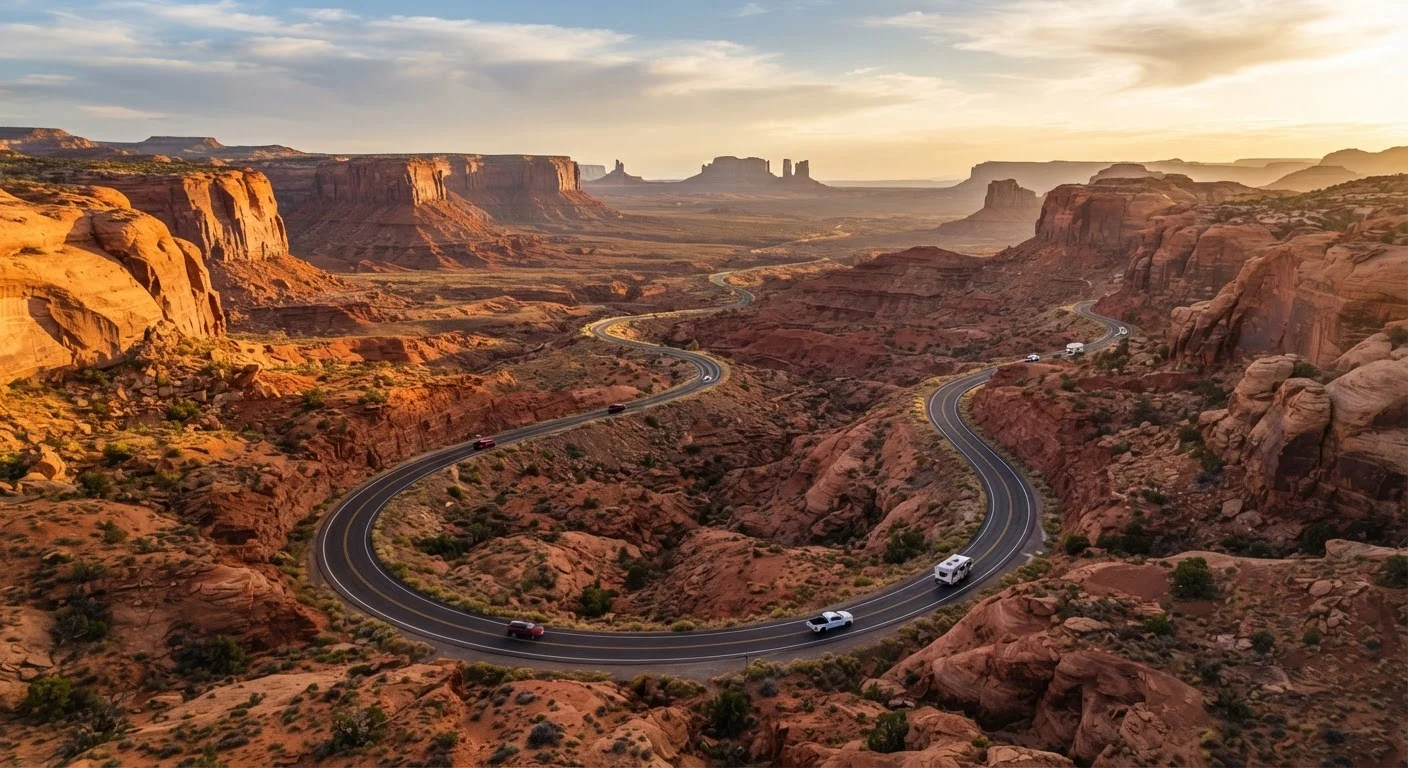
Few places on earth concentrate as much visual drama per square mile as the Colorado Plateau. Zion, Bryce Canyon, Arches, Canyonlands, and the Grand Canyon sit within reasonable driving distance of each other - making a multi-park road trip feasible for a single trip. An America the Beautiful annual pass covers entrance fees to all federal lands for a flat yearly cost, which quickly pays for itself across multiple parks.
Camping inside or just outside park boundaries keeps lodging costs low, and many viewpoints and trailheads are free once you're inside. Our region-wide overview of Southwest national parks maps out what each park offers and how to connect them into a longer journey.
A multi-park road trip through the Southwest offers world-class scenery at a fraction of international travel costs.
Asheville, North Carolina
Tucked into the Blue Ridge Mountains, Asheville has built a reputation as one of the most culturally rich small cities in the South. Its downtown is walkable, filled with independent galleries, live music venues, and a food scene that punches well above its size. The surrounding Appalachian terrain offers free hiking - the Blue Ridge Parkway alone provides hundreds of miles of scenic driving and trailheads without a fee.
Accommodation ranges from budget-friendly hostels to independent inns, and visiting during shoulder season (spring or fall) keeps prices reasonable. Pair a stop here with broader exploration using our state-by-state guide to the American South.
Asheville's walkable downtown, free mountain hiking, and vibrant arts scene make it an exceptional value destination.
New Orleans, Louisiana
New Orleans is one of the few American cities with a genuinely distinct cultural identity - shaped by French, African, Caribbean, and Spanish influences into something that exists nowhere else in the country. Much of what makes it compelling is free: the architecture of the French Quarter, outdoor music on Frenchmen Street, neighborhood parades, and public parks along the Mississippi.
Food is central to the experience, and eating well here doesn't require expensive restaurants. Neighborhood po'boy shops, corner grocery counters, and outdoor markets offer iconic local food at everyday prices. Avoiding peak festival weekends (when hotel rates spike sharply) makes a significant cost difference.
New Orleans' most defining experiences - music, architecture, street life - cost little or nothing at all.
The Upper Peninsula of Michigan
Michigan's Upper Peninsula remains one of the most undervisited regions in the country relative to its natural offerings. Pictured Rocks National Lakeshore features miles of sandstone cliffs, sea caves, and waterfalls along Lake Superior - all within a national park that charges no entrance fee. Tahquamenon Falls, one of the largest waterfalls east of the Mississippi, sits inside a state park with modest day-use fees.
The region is best suited to road-trippers comfortable with camping or basic cabin lodging. Towns like Marquette offer affordable dining and a low-key, outdoors-oriented culture that feels genuinely off the tourist track.
Michigan's Upper Peninsula delivers dramatic Great Lakes scenery with minimal crowds and very low entry costs.
El Paso, Texas
El Paso is one of the most consistently overlooked American cities for travel. Situated where Texas, New Mexico, and the Mexican state of Chihuahua converge, it has a distinct border culture expressed through its food, public murals, and architecture. The Franklin Mountains State Park - the largest urban state park in the U.S. - provides extensive hiking directly within city limits, free to low-cost depending on the access point.
Accommodation and dining costs run noticeably below national averages, and the city's museums, including those focused on regional history and borderland art, charge modest or no admission. For travelers curious about cross-border dynamics, it offers a unique context that few other American cities can match.
El Paso's prices, urban hiking, and genuine border culture offer a distinctive experience at below-average costs.
The Olympic Peninsula, Washington
Olympic National Park is unusual even among major national parks: within its boundaries you'll find temperate rainforests, glacier-capped peaks, and wild Pacific coastline - three ecosystems in one park. The Hoh Rain Forest, Hurricane Ridge, and Rialto Beach each offer dramatically different landscapes, all accessible through a single park pass.
The peninsula's relative remoteness keeps it less crowded than parks closer to major metro areas, and campgrounds within the park range from developed sites to primitive backcountry spots. The surrounding communities - Forks, Port Angeles, Sequim - provide affordable lodging and supply options for longer stays.
Olympic National Park packs rainforest, mountains, and coastline into one pass, keeping costs and crowds manageable.
Making the Most of Wherever You Go
A destination is only part of the equation. How you structure your days, where you eat, and what you choose to skip all shape the final cost. Leaning on neighborhood restaurants and local markets instead of tourist-corridor dining can meaningfully reduce daily spending - our guide to eating smart on the road walks through exactly how to do that.
Time Your Visit to Control Costs
Shoulder season travel - typically late spring and early fall for most U.S. destinations - can reduce accommodation costs significantly compared to peak summer or holiday periods. Weather is often still favorable, crowds are thinner, and popular spots are easier to experience at a relaxed pace. Checking a destination's specific seasonal patterns before booking pays dividends.
For lodging, it's worth exploring options beyond standard hotels. Campgrounds near national parks, vacation rentals in residential neighborhoods, and hostels in walkable cities each offer a different trade-off between cost, comfort, and character. See our comparison of lodging alternatives for a practical breakdown.
Finally, resist the urge to over-schedule. Packed itineraries often lead to rushed visits, impulse spending, and exhaustion. A well-paced itinerary leaves room for the unplanned moments that tend to become the most memorable ones - and often costs less than trying to do everything at once.