

Key Takeaways
Why Morocco Feels Overwhelming - And Why It Doesn't Have to Be
Morocco sits at a crossroads of Berber, Arab, French, and Andalusian influence, layered across an extraordinarily varied landscape. The country packs Atlantic beaches, ancient imperial cities, Saharan dunes, and snowcapped mountain ranges into an area roughly the size of California - plus Texas. That variety is exactly what makes it compelling and exactly what makes planning it feel like a puzzle.
The overwhelm usually comes from one source: trying to see too much. Morocco travel content online tends to present every destination as essential, every souk as a must-visit, every mountain pass as a can't-miss drive. The result is itineraries so packed that travelers spend their trip in transit instead of present.
The good news is that Morocco is forgiving for travelers who plan simply. A single well-chosen city plus one or two day trips delivers an experience that most people describe as transformative. You don't need to see all of it on the first trip. If you're building your planning skills from the ground up, our first-timer's roadmap to travel planning covers the core process in detail.
What you will need
What to Expect on the Ground
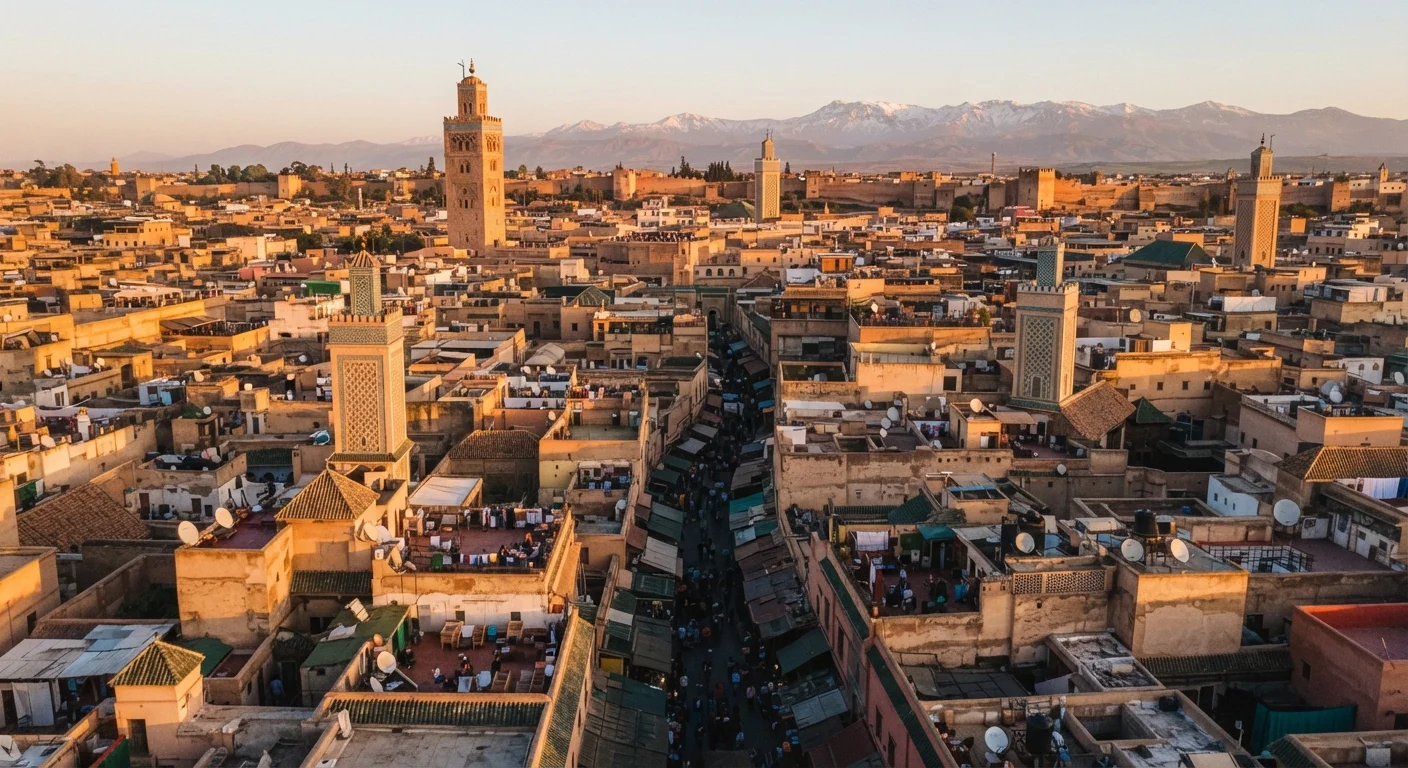
Morocco runs on a mix of French, Arabic, Darija (Moroccan Arabic), and Amazigh - and in tourist areas, a good deal of English too. In cities like Fes and Marrakech, navigating the medinas without a guide is entirely possible, but many first-time visitors find a half-day guided walk helpful for orientation before exploring independently.
Haggling is a genuine part of souk culture, though fixed-price shops are increasingly common. The general rule: if there's no price tag, a negotiation is expected. If you're uncomfortable with this, fixed-price cooperatives (particularly for crafts like ceramics and textiles) exist in most major cities.
Transportation between cities is reliable and reasonably affordable. The national rail service (ONCF) connects Casablanca, Rabat, Meknes, Fes, and Marrakech. For the south and the desert, shared taxis (grand taxis) and private transfers are the norm. Budget conscious travelers should consider how transit costs fit into their overall plan - our travel on a budget hub has guidance on stretching travel funds further.
Offline maps app (e.g., Maps.me or downloaded Google Maps)
Medina alleyways don't always have reliable GPS signals - downloaded offline maps help you navigate without a data connection.
A confirmed accommodation list with addresses in Arabic and French
Sharing your riad's address in local script with taxi drivers and guides prevents confusion at arrival.
Local currency (Moroccan Dirham) in cash
Many souks, small restaurants, and hammams operate on a cash-only basis.
A travel adapter (Type C or E plug)
Morocco uses European-style plugs; most U.S. devices won't fit local outlets without an adapter.
Lightweight scarf or shawl
Useful for covering shoulders when entering mosques, medersas, or rural villages out of cultural respect.
Travel insurance policy with medical and trip interruption coverage
Provides a financial safety net for flight cancellations, illness, or unexpected itinerary changes.
Finally, approach the medinas with patience rather than efficiency. The streets aren't designed for quick navigation. They're designed for community, commerce, and a pace of life that rewards slowing down. Travelers who embrace that tend to have a very different - and better - experience than those who fight it.
For a comprehensive framework that takes you from early research through arriving ready, see our end-to-end trip planning walkthrough.