

Key Takeaways
Why These Three Commands Come First
Before tackling loose-leash walking or more advanced tricks, every dog needs a reliable foundation. Sit, stay, and come - often called the core three - give you the ability to manage your dog safely in everyday situations: at the door, near traffic, or when a guest arrives. They also establish the communication framework your dog needs to understand how training works.
If you're brand new to dog ownership, our beginner's complete starting point walks through the mindset and tools you'll want in place before diving in. And if you'd like to understand the research behind why reward-based methods are so effective, see our guide on positive reinforcement and reward-based pet training.
The approach here is simple: one command at a time, short sessions, and meaningful rewards. You don't need special equipment or a professional setup - just a quiet space, small high-value treats, and ten minutes.
What you will need
Step-by-Step: Teaching Sit, Stay, and Come
Work through these steps in order. Once your dog responds reliably to sit roughly eight out of ten times in a low-distraction environment, introduce stay. Add come after stay is solid. Rushing ahead undermines the learning your dog has already done.
Teach Sit with a lure
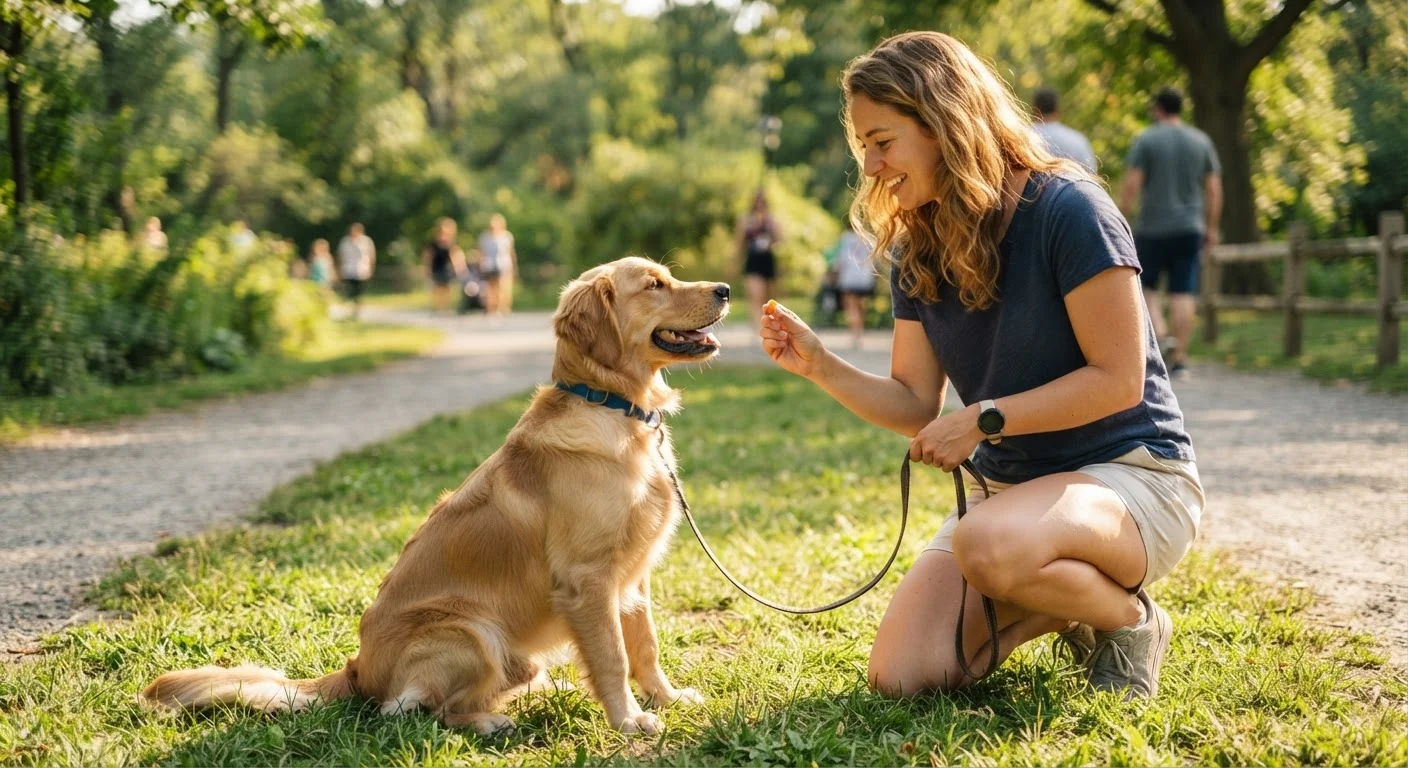
Hold a small treat close to your dog's nose, then slowly move your hand upward and slightly back over the dog's head. As the nose follows the treat upward, the hindquarters naturally lower. The moment your dog's bottom touches the ground, say "Sit" in a calm, clear voice and immediately deliver the treat.
Repeat five to eight times per session. After several successful repetitions, begin fading the lure by mimicking the hand motion without a treat in your hand, then rewarding from your other hand once the dog sits.
Add a hand signal and practice reliability
Once your dog sits consistently when you use the lure motion, transition that motion into a deliberate hand signal - an open palm moving upward works well. Say "Sit" as you give the signal. Reward every successful sit during this phase.
Practice in short bursts across several days. The goal is a dog that sits promptly when asked, without needing a treat visible beforehand. Continue rewarding with treats, but vary the timing so the dog stays engaged rather than learning to only respond when food is in your hand.
Introduce Stay from a sit position
Ask your dog to sit. The moment they're settled, open your palm toward them (like a stop signal) and say "Stay". Wait just one or two seconds, then reward before the dog moves. Gradually extend the duration - three seconds, then five, then ten - over multiple sessions before adding distance.
When your dog can hold a stay for ten seconds reliably, take one step back. If they break the stay, simply ask for a sit again and restart with a shorter duration. Never punish a broken stay; just reset quietly.
Build distance and duration on Stay
Once your dog holds a stay reliably with you standing close, begin stepping further away - one step, then two, then to the edge of the room. Return calmly each time and reward. Practice until your dog will hold a stay for 30 seconds with you several feet away before introducing real-world distractions.
Teach Come (recall)
With your dog on a long leash or in a safely enclosed space, crouch down to appear welcoming, open your arms slightly, and say your dog's name followed by "Come" in an upbeat, enthusiastic tone. When your dog reaches you, reward generously - this should be one of the most rewarding moments in your dog's training experience.
Never call your dog to you for something unpleasant (like a bath they hate or the end of playtime) during the learning phase. A strong recall depends entirely on your dog believing that coming to you is always the right choice.
Combine the commands in real-life moments
Once all three commands are individually reliable, start using them in natural sequences: ask for a sit before mealtimes, a stay while you open the front door, and a come when your dog is exploring the yard. Real-life practice reinforces the behaviors far more durably than drills alone.
Keep rewarding, especially in new environments where your dog faces more distraction. Even a well-trained adult dog benefits from occasional reinforcement to keep responses sharp.
Keep Sessions Short and Positive
Five to ten minutes is genuinely enough for most dogs, especially puppies. Ending a session while your dog is still engaged and succeeding - rather than when they're bored or frustrated - builds enthusiasm for the next session. If your dog is struggling, make the task easier rather than pushing through. Consistent small wins add up to lasting skills.
Once all three commands are solid indoors, gradually practice in new environments - the yard, a quiet sidewalk, a friend's home. Increasing distraction slowly is the key to reliable obedience beyond your living room. For the natural next step, our article on turning a pulling walk into a calm one builds directly on these foundations.
This article is for general informational and educational purposes only. For concerns about your dog's behavior, health, or wellbeing, consult a qualified veterinary or professional training professional.