

Key Takeaways
Small Pets Can Learn - Here's What That Actually Looks Like
When most people think about training a pet, they picture a dog sitting on command or a cat learning to use a litter box. But rabbits, guinea pigs, and birds are far more capable learners than they're often given credit for. These animals form real bonds with their owners, respond to consistent feedback, and benefit deeply from the mental stimulation that structured training provides.
The key is adjusting your expectations and your approach to fit the species in front of you. A rabbit isn't a small dog, and a cockatiel isn't a parrot in miniature - each brings its own sensory world, social instincts, and motivation profile to the table. Understanding those differences is what makes the difference between a frustrated owner and a genuinely enriching experience for both animal and human.
Whether you're new to small pets or looking to deepen an existing bond, the training possibilities outlined below might surprise you. For a broader look at how to structure learning sessions regardless of species, see our pre-session checklist for setting up the right conditions before you begin.
Rabbits: Litter Training and Target Training Are Very Achievable
Rabbits are naturally inclined to use a consistent bathroom spot - a trait that makes litter training one of the most straightforward wins for rabbit owners. Place a litter box in the corner your rabbit already favors, add appropriate substrate, and reinforce visits with a small treat or calm verbal praise. Most rabbits catch on within days to weeks.
Beyond litter habits, rabbits can learn to follow a target stick (a small object they touch with their nose on cue), come when called by name, and navigate simple obstacle courses. Target training is especially useful because it gives you a way to guide your rabbit's movement without physical pressure, which many rabbits find stressful. Keep sessions to five minutes or fewer - rabbits have short attention spans and can become overstimulated quickly.
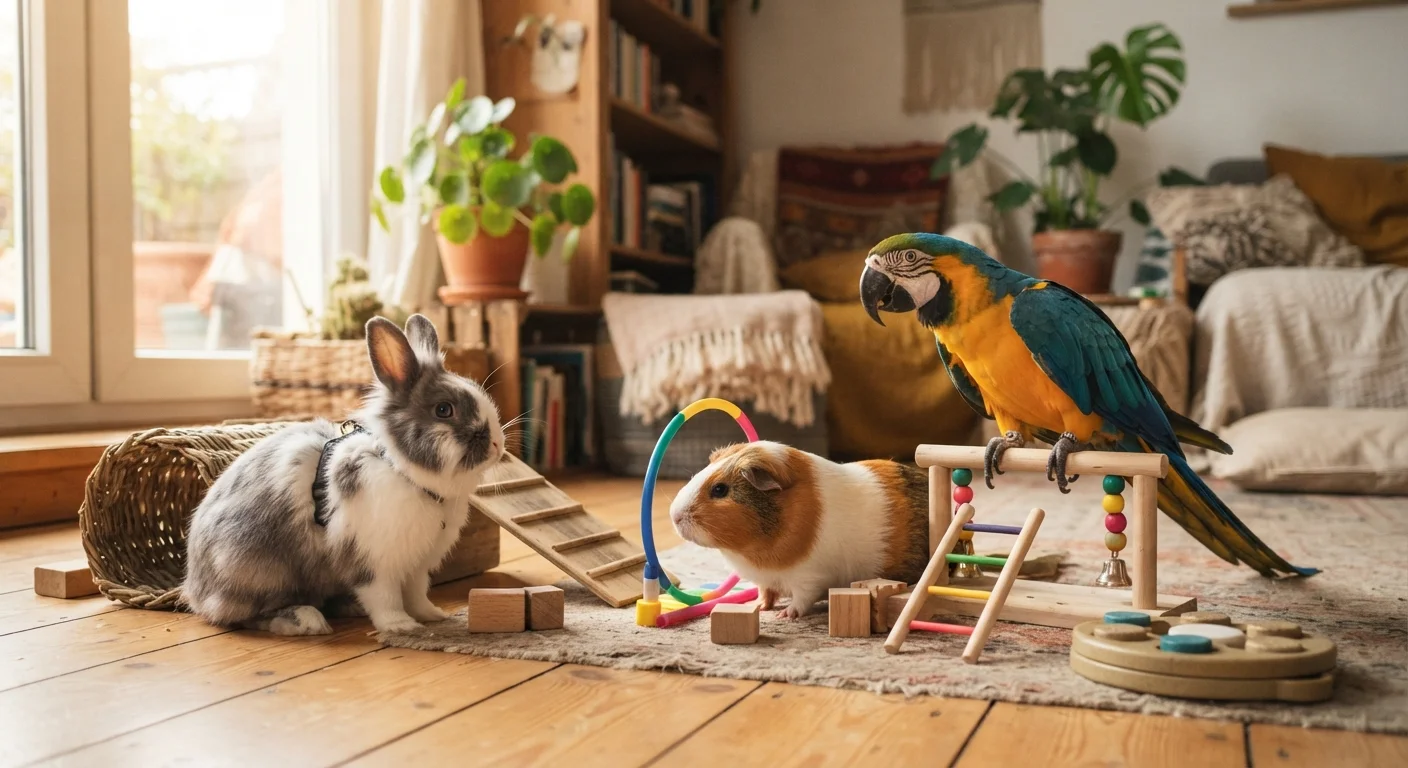
Rabbits can learn to come when called and navigate simple courses with patient target training.
Guinea Pigs: Recall, Lap Training, and Simple Cues
Guinea pigs are social, food-motivated animals who respond well to gentle, repetitive training. Recall - coming to your hand or a specific spot when called - is a great first skill. Pair their name or a consistent sound with a small piece of vegetable offered at a fixed location. With daily repetition, most guinea pigs make the association reliably.
Lap training, where a guinea pig learns that your lap is a safe and rewarding place to rest, is another meaningful goal that deepens the human-animal bond. Start by placing them near your lap with treats, gradually building duration. Some guinea pigs also learn to spin, stand briefly on their hind legs, or navigate simple mazes - though individual personality plays a significant role in how far training progresses.
Food motivation makes guinea pigs surprisingly responsive to recall and simple behavior cues.
Parrots and Hookbills: Step-Up, Station Training, and Vocalizations
Parrots - from budgies and cockatiels to larger hookbills - are among the most trainable non-dog pets available. The foundational cue for any parrot is the step-up: stepping from a surface onto your hand on a verbal or gestural cue. This is both a safety behavior and the basis for nearly everything else. Use a treat the bird reliably works for, hold your finger or hand firmly at their lower chest, say your cue word clearly, and reward immediately.
Station training (going to a specific perch or mat on cue) helps manage a bird's movement during out-of-cage time and reduces unsafe free-roaming. Many parrots also learn their own name, targeted recall, and - in species capable of mimicry - contextual vocalizations. What's important to note is that vocalization training works best when it emerges from natural social interaction rather than forced repetition.
The step-up cue is the foundation of parrot training - a safety skill and a gateway to everything else.
Softbills and Finches: Habituation Over Trick Training
Not all birds are wired for interactive training in the same way parrots are. Finches, canaries, and other softbills are typically less oriented toward human interaction and more focused on their flockmates. For these species, the most meaningful form of training is habituation - gradually helping them become comfortable with human presence, handling, and routine disruptions without stress.
Consistent, predictable care routines, calm movements near the cage, and brief periods of quiet presence can reduce fear responses over time. While you're unlikely to teach a zebra finch to step up reliably, a well-habituated bird is a healthier, less stressed bird - and that matters just as much as any learned trick.
For finches and softbills, reducing fear through habituation is a genuine and worthwhile training goal.
Universal Principles: What Works Across All Small Pets
Regardless of species, a few training principles hold consistently across rabbits, guinea pigs, and birds:
- Positive reinforcement works. Reward the behavior you want immediately after it happens. Punishment-based methods are not only less effective with small pets - they actively damage trust and can increase fear-based behaviors.
- Short sessions are better. Five to ten minutes once or twice daily is more productive than a single long session. Small pets fatigue quickly and lose motivation when pushed too long.
- Find the right reward. High-value food motivators vary by individual - experiment with different treats to discover what your pet will genuinely work for.
- End on success. Always finish a session with something your pet can do easily and confidently, leaving them with a positive association with the activity.
- Respect no-training days. If your pet seems unwell, stressed, or uninterested, skip the session. Forcing training when a pet isn't receptive sets back progress rather than building it.
End every session with a confident success - it shapes how your pet feels about training tomorrow.
Building the Bond Through Consistent Practice
Training small pets isn't about control - it's about communication. Each interaction where your pet responds to a cue and receives something they value is a small deposit into a growing account of trust. Over time, that trust reshapes how your pet experiences you: not as an unpredictable giant who appears and disappears, but as a reliable source of good things.
Start With One Skill, Not Five
When beginning training with any small pet, choose a single, simple behavior and work on it exclusively for the first week or two. Splitting attention across multiple cues too early slows learning and creates confusion. Once your pet responds reliably to one cue in a calm environment, you can gradually introduce another. Patience at the start pays off significantly over time.
If you're exploring training beyond the home environment or want structured guidance, it's worth reviewing the different formats available to pet owners in our guide to group classes, private trainers, and self-guided training. While resources for small exotic pets may be more limited than for dogs, small-animal-savvy trainers and behaviorists do exist. And for foundational day-to-day care that supports a trainable, healthy pet, the Pet Care Basics hub is a helpful starting point.
This article is for general informational purposes only. For health concerns related to your specific pet, always consult a qualified veterinarian or exotic animal specialist.