

Key Takeaways
Significantly longer average lifespan
Indoor cats are estimated to live considerably longer on average than outdoor cats, largely due to reduced exposure to traffic, predators, and infectious disease. While individual variation exists, the lifespan difference is widely recognized in veterinary practice.
Lower risk of infectious disease
Diseases like FeLV, FIV, and upper respiratory infections spread through contact with infected cats. Keeping a cat indoors dramatically reduces these exposure opportunities.
Protection from environmental toxins
Outdoor cats may encounter rodenticides, antifreeze, pesticides, and toxic plants. Indoor environments, once hazard-proofed, are far easier to control.
Reduced parasitic burden
Fleas, ticks, and intestinal parasites are far more prevalent in cats with outdoor access. Indoor cats require less intensive parasite prevention, though some prophylactic care is still recommended.
No impact on local wildlife
Free-roaming cats are recognized as a significant threat to bird and small mammal populations. Indoor living eliminates this ecological concern entirely.
Reduced opportunities for natural behavior
Hunting, climbing, territory-patrolling, and sensory exploration are core feline behaviors. Indoor environments, even enriched ones, require deliberate design to provide adequate outlets.
Higher risk of boredom and behavioral issues
Without sufficient stimulation, indoor cats may develop stress-related behaviors including over-grooming, aggression, or inappropriate elimination. These are welfare concerns, not merely nuisances.
Greater owner responsibility for enrichment
The burden of providing variety, novelty, and physical activity falls entirely on the owner. This is manageable but requires consistent, ongoing effort rather than a one-time setup.
Potential for weight gain and related health issues
Indoor cats tend to be less physically active, which can contribute to obesity if diet isn't carefully managed. Pairing indoor living with appropriate feeding schedules is an important safeguard.
Our Verdict
Neither lifestyle is universally right or wrong - it depends on your cat's individual needs, your environment, and your capacity to provide enrichment or manage risks. Indoor living generally offers greater safety and longevity, but requires deliberate effort to meet a cat's behavioral needs. Outdoor or supervised hybrid access can enrich a cat's life meaningfully when hazards are thoughtfully managed.
Owners in urban or high-traffic areas, or those with cats who have health vulnerabilities, will generally find indoor living the safer path; those in quieter rural settings with the time to supervise may benefit from exploring structured outdoor access.
Why This Decision Matters More Than You Might Think
The question of indoor versus outdoor living sits at the heart of responsible cat ownership, yet it rarely gets the careful consideration it deserves. It touches on lifespan, behavioral welfare, public ecology, and the day-to-day practicalities of your household. There isn't a single correct answer - but there are real trade-offs worth understanding before defaulting to habit or convenience.
For context on building a home environment that supports your cat's wellbeing regardless of which path you choose, see our guide on setting up a safe, enriching home for a new pet.
No Universal Right Answer
Veterinary organizations and animal welfare groups sometimes hold differing positions on this topic, reflecting genuine uncertainty about how to weigh safety against behavioral welfare. Some advocate for strictly indoor living; others support supervised outdoor access as a reasonable option. What matters most is that the choice is made thoughtfully, with your specific cat's needs in mind - not by default.
The Case for Keeping Cats Indoors
Veterinary and animal welfare organizations widely cite indoor living as the safer option from a physical health standpoint, and the data supporting that position is difficult to dismiss.
Significantly longer average lifespan
Indoor cats are estimated to live considerably longer on average than outdoor cats, largely due to reduced exposure to traffic, predators, and infectious disease. While individual variation exists, the lifespan difference is widely recognized in veterinary practice.
Lower risk of infectious disease
Diseases like FeLV, FIV, and upper respiratory infections spread through contact with infected cats. Keeping a cat indoors dramatically reduces these exposure opportunities.
Protection from environmental toxins
Outdoor cats may encounter rodenticides, antifreeze, pesticides, and toxic plants. Indoor environments, once hazard-proofed, are far easier to control.
Reduced parasitic burden
Fleas, ticks, and intestinal parasites are far more prevalent in cats with outdoor access. Indoor cats require less intensive parasite prevention, though some prophylactic care is still recommended.
No impact on local wildlife
Free-roaming cats are recognized as a significant threat to bird and small mammal populations. Indoor living eliminates this ecological concern entirely.
The single largest factor is lifespan. Outdoor cats face a gauntlet of hazards - traffic, predators, toxic plants, disease exposure from other animals, and accidental poisoning - that indoor cats largely avoid. Cats living exclusively indoors are also far less likely to contract serious infectious diseases like feline leukemia virus (FeLV) or feline immunodeficiency virus (FIV), both of which spread through contact with infected cats.
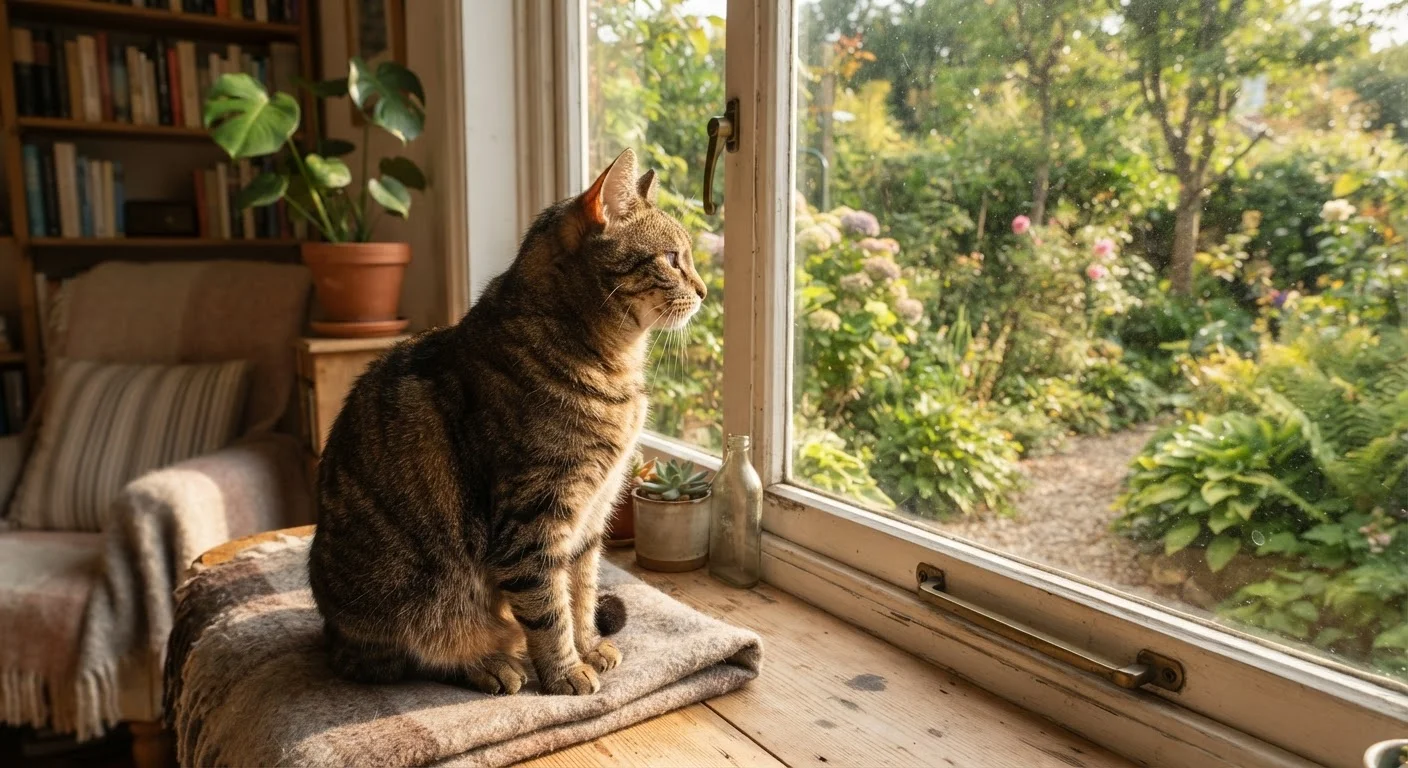
Behavioral health is trickier indoors, but manageable. Mental stimulation and enrichment - puzzle feeders, climbing structures, window perches, interactive play - can meaningfully substitute for the sensory variety the outdoors provides, though they require consistent owner effort.
The Case for Outdoor Access
It would be intellectually dishonest to ignore what the outdoors genuinely offers cats. For many animals, particularly those with strong prey drives or high activity levels, an indoor environment - however enriched - may not fully satisfy their behavioral needs.
Reduced opportunities for natural behavior
Hunting, climbing, territory-patrolling, and sensory exploration are core feline behaviors. Indoor environments, even enriched ones, require deliberate design to provide adequate outlets.
Higher risk of boredom and behavioral issues
Without sufficient stimulation, indoor cats may develop stress-related behaviors including over-grooming, aggression, or inappropriate elimination. These are welfare concerns, not merely nuisances.
Greater owner responsibility for enrichment
The burden of providing variety, novelty, and physical activity falls entirely on the owner. This is manageable but requires consistent, ongoing effort rather than a one-time setup.
Potential for weight gain and related health issues
Indoor cats tend to be less physically active, which can contribute to obesity if diet isn't carefully managed. Pairing indoor living with appropriate feeding schedules is an important safeguard.
Cats are obligate hunters by instinct. Access to varied smells, textures, temperatures, and the opportunity to stalk, climb, and explore engages sensory systems that are difficult to replicate indoors. Some cats confined exclusively indoors display signs of frustration: over-grooming, redirected aggression, or persistent attempts to escape.
It's also worth acknowledging the broader context of cat health - stress and under-stimulation carry their own welfare costs, and these shouldn't be dismissed in the name of physical safety alone.
10-15 yrs
Typical indoor cat lifespan
Veterinary sources commonly cite this range for indoor cats, compared to estimates of 2-5 years for free-roaming outdoor cats, though variation is significant.
~1.3-4B
Birds killed by cats annually in the U.S.
A study published in Nature Communications estimated that free-ranging domestic cats kill between 1.3 and 4 billion birds in the United States each year.
The Middle Ground: Supervised and Contained Outdoor Options
For many cat owners, the most responsible path isn't a binary choice. Structured outdoor access - which limits exposure while still delivering enrichment - is increasingly popular and practical.
- Catios: Enclosed outdoor enclosures attached to a window or door. They allow fresh air, sunlight, and nature-watching without free roaming.
- Leash and harness walking: With patience and positive reinforcement, many cats can be trained to walk on a harness. See what cats can realistically learn for guidance on setting expectations.
- Fenced or enclosed yards: Roller-top or overhang fence systems can prevent cats from escaping while allowing yard access.
These options require upfront investment in time or money, but they represent a genuine compromise between safety and behavioral fulfillment.
Factors That Should Shape Your Decision
No single factor determines the right choice, but several deserve serious weight:
- Location
- Urban and suburban areas with heavy traffic pose dramatically higher risks than quiet rural properties. Local wildlife, stray cat populations, and even neighborhood use of pesticides and rodenticides all matter.
- Your cat's health and age
- Cats with immunocompromising conditions, mobility issues, or chronic illness are generally better served by indoor life. Senior cats may also be less equipped to handle outdoor stressors.
- Temperament
- A confident, curious cat with a strong prey drive may struggle indoors without significant enrichment. A shy or anxious cat may actually feel safer with defined indoor territory.
- Your capacity to enrich
- Indoor living only works well if you can consistently provide stimulation. A bored indoor cat is not automatically a safe or happy one. Nutrition also plays a role in overall wellness - understanding how diet formats differ can help you support your cat's health from every angle.
This article is for general informational purposes only and is not a substitute for personalized veterinary advice. Always consult your veterinarian for guidance tailored to your cat's specific health needs and circumstances.