

Key Takeaways
Why a Home Grooming Routine Matters
Grooming isn't just about appearances. Regular brushing, bathing, and nail trimming directly affect your pet's physical comfort and give you frequent, hands-on contact that helps you notice lumps, skin irritation, or changes in coat condition before they become bigger concerns. It's one of the most practical forms of preventive care you can offer at home.
If you're just getting started as a pet owner, grooming fits naturally into the broader foundation of daily care covered in our new pet owner's daily care guide. Even experienced owners benefit from revisiting their routine - habits can drift, and what worked for a puppy may need adjusting for an adult or senior animal.
What you will need
Brushing: Frequency, Tools, and Technique
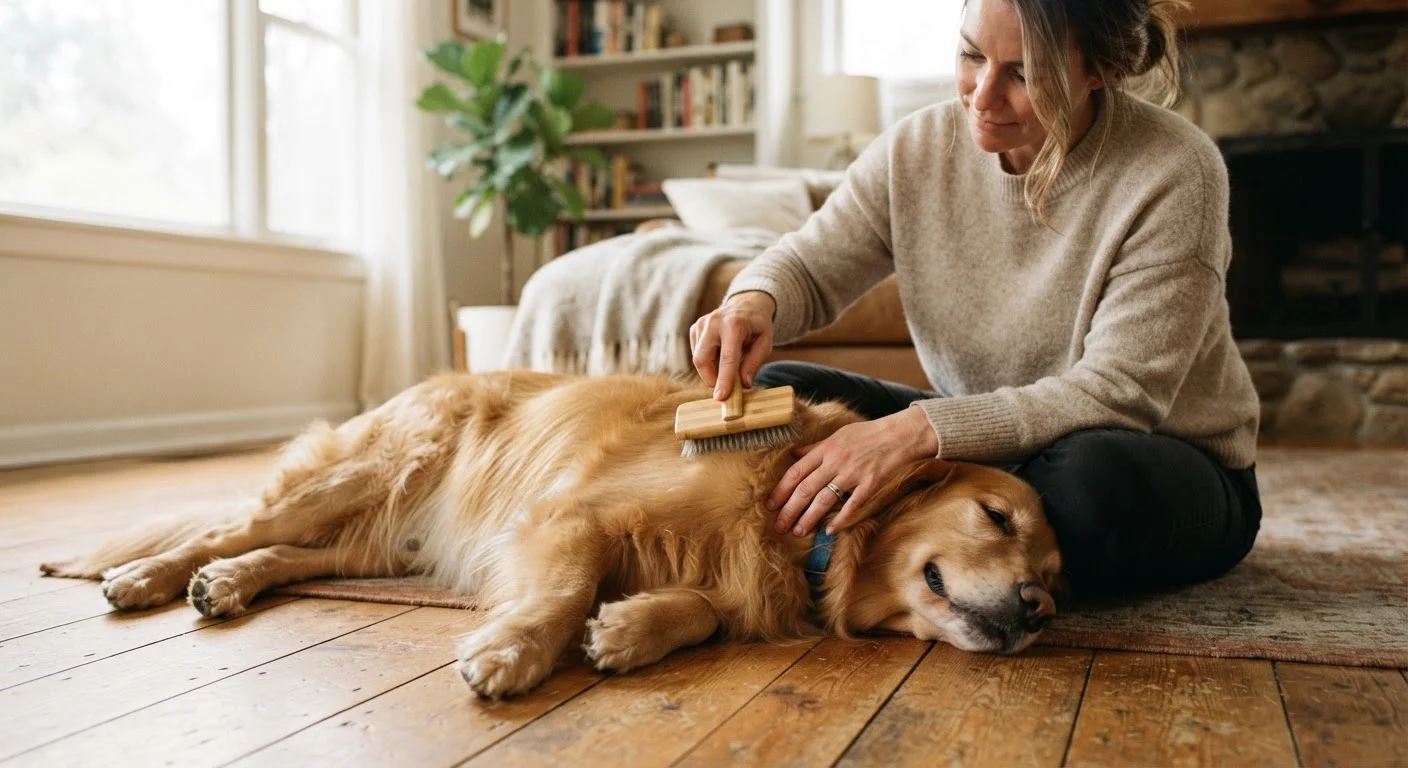
How often you brush depends heavily on coat type. Short-coated dogs (like beagles or boxers) typically do well with a weekly once-over using a rubber curry brush or bristle brush. Medium and long coats - think golden retrievers, collies, or Maine Coon cats - may need brushing several times a week to prevent tangles and matting. Double-coated breeds often benefit from daily attention during shedding season.
Always brush in the direction of hair growth and work in sections, especially with longer coats. Start at the legs and hindquarters, where mats form most easily, and work toward the head. For cats, keep early sessions brief and positive - many cats will tolerate brushing longer once they associate it with calm handling and the occasional treat.
Make Brushing a Bonding Ritual
Many pets grow to enjoy brushing when it's paired consistently with gentle touch and quiet praise. Try brushing at the same time each day - after a walk or before a meal - so the routine becomes a predictable, calming event rather than something that appears out of nowhere. Over time, your pet may actively seek out the brush.
If you encounter a mat, don't pull. Use a detangling spray and work from the ends inward with your fingers before introducing a comb. Severe mats close to the skin should be addressed by a professional groomer.
Bathing: How Often and How to Do It Calmly
Most dogs benefit from a bath roughly every four to six weeks, though dogs that spend a lot of time outdoors or have skin conditions may need a different schedule - your veterinarian can advise on what's right for your individual pet. Healthy cats generally do not need regular baths; their self-grooming is efficient, and bathing too often can strip the coat's natural oils.
When bathing a dog, use lukewarm water and a shampoo formulated for pets - human shampoos have a different pH and can irritate animal skin. Wet the coat thoroughly, lather from neck to tail while avoiding the eyes and ears, then rinse completely. Any residual shampoo can cause itching or skin irritation. Dry with a towel and, if your dog tolerates it, a low-heat dryer held at a safe distance.
Never Use Human Products on Pets
Human shampoos, conditioners, and soaps are formulated for human skin pH levels, which differ significantly from those of dogs and cats. Using them can strip protective oils, cause dryness, and lead to skin irritation. Always select products specifically labeled for use on the species you're bathing, and confirm with your vet if your pet has a diagnosed skin condition.
Nail Trimming: A Step Most Owners Dread (But Shouldn't)
Overgrown nails affect how your pet distributes weight, which can strain joints and alter gait over time. For most dogs and cats, trims every three to four weeks keep nails at a healthy length. If you hear nails clicking on hard floors, it's generally time for a trim.
Use a clipper designed for the size of your pet - guillotine-style or scissor-style both work well. Trim small amounts at a time, cutting at a slight angle just below the quick (the blood vessel inside the nail). On light-colored nails, the quick appears as a pink streak and is easy to see. On dark nails, go slowly and trim thin slivers until you see a dark dot appear at the center of the cut surface - that signals you're close to the quick and should stop.
Keep styptic powder nearby in case you nick the quick; it stops bleeding quickly. If your pet is very resistant or has particularly dark nails, a professional groomer or veterinary technician can handle trims safely. For broader guidance on your pet's overall health across their life stages, see our complete pet health overview.
Introduce the tools before the session
Let your pet sniff brushes, clippers, and other tools while giving calm praise and a treat. Do this over several short sessions before any grooming takes place. Animals that are familiar with the equipment are far less likely to resist when the actual grooming begins.
Brush the coat thoroughly
Work in sections using the brush suited to your pet's coat. Start at the lower body and legs, where mats tend to form, and move toward the neck and head. Apply gentle, even strokes in the direction of hair growth. Check for skin redness, lumps, parasites, or unusual odors as you go.
Bathe your dog if due
Wet the coat thoroughly with lukewarm water. Apply pet shampoo from neck to tail, lathering gently and avoiding the face and ear canals. Rinse until the water runs completely clear - leftover shampoo is a common cause of post-bath itching. Towel dry, then use a low-heat dryer if your dog tolerates the sound.
Trim the nails
Hold the paw gently but firmly. Position the clipper just below the quick, angled slightly downward. Cut one small sliver at a time. Pause after each cut on dark nails to check the center of the trimmed surface. Reward your pet with a treat after each paw.
End every session on a positive note
Finish with praise, a treat, or a brief play session your pet enjoys. Even if the session didn't go perfectly, ending positively creates a favorable memory that makes the next session easier. Consistency and calm matter far more than getting everything right the first time.
This article provides general grooming guidance for informational purposes only. For advice tailored to your individual pet's health or skin conditions, consult your veterinarian.