

Key Takeaways
Our Verdict
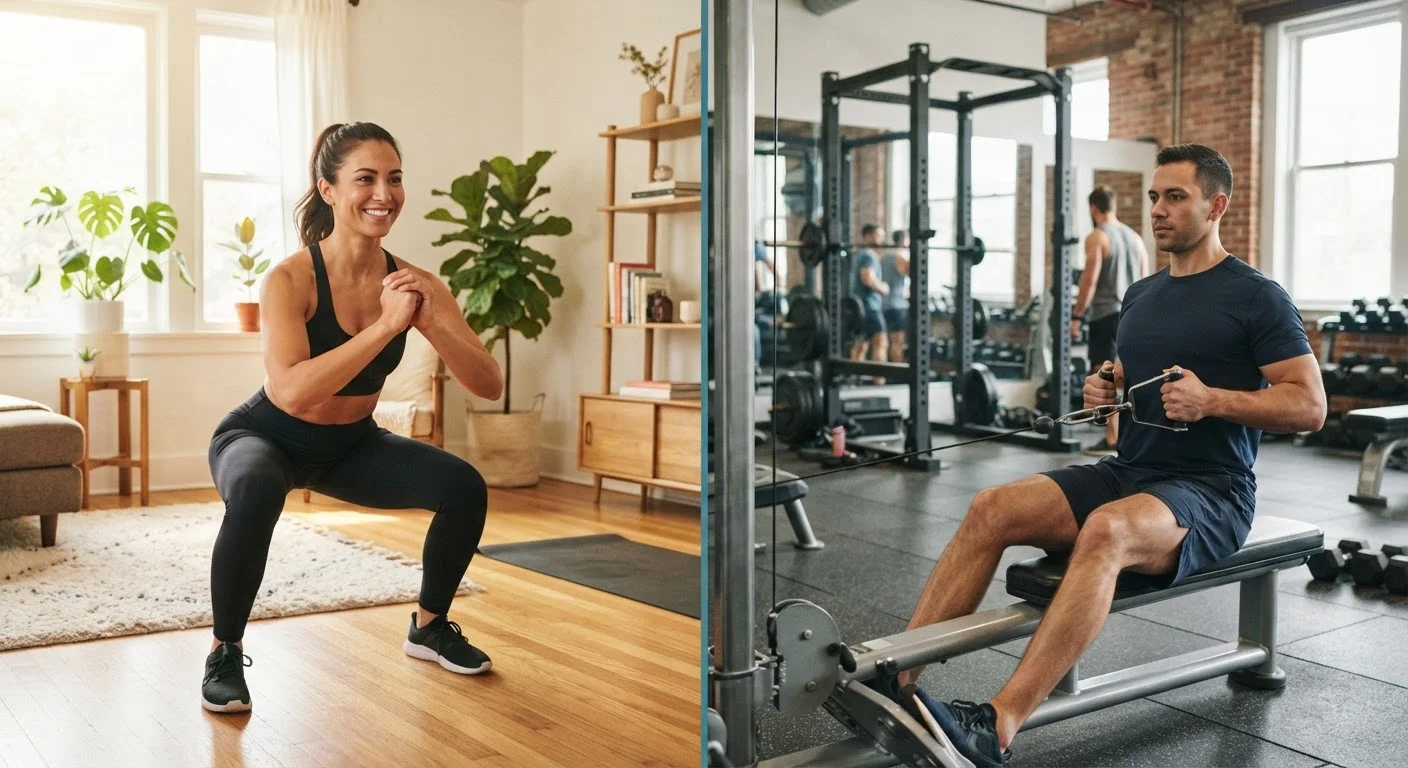
Neither home workouts nor gym workouts are universally superior. The most effective training environment is the one that best fits your schedule, budget, goals, and personal motivation style. Research consistently shows that adherence - showing up regularly - is the single strongest predictor of fitness outcomes, regardless of where you train.
| Best for | Recommended |
|---|---|
| Those prioritizing convenience, privacy, or cost savings | Home workouts |
| Those pursuing advanced strength, specialized equipment, or social accountability | Gym workouts |
| Those who struggle with motivation or want coached instruction | Gym workouts |
| Busy adults wanting flexible, no-commute fitness routines | Home workouts |
The Principles That Never Change
Regardless of where you exercise, the biological mechanisms that drive fitness improvements remain identical. Progressive overload - gradually increasing the challenge placed on your muscles over time - is the core driver of strength and endurance gains whether you're lifting in a commercial gym or doing push-ups in your living room. Recovery, sleep, and nutrition matter just as much at home as they do after a gym session.
Common misconceptions about what makes exercise "count" often stop people before they start. If you've ever assumed a home workout couldn't be as effective as a gym session, several persistent exercise myths may be shaping that belief. The science is clear: well-structured bodyweight and resistance band routines can build meaningful strength and cardiovascular fitness for the majority of people.
What changes between settings is largely about tools, environment, and psychology - not the underlying physiology of exercise itself.
Start With What You'll Actually Do
The most sophisticated gym program delivers zero benefit if you don't show up. Fitness professionals often recommend starting with the most accessible option - frequently home training - to build the habit of consistent movement first. Once exercise becomes a regular part of your routine, you can layer in more complexity, equipment, or a gym environment if your goals call for it.
Where Home Workouts Have a Real Edge
The most significant advantage of home training is the elimination of friction. No commute, no waiting for equipment, no membership fee, and no need to coordinate a schedule around facility hours. For many adults, these practical barriers are what ultimately derail a fitness routine. A 20-minute session before work becomes far more realistic when it starts the moment you step onto your mat.
Home workouts also offer a level of privacy that a public gym cannot. For beginners, those returning to exercise after a long break, or anyone who feels self-conscious about their fitness level, training at home removes a real psychological obstacle. Research published in health behavior journals consistently identifies perceived judgment as a barrier to gym participation, particularly among older adults and those with higher body weight.
Cost is another genuine differentiator. A set of resistance bands, a pair of adjustable dumbbells, or even just floor space can support a wide range of effective workouts. These represent a one-time investment rather than an ongoing monthly expense.
| Home Workouts | Gym Workouts | |
|---|---|---|
| Upfront cost | Low to moderate (minimal equipment) | Low to moderate (membership fee) |
| Ongoing cost | Minimal after setup | Monthly membership required |
| Convenience | High - no commute or schedule | Lower - travel and hours required |
| Equipment variety | Limited by space and budget | Broad access to specialized gear |
| Privacy | Complete privacy | Public shared environment |
| Social motivation | Requires self-discipline | Built-in community and energy |
| Professional guidance | Self-directed or online only | On-site trainers and classes available |
| Suitability for advanced goals | Moderate - limited by equipment | High - full equipment access |
Where the Gym Holds an Advantage
A well-equipped gym provides access to a breadth of training tools that most home setups simply cannot replicate on a practical budget - barbells, cable machines, squat racks, specialized cardio equipment, and more. For people pursuing specific strength benchmarks, training for competitive sports, or working through physical therapy protocols that require specific apparatus, this equipment access is meaningful rather than merely convenient.
Gyms also offer a structured social environment that many people find motivating. Being surrounded by others exercising can reinforce commitment, and the presence of certified fitness professionals - whether as instructors or trainers - provides access to real-time guidance. For those uncertain about form or program design, that expertise can reduce injury risk and improve results. See our overview of group fitness versus solo training for a closer look at how the social dimension affects workout outcomes.
Finally, for some people, the act of physically going somewhere dedicated to exercise creates a mental switch that improves focus and effort - what behavioral scientists sometimes call "environmental cueing."
Matching Your Setting to Your Goals
The right training environment depends heavily on what you're actually trying to achieve. General fitness, weight management, flexibility, and basic strength development are all highly achievable at home with minimal equipment. Bodyweight training, yoga, Pilates, and HIIT-style cardio translate well to a home setting and cover a broad spectrum of health goals.
Goals that are more equipment-dependent - such as competitive powerlifting, Olympic weightlifting, or targeted muscle hypertrophy programs that rely on cable machines and free weight progressions - are genuinely better served by a gym. Similarly, anyone managing a specific health condition or recovering from injury should discuss their training environment with a qualified healthcare provider or physical therapist before deciding.
It's also worth recognizing that these aren't mutually exclusive options. Many people use a hybrid approach: gym sessions for heavier lifting a few days a week, home workouts for cardio or mobility on other days. If you're exploring what types of movement best complement your goals, our comparison of strength training and cardio offers useful context on how different exercise types serve different purposes.
~80%
Adults not meeting weekly exercise guidelines
According to the CDC, roughly 80% of American adults do not meet the federal guidelines for both aerobic and muscle-strengthening activity.
Top barrier
Lack of time cited in fitness surveys
Studies on exercise adherence consistently rank time constraints and scheduling conflicts as the leading reasons adults skip workouts, a barrier home training directly reduces.
This article is for general informational purposes only and is not a substitute for professional medical or fitness advice. Consult a qualified healthcare provider before beginning any new exercise program, especially if you have an existing health condition.