

Key Takeaways
Start here
What Are Macronutrients?
Next
Carbohydrates: Your Body's Preferred Fuel
Then
Protein: The Building Block Macro
Continue
Fat: Essential, Not the Enemy
Put it together
Why Balance Matters More Than Elimination
What Are Macronutrients?
Every food you eat contains some combination of three nutrients your body needs in relatively large quantities: carbohydrates, protein, and fat. These are called macronutrients - or simply "macros" - because your body uses them by the gram, not the microgram. They are distinct from micronutrients like vitamins and minerals, which you only need in tiny amounts. For a closer look at those, see our practical reference for vitamins and minerals.
All three macronutrients supply energy, measured in calories: carbohydrates and protein deliver 4 calories per gram, while fat delivers 9. Beyond energy, each macro plays unique structural and regulatory roles that no other nutrient can fully replace.
Macronutrient
A nutrient the body requires in large amounts to function. The three macronutrients are carbohydrates, protein, and fat, each of which supplies energy and serves distinct biological roles.
Glucose
The simple sugar that serves as your body's primary energy currency. Carbohydrates are broken down into glucose during digestion.
Amino acids
The small molecules that link together to form proteins. Nine are called 'essential' because your body cannot produce them and you must obtain them from food.
Complete protein
A food that contains all nine essential amino acids in adequate amounts. Most animal-based foods are complete proteins; most plant-based foods are not on their own.
Unsaturated fat
A type of dietary fat - found in foods like olive oil, nuts, and fish - that is liquid at room temperature and broadly considered heart-friendly in nutrition research.
Trans fat
An artificially produced fat created by partially hydrogenating liquid oils. It has been largely removed from the U.S. food supply due to its links to cardiovascular harm.
Carbohydrates: Your Body's Preferred Fuel
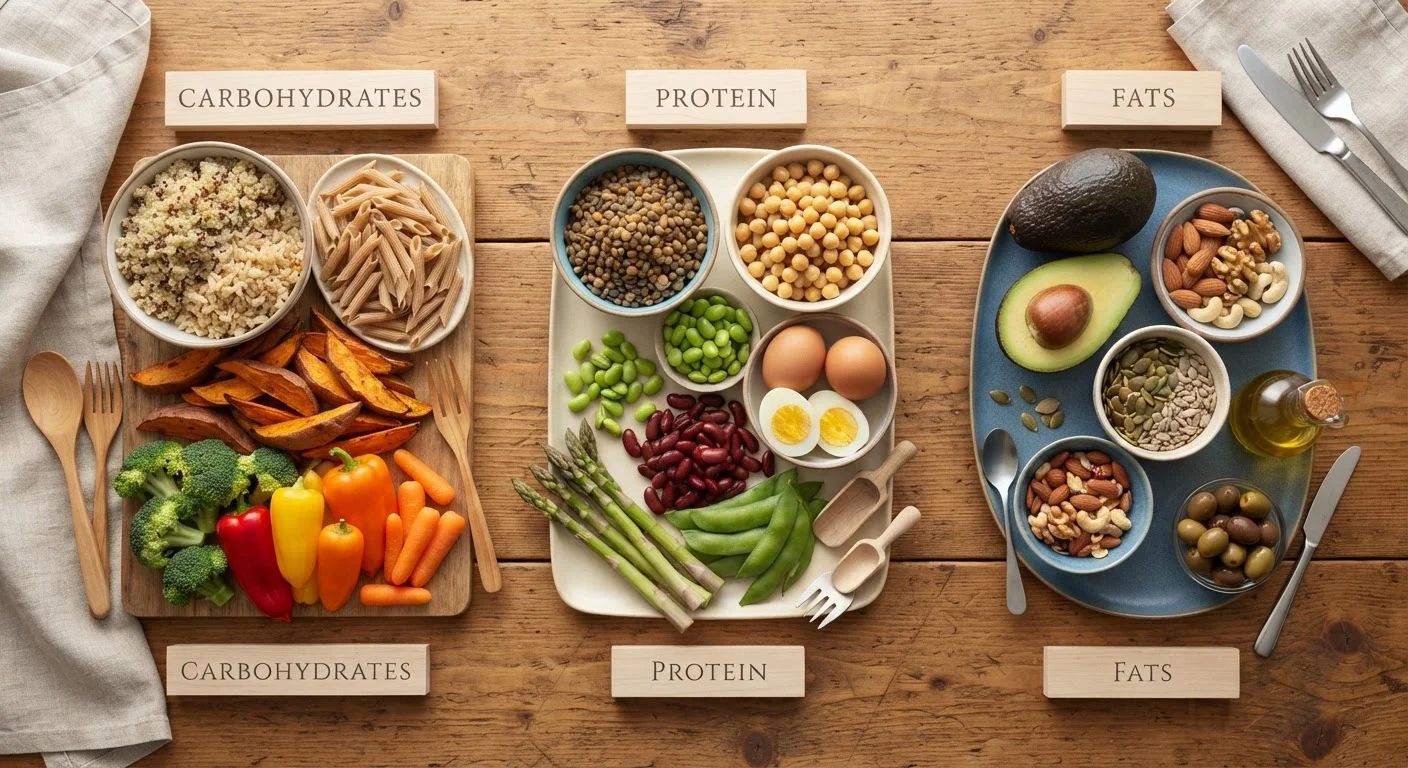
Carbohydrates are the body's fastest and most efficient energy source. When you eat them, your digestive system breaks them down into glucose, which fuels your brain, muscles, and organs. Despite the reputation carbs have earned in diet culture, they are not inherently harmful - the type and source make all the difference.
Simple carbohydrates (sugars) digest quickly and cause a faster rise in blood glucose. They appear naturally in fruit and dairy, and are added in large amounts to sweets and sodas. Complex carbohydrates - starches and fiber found in whole grains, legumes, and vegetables - digest more slowly, providing steadier energy and additional nutrients.
Dietary fiber, technically a carbohydrate, deserves special mention because most Americans fall well short of recommended intakes. Our guide on fiber and how to get more of it explains the difference between soluble and insoluble types and which foods deliver both.
Choose Whole-Food Carb Sources First
When building a meal, reach for carbohydrates that come packaged with fiber, vitamins, and minerals - think oats, brown rice, sweet potatoes, beans, and whole fruit. These provide more sustained energy than refined alternatives like white bread or sugary cereals, and they support digestive health as a bonus.
Protein: The Building Block Macro
Protein is made up of chains of amino acids - organic compounds that your body uses to build and repair tissue, produce enzymes and hormones, and support immune function. Of the 20 amino acids your body uses, nine are called essential amino acids because the body cannot make them on its own; you must get them from food.
Animal-based proteins - meat, poultry, fish, eggs, and dairy - are considered complete proteins because they contain all nine essential amino acids. Most plant-based proteins are incomplete, but eating a variety of plant foods throughout the day (beans, lentils, tofu, whole grains, nuts) allows you to meet all your amino acid needs without animal products.
Protein needs vary by age, body weight, and activity level. General guidance from nutrition authorities suggests roughly 0.8 grams per kilogram of body weight per day for healthy, sedentary adults - though people who exercise regularly or are older may benefit from more. A registered dietitian can help you dial in what's right for your situation.
Fat: Essential, Not the Enemy
Dietary fat has spent decades as the villain of American nutrition discourse, but it is absolutely essential to health. Fat supports hormone production, protects organs, helps maintain cell membranes, and enables your body to absorb fat-soluble vitamins A, D, E, and K.
The key distinction is fat type:
- Unsaturated fats (found in olive oil, avocados, nuts, and fatty fish) are broadly associated with cardiovascular benefits in most nutrition research.
- Saturated fats (found in butter, red meat, and full-fat dairy) remain the subject of ongoing scientific debate; current mainstream guidance suggests moderate intake.
- Trans fats (partially hydrogenated oils) are the type most consistently linked to harm and have been largely eliminated from the U.S. food supply through regulation.
For a deeper look at one well-researched category of beneficial fat, see our explainer on omega-3 fatty acids and what the research actually says.
Don't Judge Fat by Calories Alone
Because fat is calorie-dense at 9 calories per gram, it's easy to assume eating less fat automatically leads to better health. But research has consistently shown that replacing fat with refined carbohydrates - as many low-fat packaged foods do - can undermine the intended benefit. Focus on the quality and source of fat rather than obsessing over total grams.
Why Balance Matters More Than Elimination
One of the most persistent myths in popular nutrition is that cutting out an entire macronutrient will solve a health problem. Low-carb diets, fat-free diets, and protein-only approaches all reflect this thinking - and all oversimplify what nutrition science actually shows. Our companion article on popular nutrition claims that science doesn't support breaks down several of these beliefs in detail.
What consistent research does support is the importance of overall dietary patterns: eating a variety of whole foods, limiting heavily processed items, and getting a reasonable mix of all three macros over the course of a day. No single macro causes disease on its own, and no single macro is a cure.
If you eat out frequently, understanding how macros apply in restaurant settings can help you make more informed choices. Our guide on reading menus nutritionally is a practical next step.
This article is for general informational purposes only and does not constitute medical or nutritional advice. For guidance tailored to your individual health needs, consult a qualified healthcare provider or registered dietitian.