

Key Takeaways
Summary
18 items · 10-20 minutes
Why Raw Oysters Deserve a Little Homework
Raw oysters occupy a unique place in American food culture. From the oyster bars of New Orleans to the tidal flats of the Pacific Northwest, they're celebrated as a living connection to the water they come from. But that same quality - they're alive when you eat them - means a few things are genuinely worth knowing before you order your first dozen.
This isn't about discouraging anyone from eating oysters. It's about making that experience smarter, safer, and honestly more interesting. Understanding where your oysters come from and what condition they should be in turns a good meal into a great one. For a broader look at how food safety myths can mislead even careful eaters, see our piece on common food safety myths.
Raw Oysters Are Not Safe for Everyone
People with liver disease, diabetes, compromised immune systems, or certain chronic conditions face a significantly elevated risk of serious illness from Vibrio vulnificus, a naturally occurring bacterium found in raw shellfish. This is not a rare edge case - the CDC has documented that certain high-risk individuals can develop life-threatening infections from a single serving. If any of these conditions apply to you or a dining companion, choose fully cooked oysters instead, and consult a healthcare provider if you're unsure about your risk level.
What You Need Before You Eat
Whether you're visiting a raw bar for the first time or shucking at home, the tools and knowledge below make the experience safer and more rewarding.
Oyster knife (shucking knife)
A short, sturdy knife with a guard is the essential tool for safely opening oyster shells at home without slipping.
Cut-resistant glove or thick folded towel
Protects your hand while holding the oyster steady during shucking - a common and serious source of kitchen injury.
Shellfish identification tag
Provided by your fish market or restaurant, this tag documents harvest location and date - key information for traceability.
Crushed ice or a salt-packed tray
Keeps shucked oysters cold and upright to preserve the natural liquor inside the shell until serving.
Small ramekins for condiments
Used to serve mignonette, cocktail sauce, or hot sauce alongside the oysters without overwhelming the shell presentation.
The Raw Oyster Checklist
Work through these grouped items before eating raw oysters at a restaurant or preparing them at home. They cover health awareness, sourcing, freshness assessment, and enjoyment - roughly in the order you'd encounter each decision.
Health Awareness
Sourcing and Freshness
Assessing Quality at the Shell
Seasonal Awareness
Understanding Regional Variety
One of the genuine pleasures of raw oysters is that no two taste alike. American oysters are typically grouped into five species, and within those species, the salinity, mineral character, and sweetness vary dramatically by growing region. A Wellfleet from Cape Cod tends to be briny and crisp; a Kumamoto from the Pacific Coast is small, sweet, and mild. Gulf oysters are often larger and creamier with a lower salinity profile.
Paying attention to the harvest region printed on the menu or the tag stapled to your plate isn't just for enthusiasts - it also tells you roughly how the oyster was raised and what conditions it came from. Reputable raw bars are required to keep shellfish tags on record, which is part of how contamination can be traced if ever needed.
Harvest Closures Are Not Always Publicized
Shellfish harvest waters can be temporarily closed due to elevated bacteria counts, algal blooms, or pollution events - and these closures don't always make the news. Before buying raw oysters from a market or shucking your own, check your state's shellfish safety program or the National Shellfish Sanitation Program (NSSP) for current harvest area status. Reputable licensed seafood dealers are required to source only from approved waters, which is one reason buying from established vendors matters.
If you're planning a trip specifically to visit oyster country - say, the Chesapeake Bay or Hood Canal in Washington - our destination verification checklist is a useful companion for planning ahead.
How to Eat Them (and What to Pair)
There's no universally correct way to eat a raw oyster, but there are some broadly observed traditions. The classic approach is to tip the shell and let the oyster - along with its liquor, the natural brine in the shell - slide directly into your mouth. Chewing once or twice releases the full flavor before swallowing.
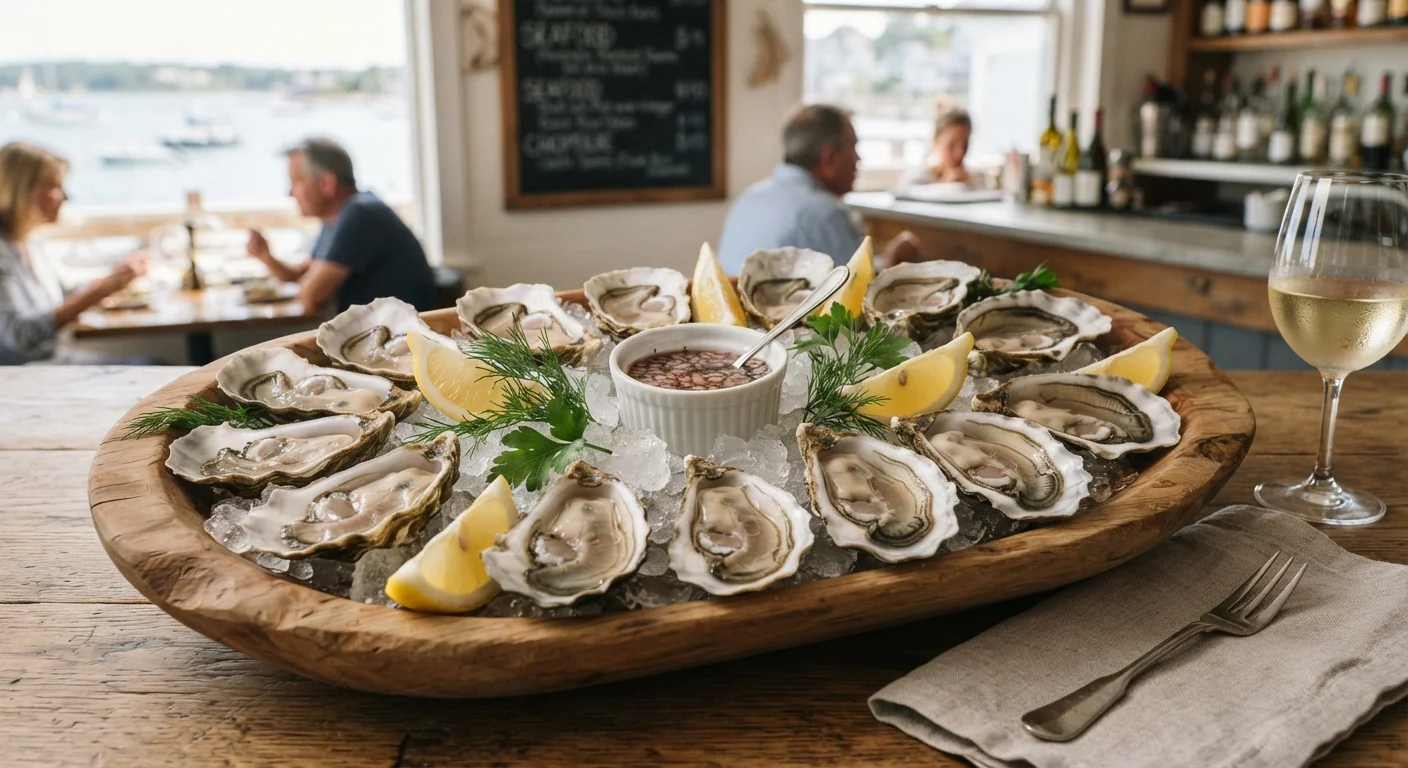
Common accompaniments include mignonette (a simple shallot and vinegar sauce), fresh lemon, cocktail sauce, and hot sauce. These are flavoring choices, not safety measures. If you're curious about how raw bar meals fit into a broader nutritional picture when dining out, our guide to reading a menu nutritionally offers helpful context.
Pairing drinks? Dry, crisp whites and sparkling wines have long been considered complementary, as have light lagers. The goal is something that doesn't overwhelm the delicate brine of the oyster.