

Key Takeaways
Why Kitchen Myths Persist
Food safety advice is everywhere - on social media, passed down in families, embedded in cooking shows. The problem is that a lot of it is wrong, and not harmlessly so. Misconceptions about how bacteria behave, how heat works, and how long food stays safe can translate directly into illness.
Most kitchen myths survive because they seem logical on the surface or because they've never caused an obvious problem - yet. Foodborne illness is frequently underreported, misattributed, or mild enough that people don't connect it to a specific meal. That invisibility makes bad habits feel safe. The evidence, however, tells a different story.
This article breaks down six of the most common food safety myths and replaces them with what food scientists and public health agencies actually recommend. For a parallel look at how misinformation shapes what we eat, see popular nutrition claims that science doesn't fully support.
Food Safety Is a Public Health Issue
The CDC estimates roughly 48 million Americans experience foodborne illness each year. Many cases are preventable with accurate kitchen practices. The myths below are not harmless superstitions - acting on them can put you and your household at real risk.
The Myths - and What's Actually True
Each of the myths below is widely held, easy to believe, and - in the wrong circumstances - genuinely risky. Work through them carefully, and consider which habits in your own kitchen may need a second look.
Myth
If food sits on the floor for five seconds or less, it's safe to eat.
Fact
Bacteria transfer to food almost instantaneously - the length of contact time makes little meaningful difference.
Research published by food scientists has consistently shown that contamination begins the moment food contacts a surface. Wet or sticky foods pick up bacteria faster than dry ones, and a contaminated floor doesn't become safe to eat from simply because contact is brief. The five-second rule is a comforting idea, not a scientific one.
Myth
You should rinse raw chicken before cooking it to remove bacteria.
Fact
Rinsing raw chicken does not remove harmful bacteria and actively spreads them to your sink, countertops, and nearby utensils.
The USDA advises against rinsing raw poultry. Water splashing off the bird can carry pathogens like Salmonella and Campylobacter up to several feet from the sink. Thorough cooking to a safe internal temperature - 165°F for poultry - is the only step that reliably eliminates these bacteria. Rinsing adds risk without providing any safety benefit.
Myth
If meat looks brown or has no pink, it's definitely cooked through.
Fact
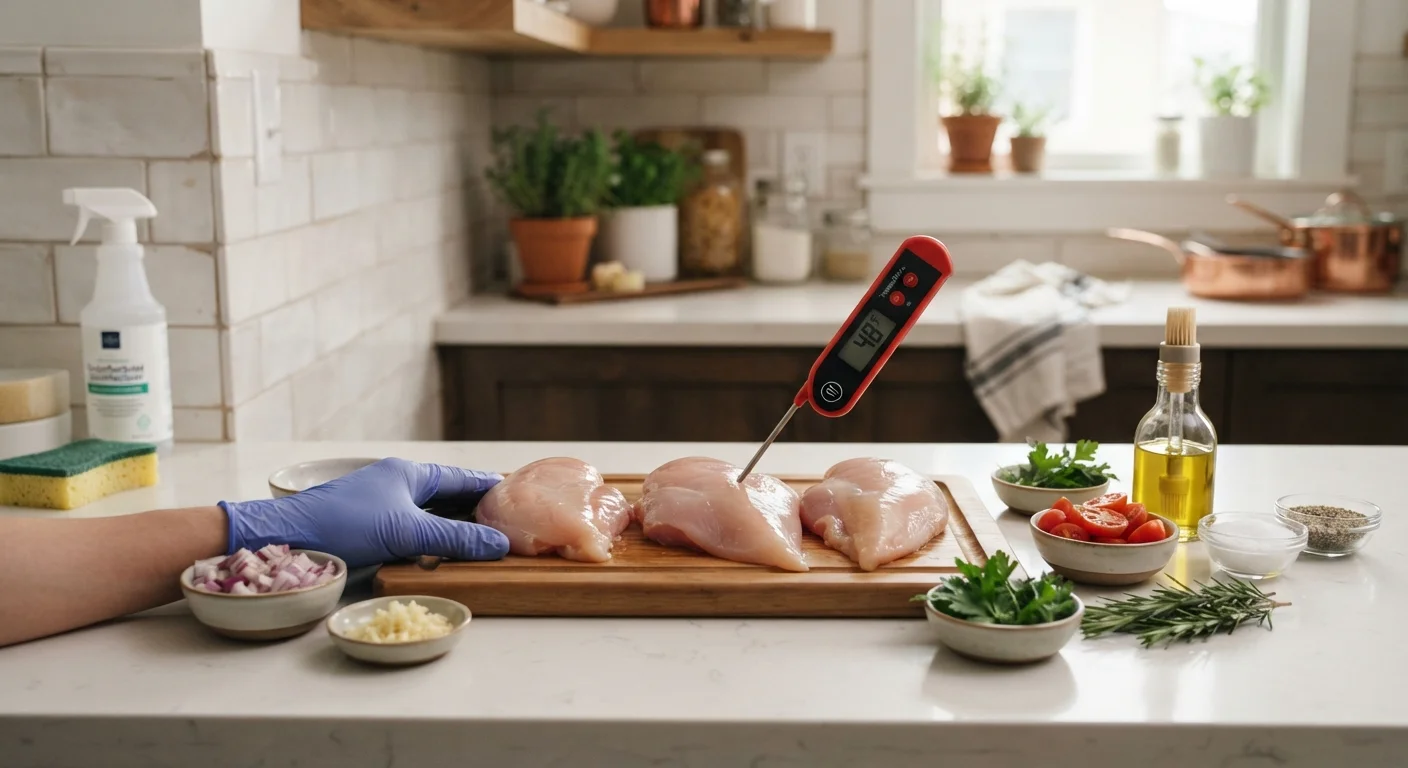
Color is not a reliable indicator of doneness - only a food thermometer confirms a safe internal temperature.
Ground beef can turn brown before it reaches a safe temperature, and some poultry can remain pink even after being fully cooked. The USDA recommends using a calibrated instant-read thermometer: 145°F for whole cuts of beef, pork, lamb, and veal; 160°F for ground meats; and 165°F for all poultry. Relying on color alone has led to real outbreaks of foodborne illness.
Myth
Leftovers stored in the refrigerator are safe to eat indefinitely.
Fact
Refrigeration slows bacterial growth significantly but does not stop it - most cooked leftovers should be consumed within three to four days.
Cold temperatures suppress the growth of many pathogens, but they don't create a sterile environment. Bacteria like Listeria monocytogenes can multiply even at refrigerator temperatures over time. The USDA's general guidance is to consume cooked leftovers within three to four days and to store them in shallow, covered containers to cool quickly and evenly.
Myth
Marinating meat at room temperature is fine as long as you don't leave it too long.
Fact
Meat should always be marinated in the refrigerator, and any marinade that touched raw meat must be cooked or discarded before serving.
At room temperature, bacteria in raw meat multiply rapidly - the danger zone is between 40°F and 140°F. Marinating on the counter accelerates that growth. Additionally, using leftover marinade as a basting sauce or dressing without boiling it first introduces the pathogens from the raw meat directly onto your finished dish.
Myth
A strong smell is the best way to tell whether food has gone bad.
Fact
Many dangerous bacteria produce no detectable odor, taste, or visible change in food.
This is one of the most dangerous myths in home kitchens. Pathogens like Salmonella, E. coli O157:H7, and Listeria can be present in food at harmful levels without any off smell. Food safety professionals use the phrase "when in doubt, throw it out" precisely because sensory cues are unreliable guides to microbial safety.
Food safety connects to a broader pattern of separating credible information from confident-sounding folklore. If you enjoy exploring that theme, the same principle applies to what we read about oysters - things worth knowing before eating raw oysters covers the nuances well.
Building Safer Habits Without Overthinking It
Replacing a myth with a fact is the easy part. Building it into an automatic kitchen habit takes a little more intention.
48 million
Americans affected by foodborne illness annually
According to the Centers for Disease Control and Prevention, approximately 48 million people in the U.S. experience foodborne illness each year, resulting in around 128,000 hospitalizations.
3-4 days
Safe fridge life for most cooked leftovers
The USDA Food Safety and Inspection Service recommends consuming most cooked leftovers within three to four days when stored in the refrigerator at or below 40°F.
165°F
Minimum safe internal temperature for poultry
The USDA specifies 165°F as the safe minimum internal temperature for all poultry, the only reliable way to destroy pathogens like Salmonella and Campylobacter.
A few practical anchors help. Keep a reliable instant-read thermometer within reach and use it consistently - not just for holiday roasts, but for weeknight chicken thighs and burgers too. Label leftovers with the date they were made. Marinate in the fridge, not on the counter. And when something smells fine but has been sitting for six days, trust the calendar over your nose.
None of this requires culinary training or expensive equipment. It requires replacing a few inherited assumptions with accurate ones. If you're also navigating information about what's healthy to eat, separating food myths from evidence-based guidance is worth your time.
This article is for general informational purposes only. For specific health concerns related to foodborne illness, consult a qualified healthcare professional.