

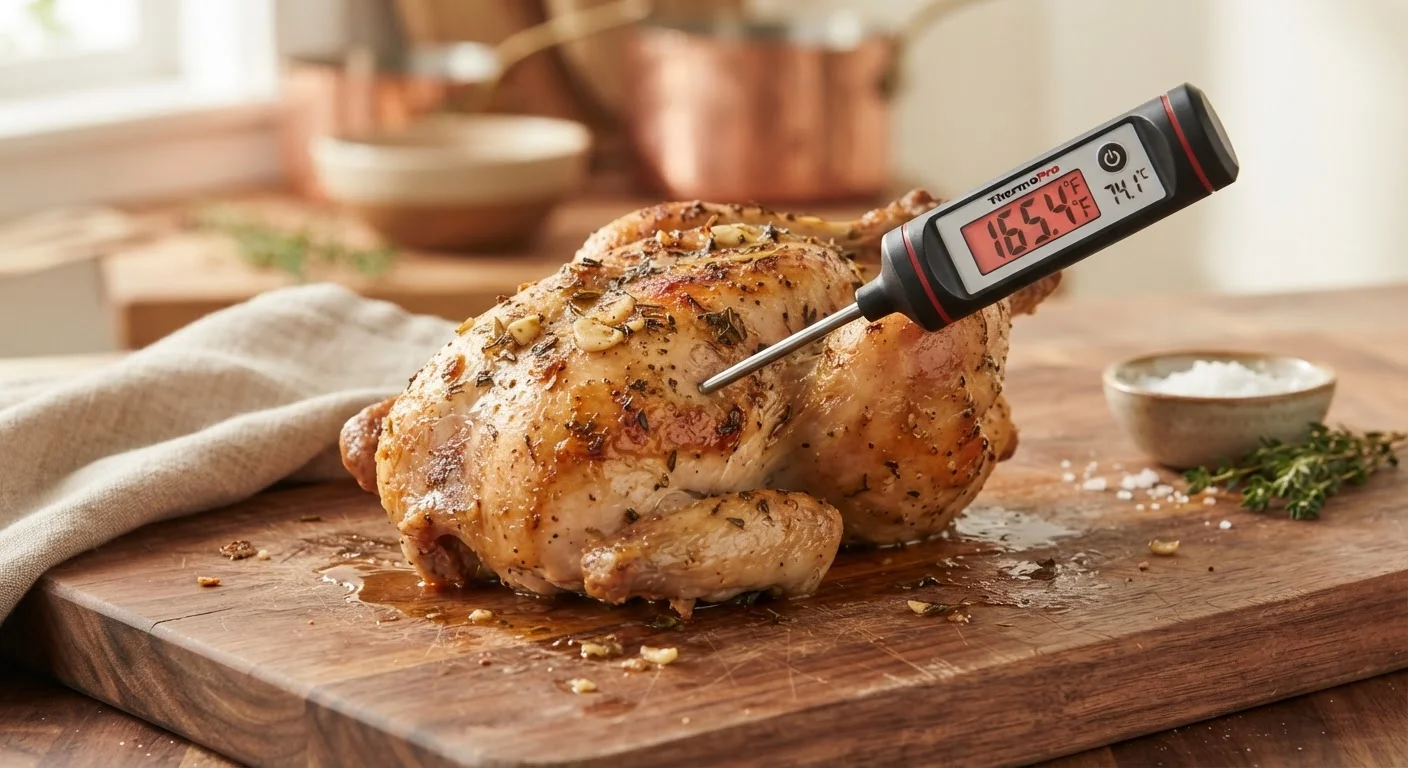
| Safe Temp: All Poultry | 165°F (74°C) (USDA Food Safety and Inspection Service) |
| Safe Temp: Ground Meats | 160°F (71°C) (USDA Food Safety and Inspection Service) |
| Safe Temp: Whole Beef, Pork, Lamb, Veal | 145°F (63°C) + 3-min rest (USDA Food Safety and Inspection Service) |
| Safe Temp: Fish | 145°F (63°C) (USDA Food Safety and Inspection Service) |
| Thermometer Type: Fastest Reading | Instant-read probe (2-5 seconds) |
| Carryover Rise for Large Roasts | Typically 3-5°F after removal from heat |
Why Internal Temperature Is the Only Reliable Test for Doneness
Color, texture, and cooking time are useful guides - but none of them can definitively tell you whether meat is safe to eat. A thick pork chop might look white in the center and still be underdone. A burger can appear brown throughout while its core is still dangerously cold. The only way to know for certain is to measure the internal temperature with a probe thermometer.
Foodborne illness from undercooked meat is a genuine health risk. The pathogens most commonly associated with poultry, ground beef, and pork - including Salmonella and E. coli - are destroyed by heat at specific temperatures. Cooking to those temperatures isn't about preference; it's about ensuring harmful bacteria can't survive. Before you fire up a burner, it also helps to read through the full recipe so you understand the process before the clock starts.
| Safe Temp: All Poultry | 165°F (74°C) (USDA Food Safety and Inspection Service) |
| Safe Temp: Ground Meats | 160°F (71°C) (USDA Food Safety and Inspection Service) |
| Safe Temp: Whole Beef, Pork, Lamb, Veal | 145°F (63°C) + 3-min rest (USDA Food Safety and Inspection Service) |
| Safe Temp: Fish | 145°F (63°C) (USDA Food Safety and Inspection Service) |
| Thermometer Type: Fastest Reading | Instant-read probe (2-5 seconds) |
| Carryover Rise for Large Roasts | Typically 3-5°F after removal from heat |
Safe Minimum Internal Temperatures by Protein
The following targets are based on guidance from the U.S. Department of Agriculture (USDA). Always insert your thermometer into the thickest part of the meat, away from bone, fat, or the pan.
Poultry (Chicken, Turkey, Duck)
All poultry - whole birds, parts, and ground - must reach 165°F (74°C). This applies to breasts, thighs, drumsticks, and any stuffing cooked inside a bird. There is no safe "medium" for chicken.
Ground Meats
Ground beef, pork, veal, and lamb require 160°F (71°C). Because grinding distributes surface bacteria throughout the meat, patties and meatloaves need a higher target than whole cuts of the same animal.
Whole Cuts of Beef, Pork, Veal, and Lamb
Steaks, roasts, chops, and other intact cuts are safe at 145°F (63°C), followed by a three-minute rest. The rest period is part of the process - residual heat continues working through the meat after it leaves the pan or oven.
Fish and Shellfish
Most fish is done at 145°F (63°C), when the flesh flakes easily and appears opaque. Shrimp, lobster, and crabs are done when they turn red and the flesh is pearlescent. Scallops should be milky-white and firm.
Internal Temperature
The temperature measured at the deepest, thickest part of a piece of meat. This reading, not the surface temperature, determines whether the meat has reached a safe level of doneness.
Carryover Cooking
The continued rise in a meat's internal temperature after it is removed from the heat source. Residual heat in the outer layers moves inward, raising the core temperature by several degrees during the rest period.
Rest Period
A period of time - typically three to ten minutes depending on the cut's size - during which cooked meat sits undisturbed before slicing. Resting allows juices to redistribute and carryover cooking to finish.
Instant-Read Thermometer
A handheld probe thermometer that gives a temperature reading within seconds of insertion. It is not left in the meat during cooking but used to spot-check doneness.
Foodborne Pathogen
A microorganism such as Salmonella, E. coli, or Listeria that can contaminate food and cause illness. Many pathogens are destroyed when food reaches specific internal temperatures.
How to Use a Meat Thermometer Correctly
Even a high-quality thermometer gives inaccurate readings if used incorrectly. Follow these steps every time:
- Insert into the thickest part. Avoid bone, which conducts heat differently and will give a falsely high reading.
- Go deep enough. Most probe thermometers need to be inserted at least a half-inch into the meat. Check your thermometer's instructions for its specific sensing zone.
- Wait for the reading to stabilize. Instant-read thermometers typically take 2-5 seconds. Leave-in probes can be monitored continuously during cooking.
- Check more than one spot. For large or uneven cuts, take readings in two or three places.
- Account for carryover cooking. For roasts and thicker cuts, remove from heat when the thermometer reads 3-5°F below the target. Temperature will continue rising during the rest period.
Thermometer Calibration Matters
A thermometer that reads even 5°F off can be the difference between safe and unsafe meat. Test your thermometer by placing the probe in ice water - it should read 32°F (0°C). If it doesn't, calibrate or replace it. Most digital instant-read thermometers have a calibration function described in the manual.
After resting, slice into the meat near the bone or thickest interior point to confirm the color and texture look consistent with what your thermometer reported.
Doneness vs. Safety: Understanding the Difference
Safe and well-cooked are related but not identical. Safety is the minimum - the temperature at which harmful bacteria are reliably destroyed. Doneness is about texture and moisture, and it varies by personal preference for certain cuts.
A medium-rare beef steak at 130-135°F is not USDA-recommended for food safety, but many cooks and diners accept that risk for intact whole cuts because the surface of the meat - where contamination typically exists - has been exposed to high heat. Ground beef, however, has no such margin; the interior must hit 160°F without exception.
Understanding this distinction helps you make informed decisions in the kitchen, especially when cooking for vulnerable individuals. Pregnant people, young children, older adults, and those with compromised immune systems should always eat meat cooked to USDA minimum safe temperatures - no exceptions.
48 million
Americans affected by foodborne illness each year
According to the U.S. Centers for Disease Control and Prevention (CDC), an estimated 48 million people experience foodborne illness annually in the United States.
1 in 6
Americans sickened by contaminated food each year
The CDC reports that roughly one in six Americans gets sick from foodborne illness annually, underscoring why proper cooking temperatures matter.
This article provides general food safety information based on established USDA guidelines. For specific health concerns, consult a qualified healthcare professional.