

Key Takeaways
Option A
Debt Snowball
The momentum-first method built on quick wins.
Best for: People who need visible progress to stay motivated and who have several smaller balances to eliminate early.
Option B
Debt Avalanche
The math-optimized method that minimizes total interest paid.
Best for: People who can stay disciplined over time and want to spend as little on interest as possible.
If you struggle to stay motivated and need fast, visible results
Debt Snowball
Paying off your smallest balances quickly creates psychological momentum that makes it easier to keep going.
If you carry high-interest debt (such as credit cards above 20% APR) and can stay disciplined
Debt Avalanche
Tackling the highest-rate balances first directly reduces how much interest accrues, saving you money over the long run.
If your balances are all similar in size or interest rate
Debt Snowball
When the math difference is small, the motivational edge of the snowball is the decisive factor.
If you have one large, high-interest balance dwarfing everything else
Debt Avalanche
Letting a very high-rate balance grow while you pay off smaller ones can cost significantly more in total interest.
How Each Method Works
Both strategies share the same basic mechanic: you pay the monthly minimum on every debt except one, then direct any extra money toward that one target debt. When it's paid off, you roll that freed-up payment amount onto the next target. The difference is simply how you choose which debt comes first.
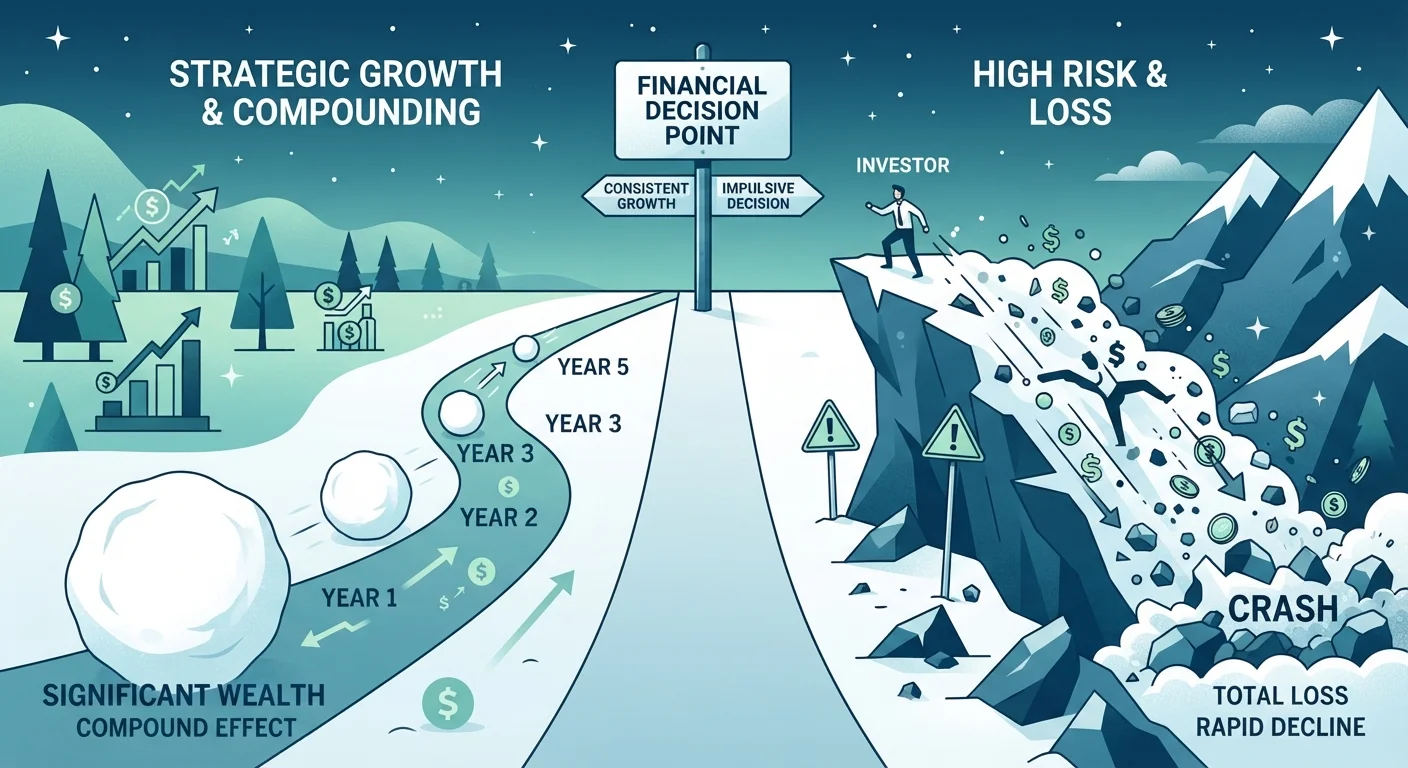
Debt Snowball: Order your debts from the smallest balance to the largest. Ignore interest rates for this ranking. Attack the smallest balance with all extra funds until it's gone, then move to the next smallest. The name reflects how your freed-up payment amount grows as each balance is eliminated - like a snowball rolling downhill.
Debt Avalanche: Order your debts from the highest interest rate to the lowest. Put all extra funds toward the highest-rate balance first. Once it's cleared, redirect those payments to the next highest rate. The avalanche metaphor captures the force of eliminating expensive interest before it compounds further.
For a detailed look at why minimum-only payments are so costly, see how minimum payment math works against you.
| Criterion | Debt Snowball | Debt Avalanche |
|---|---|---|
| Payoff order | Smallest balance first | Highest interest rate first |
| Total interest paid | Typically more | Typically less |
| Time to first payoff | Often faster | Potentially longer |
| Motivational impact | High - quick early wins | Moderate - slower initial progress |
| Math complexity | Simple - just sort by balance | Simple - just sort by rate |
| Best when | You need momentum to stay on track | You can stay consistent without quick wins |
The Real Cost Difference: Interest and Time
In most real-world debt scenarios, the avalanche method results in paying less total interest and can shorten the overall repayment timeline. The gap can be meaningful when high-rate credit card balances are involved - particularly when rates exceed 20% APR, which is common on revolving credit.
However, the snowball method isn't dramatically more expensive in many cases. The actual cost difference depends heavily on the specific balances and rates in your debt mix. If your smallest balance also carries a high rate, the two methods may even produce the same first step.
20%+
Common APR on revolving credit card debt
The Federal Reserve has tracked average credit card interest rates above 20% APR in recent reporting periods, making high-rate debt especially costly to carry.
2x
Debt paid down with account-focused repayment
A 2016 Journal of Marketing Research study found that focusing on eliminating individual accounts led consumers to pay off roughly twice as much debt as those spreading payments across balances.
The key insight from behavioral finance research is that paying off individual accounts - regardless of size - increases the likelihood that people continue making extra payments. A 2016 study published in the Journal of Marketing Research found that consumers who focused on paying off individual accounts (a snowball-style approach) paid down more debt overall than those who distributed payments across multiple balances.
This is why the "best" strategy in theory can underperform in practice if it doesn't match how you're wired to respond to progress.
Choosing the Method That Fits You
Neither method is universally superior. The decision comes down to two honest questions: How motivated do you stay when results are slow to arrive? And how large is the interest-rate spread between your highest- and lowest-rate debts?
If you have a credit card at 24% APR and another at 22% APR, the avalanche's advantage over the snowball is modest. But if you have a 26% store card and a 6% personal loan, letting the store card sit while you clear the small loan first can add up to real money over months or years.
It's also worth knowing that hybrids are allowed. Some people pay off one or two small balances first for the motivational kickstart, then switch to avalanche ordering for the rest. There's no rule against adapting as you go - what matters is that extra payments keep flowing.
If you're also trying to save while paying down debt, balancing debt repayment and saving simultaneously can help you think through that tradeoff. And if you want to understand other approaches entirely, what debt consolidation does and doesn't fix offers a balanced look at that option.
When Your Plan Stops Working
Even a well-chosen strategy can stall if life disrupts your budget. Watch for signs like consistently skipping extra payments or only covering minimums for several months running. Signs your debt repayment plan isn't working can help you recognize these patterns early and course-correct before progress slides backward.
This article is for general informational and educational purposes only and does not constitute personalized financial advice. Please consult a licensed financial professional for guidance tailored to your specific situation.