

Key Takeaways
Simplifies multiple payments into one
Managing five different due dates, minimum amounts, and creditors is mentally taxing. One payment reduces the administrative burden and lowers the risk of missed payments.
May reduce your effective interest rate
If you qualify for a rate lower than your current average across all debts, you could pay less interest overall - especially on high-APR credit card balances.
Fixed repayment timeline can provide clarity
Unlike revolving credit card debt, a consolidation loan typically has a defined end date, which makes it easier to see a finish line and plan around it.
Can reduce monthly payment pressure
A lower monthly payment - even if achieved partly through a longer term - can free up cash flow needed for essentials or an emergency fund.
Doesn't reduce the total amount owed
Consolidation moves your debt, it doesn't shrink it. The principal balance remains the same; only the structure of repayment changes.
Longer terms can increase total interest paid
Stretching repayment from three years to six may feel affordable month-to-month but can cost significantly more in cumulative interest, even at a lower rate.
Risk of accumulating new debt on cleared accounts
Paying off credit cards through consolidation restores available credit. Without firm spending boundaries, running up new balances leaves you worse off than before.
Secured options put assets at risk
Home equity loans or HELOCs used for consolidation convert unsecured debt into debt backed by your home - defaulting can have severe consequences.
Fees can offset interest savings
Origination fees, balance transfer fees, and prepayment penalties vary by lender and can erode the financial benefit of a lower rate, especially on smaller balances.
Our Verdict
Debt consolidation is a legitimate tool that can reduce interest costs and make repayment more manageable - but only when paired with a realistic budget and a commitment to not adding new debt. It restructures what you owe; it doesn't shrink it. Used thoughtfully, it can be one step toward financial stability, but it works best as part of a broader plan rather than a standalone fix.
Best suited to people carrying multiple high-interest debts who qualify for a meaningfully lower rate and have addressed the spending patterns that created the debt in the first place.
What Debt Consolidation Actually Does
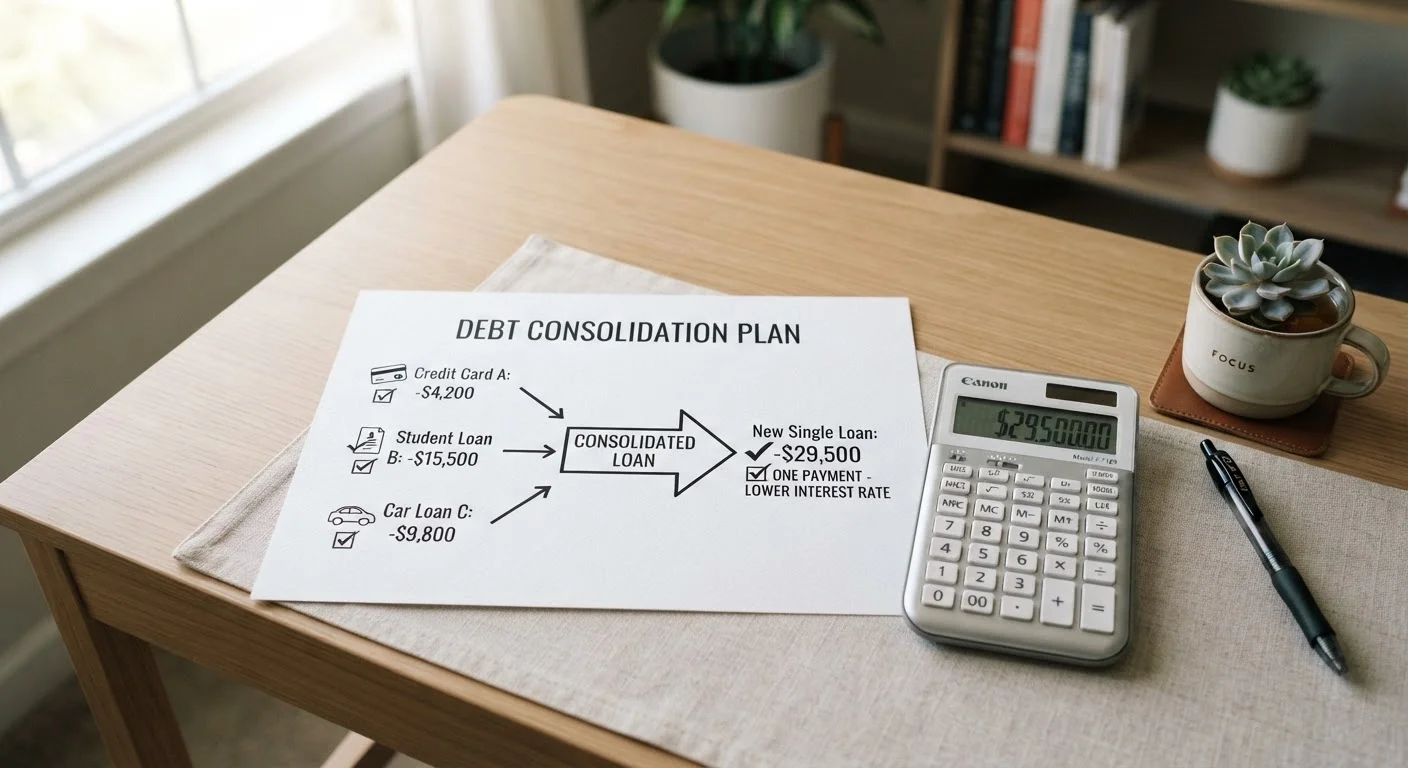
Debt consolidation means taking several separate debts - credit cards, medical bills, personal loans - and combining them into a single new loan or credit line. The goal is usually to secure a lower interest rate, reduce the number of monthly payments to track, or both.
Common methods include personal consolidation loans, balance transfer credit cards (which may offer a low or 0% introductory rate), and home equity loans. Each works differently, carries different risks, and suits different situations. What they share is this: the debt doesn't disappear - it moves.
If your new loan carries a genuinely lower annual percentage rate (APR) than your existing debts, you may pay less in total interest. But that benefit depends heavily on the rate you qualify for, the loan term you choose, and whether you keep spending on the accounts you just paid off. For a broader look at how debt strategy fits into your overall financial picture, see our end-to-end savings and debt guide.
Simplifies multiple payments into one
Managing five different due dates, minimum amounts, and creditors is mentally taxing. One payment reduces the administrative burden and lowers the risk of missed payments.
May reduce your effective interest rate
If you qualify for a rate lower than your current average across all debts, you could pay less interest overall - especially on high-APR credit card balances.
Fixed repayment timeline can provide clarity
Unlike revolving credit card debt, a consolidation loan typically has a defined end date, which makes it easier to see a finish line and plan around it.
Can reduce monthly payment pressure
A lower monthly payment - even if achieved partly through a longer term - can free up cash flow needed for essentials or an emergency fund.
The Risks That Often Go Unmentioned
Consolidation is frequently marketed as a relief solution, but the fine print matters. Extending your repayment period - say, from three years to six - can lower your monthly payment while significantly increasing the total interest you pay over time. A lower monthly bill does not automatically mean a better deal.
There's also the behavioral risk. Paying off several credit cards through consolidation frees up available credit. Without deliberate boundaries, many people run those balances back up, ending up with the consolidated loan and new card debt. This is sometimes called the "double debt" trap, and it's more common than most consolidation guides acknowledge. You can explore common debt misconceptions that make this cycle worse.
Secured consolidation options - like home equity loans - add another layer of risk. Using your home as collateral means that falling behind on payments could put your property at risk. That's a meaningful trade-off that deserves careful consideration before proceeding.
Doesn't reduce the total amount owed
Consolidation moves your debt, it doesn't shrink it. The principal balance remains the same; only the structure of repayment changes.
Longer terms can increase total interest paid
Stretching repayment from three years to six may feel affordable month-to-month but can cost significantly more in cumulative interest, even at a lower rate.
Risk of accumulating new debt on cleared accounts
Paying off credit cards through consolidation restores available credit. Without firm spending boundaries, running up new balances leaves you worse off than before.
Secured options put assets at risk
Home equity loans or HELOCs used for consolidation convert unsecured debt into debt backed by your home - defaulting can have severe consequences.
Fees can offset interest savings
Origination fees, balance transfer fees, and prepayment penalties vary by lender and can erode the financial benefit of a lower rate, especially on smaller balances.
How to Know If It's Worth Considering
Consolidation may be worth exploring if all of the following are true: you qualify for a rate meaningfully lower than your current average, you have stable income to meet the new payment, and you've identified and addressed what drove the debt in the first place.
~20%
Average credit card APR in recent years
The Federal Reserve has tracked average credit card interest rates consistently above 19-20% in recent reporting periods, highlighting how costly carrying balances can be.
1 in 3
Consolidators who accumulate new debt
Research on debt consolidation behavior suggests a significant share of borrowers accrue new balances on accounts paid off through consolidation, negating the initial benefit.
If your credit score is low, you may not qualify for rates that actually improve your situation - and some lenders charge origination fees that offset any interest savings. Run the full numbers: total interest paid under your current plan versus total interest under the new loan, including any fees.
Consolidation is less useful when your debts are already low-interest or near payoff, when you're facing a cash-flow crisis that a single payment won't resolve, or when the root issue is a spending pattern that hasn't changed. Consider comparing it to focused payoff strategies - the debt snowball and avalanche methods may achieve similar or better results without taking on a new loan.
When to Talk to a Nonprofit Credit Counselor
If you're unsure whether consolidation is right for your situation, a nonprofit credit counseling agency can walk through your options without a conflict of interest. They can help you compare consolidation against a debt management plan or other approaches. Look for agencies accredited by the National Foundation for Credit Counseling (NFCC). Initial consultations are often free or low-cost.
Keeping the Bigger Picture in View
Debt consolidation is one tool, not a financial plan. It works best alongside a functional monthly budget and a savings habit - even a small one. Many people assume they must be fully debt-free before saving anything, but building even a modest emergency fund while paying down debt reduces the likelihood of new debt when an unexpected expense hits. See how to pay off debt while saving at the same time for practical guidance on that balance.
If you consolidate and later notice you're back to making only minimum payments on a growing balance, treat that as an early warning sign. Recognizing when a repayment plan isn't working early gives you time to adjust before the situation worsens.
This article is for general informational purposes only and does not constitute personalized financial, legal, or tax advice. For guidance specific to your circumstances, consult a licensed financial professional.