

Key Takeaways
What the Envelope Method Actually Is
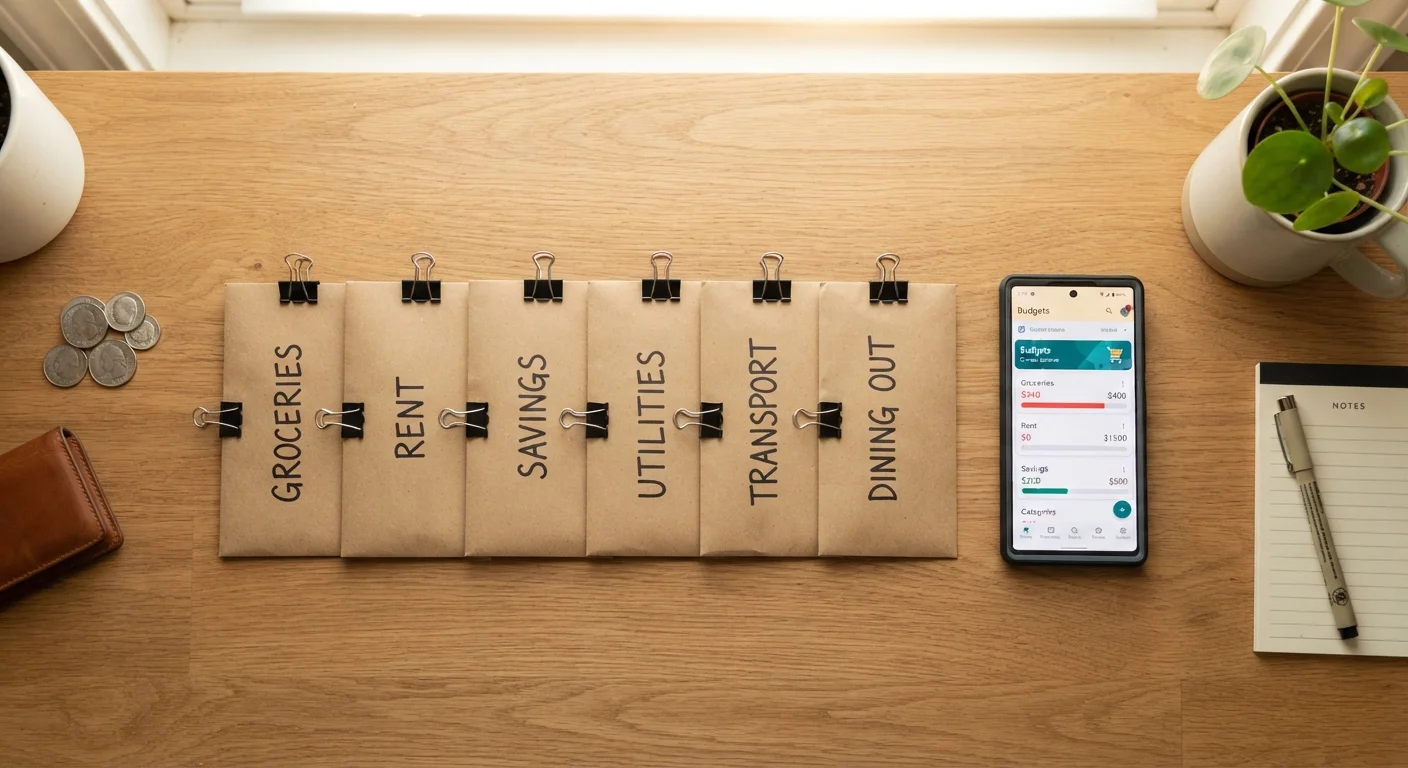
The envelope budgeting system is straightforward: at the start of each pay period, you divide your spending money into physical envelopes, one for each spending category. When an envelope is empty, spending in that category stops until next month. There's no math trick or special formula - the limit is built into the structure itself.
Historically, the system relied on cash. You'd literally stuff bills into envelopes labeled Groceries, Gas, Dining Out, and so on. The tactile friction of handing over physical bills made overspending feel immediate and real in a way that swiping a card does not.
Today, most Americans rarely use cash for everyday purchases. But that doesn't make the envelope method obsolete - it just means the "envelope" is now a concept rather than a physical object. The underlying logic - every dollar has a designated purpose before you spend it - is just as sound as it ever was. For a broader look at how this approach compares to other frameworks, see our overview of envelope budgeting trade-offs.
Focus Envelopes on Variable Spending
The envelope method is most powerful for spending categories that fluctuate from week to week - groceries, dining, entertainment, and personal care. Fixed bills like rent, insurance, and loan payments don't benefit from envelopes because you can't control their amounts month to month. Keeping envelopes focused prevents the system from becoming overwhelming.
Tools and What You'll Need
Before you set up your system, gather a few pieces of information and decide on your preferred format. You don't need any paid software to make this work.
What you will need
Bank sub-accounts or savings buckets
Many banks allow you to create named sub-accounts within a single checking or savings account, functioning as digital envelopes.
Spreadsheet (Google Sheets or Excel)
A simple spreadsheet lets you track envelope balances manually, with full control over categories and amounts.
Envelope-style budgeting app
Apps built around category-based spending limits can automate transaction sorting and balance tracking.
Past spending statements
Two to three months of actual spending data helps you set realistic envelope amounts rather than guessing.
How to Set Up Your Digital Envelopes
Follow these steps to build a functional envelope system without relying on physical cash. If you're starting from scratch with your overall budget, our guide on building a monthly budget from the ground up covers the foundational steps that complement this method well.
List your spending categories
Write down every variable spending category you have: groceries, dining out, gas, clothing, entertainment, personal care, and any others that apply to your life. Keep the list focused - too many categories creates friction you won't maintain. Aim for six to ten envelopes to start. Fixed expenses like rent and insurance don't need envelopes because their amounts don't vary month to month.
Assign a realistic dollar amount to each category
Use your spending history, not wishful thinking. If you averaged $380 on groceries last month, setting the envelope at $200 will set you up to fail. You can always tighten limits gradually once you've established the habit. Total all envelope amounts together with your fixed expenses, and confirm the sum does not exceed your monthly take-home pay. If it does, something needs to be reduced. Our guide to the 50/30/20 rule can help you think about appropriate proportions for needs versus wants.
Create your digital envelopes
Choose your preferred method and set it up before the new month begins. If using bank sub-accounts, open and label each one to match your categories. If using a spreadsheet, create a simple table with columns for category name, budgeted amount, amount spent, and remaining balance. If using an app, create spending categories and enter the limit for each one.
Allocate your income at the start of each pay period
When your paycheck arrives, immediately move or assign money to each envelope. If you're paid twice a month, divide each envelope's monthly amount in half and fund it each pay period. This step is non-negotiable - allocating after the fact defeats the purpose of the system. The goal is that every dollar is spoken for before you spend it, not accounted for after.
Track spending against each envelope throughout the month
Each time you make a purchase, subtract it from the relevant envelope balance. If you're using a spreadsheet, update it the same day. If you're using an app, check that transactions are categorized correctly - auto-categorization is often wrong. A quick two-minute review each evening or every other day is enough to stay on top of balances. This is the habit that makes the system work; skipping it for a week tends to snowball.
Review and adjust at month-end
At the end of the month, note which envelopes ran out early, which had money left over, and whether any category was missing entirely. Use this information to adjust amounts for the coming month. The first two or three months are a calibration period - some envelope amounts will be wrong, and that's expected. Consistent adjustment is how the system gets accurate over time. Any leftover envelope funds can be swept into savings or used to pay down debt. For ideas on where to direct surplus funds, see our saving and debt resources.
Staying Consistent and Troubleshooting Common Problems
The setup is only half the work. Most people who abandon envelope budgeting do so not because the system is flawed, but because real life creates friction the system didn't account for.
When an envelope runs out early
This is not a failure - it's the system working. You have two honest choices: stop spending in that category, or consciously transfer from a lower-priority envelope. What you should avoid is quietly ignoring the limit. The discipline of making that trade-off explicit is precisely what builds financial awareness over time.
Irregular or annual expenses
Bills like car insurance, holiday gifts, or annual subscriptions can blow up a monthly system if not anticipated. Create a dedicated "sinking fund" envelope for irregular costs and contribute a fixed monthly amount toward it. For example, if you typically spend $600 on holiday gifts, you might allocate $50 per month to that envelope starting in January.
Shared finances
If you share expenses with a partner, agree on envelope amounts together before the month starts. Unilateral changes mid-month are a common source of conflict. A quick weekly check-in - even five minutes - keeps both people aligned.
For broader habits that support any budgeting approach, see our article on budgeting habits that hold up over time. If you're curious how the envelope method stacks up against other structures, zero-based vs. percentage-based budgeting is a useful comparison.
Avoid the Temptation to Over-Borrow Between Envelopes
Moving money between envelopes is legitimate when it's a deliberate trade-off - for example, spending less on dining out so you can cover an unexpected car repair. But if you routinely raid lower-priority envelopes to fund overspending in others, you're no longer budgeting; you're just tracking. If this pattern appears, it usually means your envelope amounts are set unrealistically rather than that the method doesn't work.
This article is for general informational and educational purposes only and does not constitute personalized financial advice. Consider consulting a qualified financial professional for guidance specific to your situation.