

Key Takeaways
Why Grocery Stores Are Built to Influence You
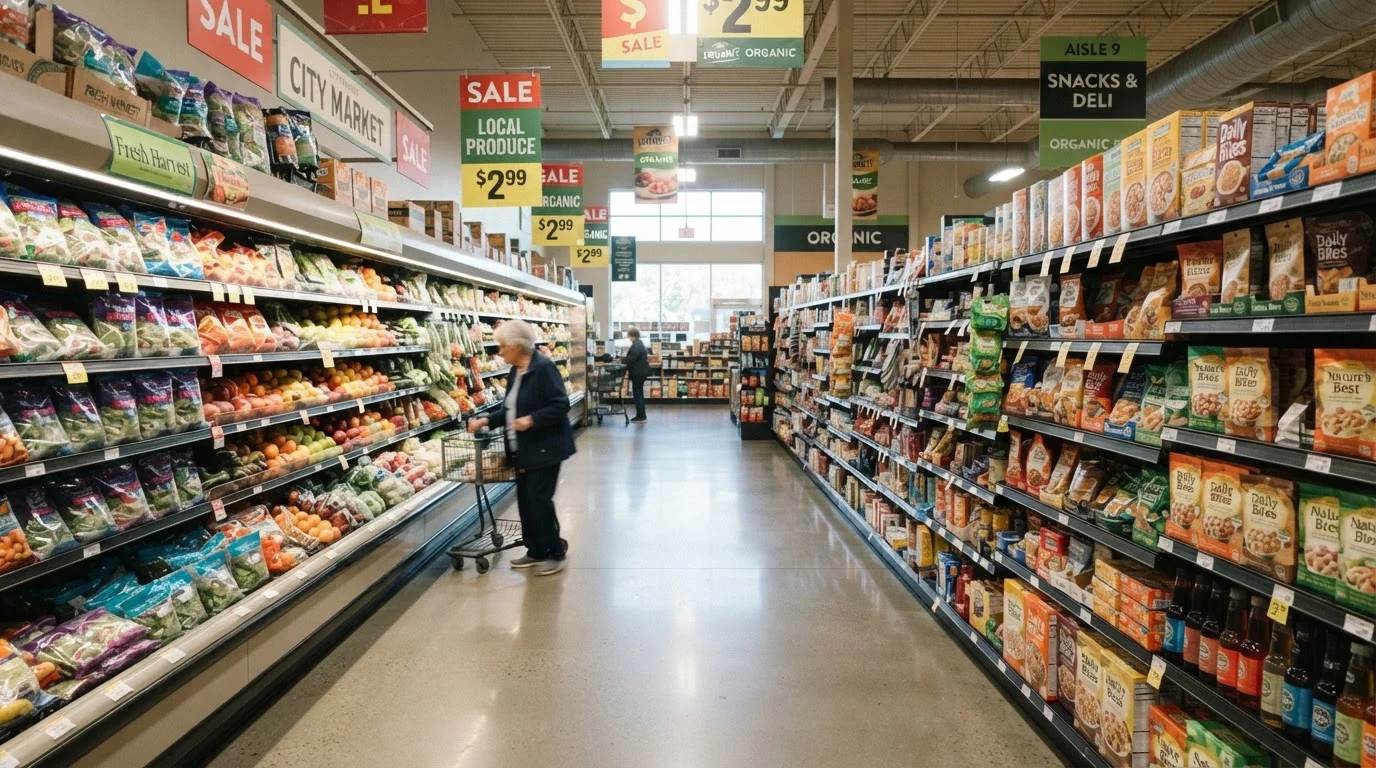
Walking into a grocery store feels routine, but the environment around you has been carefully constructed. Store designers and retail teams spend considerable effort on layout, lighting, signage, and shelf placement - all with the goal of keeping you in the store longer and encouraging you to add more to your cart.
None of this is hidden or necessarily predatory. But being aware of these common tactics puts you in a better position to shop deliberately rather than reactively. Paired with strategies like shopping your pantry first, understanding store design is one of the most practical tools in a budget-conscious shopper's toolkit.
Here are some of the most widely used grocery store pricing and placement tactics - and straightforward ways to navigate each one.
The Perimeter Layout Pushes Staples to the Edges
Most grocery stores place essential items - produce, dairy, meat, and bread - along the outer edges of the store. To reach them, you pass through interior aisles stocked with higher-margin processed goods. The longer your path, the more items you encounter.
What to do: Map out your typical route mentally before you enter. If you only need perimeter staples, you can often avoid most interior aisles entirely - and the temptations that come with them.
Staples placed at the edges mean you walk past high-margin goods to reach them.
Eye-Level Shelves Feature the Highest-Margin Products
Products at eye level tend to be those with the highest profit margins - often national brands that pay for premium shelf placement. Identical or comparable generic products are frequently stocked on lower shelves, out of casual sight lines.
What to do: Make a habit of checking shelves above and below eye level, especially for staple items like canned goods, cereals, and condiments. Store brands are often manufactured by the same suppliers as name brands, with different packaging.
Eye-level shelves favor high-margin items; look up and down for comparable alternatives.
"10 for $10" and Bulk Deals May Not Require Buying in Bulk
Multi-buy promotions like "4 for $5" or "buy 2, get 1 free" are designed to increase your total spend. In many cases, the per-unit price is the same whether you buy one or four - but the framing nudges you toward a larger purchase.
What to do: Check whether the deal actually requires you to buy the full quantity to get the discount. Read the fine print on the shelf tag. If you don't need six cans of soup this week, buying one at the same effective price is the smarter move.
Multi-buy deals often don't require bulk purchases - check the fine print before loading your cart.
Unit Prices Tell the Real Story
Package sizes and price points vary widely, making it hard to compare value at a glance. A larger container might look like a better deal but cost more per ounce than a smaller one on sale. Stores are required to display unit prices on shelf tags in most U.S. states, but they're easy to overlook.
What to do: Always compare unit prices - usually shown as price per ounce, per count, or per pound - rather than the total sticker price. Most smartphone calculator apps make this quick if the label isn't clear.
The unit price - not the sticker price - reveals which size or brand actually costs less.
End-Cap Displays Create a False Sense of a Deal
The displays at the end of aisles - called end caps - are prime retail real estate. Shoppers often assume end-cap products are on sale because they're prominently featured. Frequently, they are not. Brands pay for end-cap placement as a marketing tool, not necessarily to pass savings to consumers.
What to do: Treat end-cap products the same as any other item - check the price, compare to alternatives, and buy only if it fits your list and your budget. Prominence is not the same as value.
End-cap placement signals prominence, not necessarily a price reduction - always verify.
Loss Leaders Draw You In, But Watch What Else Lands in Your Cart
A loss leader is a product priced at or below cost to attract shoppers to the store. Common examples include deeply discounted rotisserie chicken, milk, or eggs. The strategy works because most shoppers don't leave with just the loss-leader item - they fill their carts while they're there.
What to do: There's nothing wrong with taking advantage of a genuine deal on something you actually need. The key is arriving with a list and sticking to it, so a good price on one item doesn't become permission to spend freely on everything else. If you're building broader spending discipline, automating your savings can help ensure grocery overages don't derail your monthly goals.
Loss leaders are real savings - but only if you don't overspend on everything else around them.
Shop With Intention, Not Reaction
Grocery stores are expert environments. They've been refined over decades to encourage spending, and they're very good at it. But knowing the playbook doesn't mean you have to resist every signal - it means you can engage on your own terms.
Make Your List Before You're Hungry
Shopping while hungry is one of the most reliably documented contributors to unplanned grocery spending. Writing your list at home - ideally after a meal - helps you plan from actual need rather than in-the-moment appetite. A list created after checking what's already in your pantry is even more effective at reducing both waste and overspending.
A written or digital shopping list remains one of the most effective tools against in-store impulse decisions. Research consistently shows that shoppers without lists spend more and return home with items they didn't plan to buy. If you find yourself frequently overspending at the grocery store, it may also be worth looking at how you handle impulse purchases more broadly - the same psychology applies well beyond the cereal aisle.
For more on building deliberate financial habits around everyday spending, the Budgeting Basics hub is a useful starting point.
This article is for general informational purposes only and does not constitute financial advice. Consult a qualified financial professional for guidance specific to your situation.