

Key Takeaways
Neutral third-party assessment with no sales conflict
An independent mechanic has no stake in the transaction, so their findings reflect the vehicle's actual condition - not what the seller needs you to believe.
Uncovers hidden mechanical and structural issues
A lift inspection can reveal frame damage, oil leaks, rust, worn suspension components, and brake wear that are invisible during a test drive or cursory walk-around.
Creates concrete negotiating leverage
A written list of needed repairs gives you a factual basis to request a price reduction or ask the seller to address specific items before the sale closes.
Low cost relative to potential repair exposure
Most inspections cost $100-$200. A single major undisclosed repair - transmission, head gasket, or structural damage - can easily cost ten times that amount or more.
Provides documented peace of mind
A clean inspection report is tangible confirmation that the vehicle is mechanically sound, which is especially valuable for buyers without automotive expertise.
Adds time and coordination to the buying process
Scheduling and completing an inspection can add one to several days to a purchase timeline, which can be a disadvantage in competitive used-car markets where inventory moves quickly.
Upfront cost even if you walk away
You pay the inspection fee regardless of outcome - if the vehicle fails inspection and you decline the purchase, that cost is not recoverable.
Does not catch every possible problem
Intermittent faults, early internal engine wear, and certain transmission issues may not manifest during a standard inspection, meaning some risk always remains.
Seller or dealer may refuse or restrict access
Not every seller will agree to an off-site inspection, and some may impose conditions that limit the mechanic's access to the vehicle or time with it.
Our Verdict
For most used-car buyers, the modest cost of an independent pre-purchase inspection is well-justified. It removes the information gap between seller and buyer, surfaces problems that may not be visible during a test drive, and either confirms the vehicle is sound or gives you hard data to negotiate or walk away. No inspection eliminates all risk, but an independent one from a qualified mechanic gives you the clearest picture available.
Any buyer considering a used vehicle purchase - especially private-party sales or vehicles without a verifiable service history - where the stakes of an undisclosed mechanical problem are high.
What an Independent Pre-Purchase Inspection Actually Is
A pre-purchase inspection (PPI) is a thorough mechanical evaluation of a used vehicle carried out by a mechanic who has no financial stake in whether the sale goes through. Unlike an inspection performed by the selling dealership's service department, an independent mechanic works only for you.
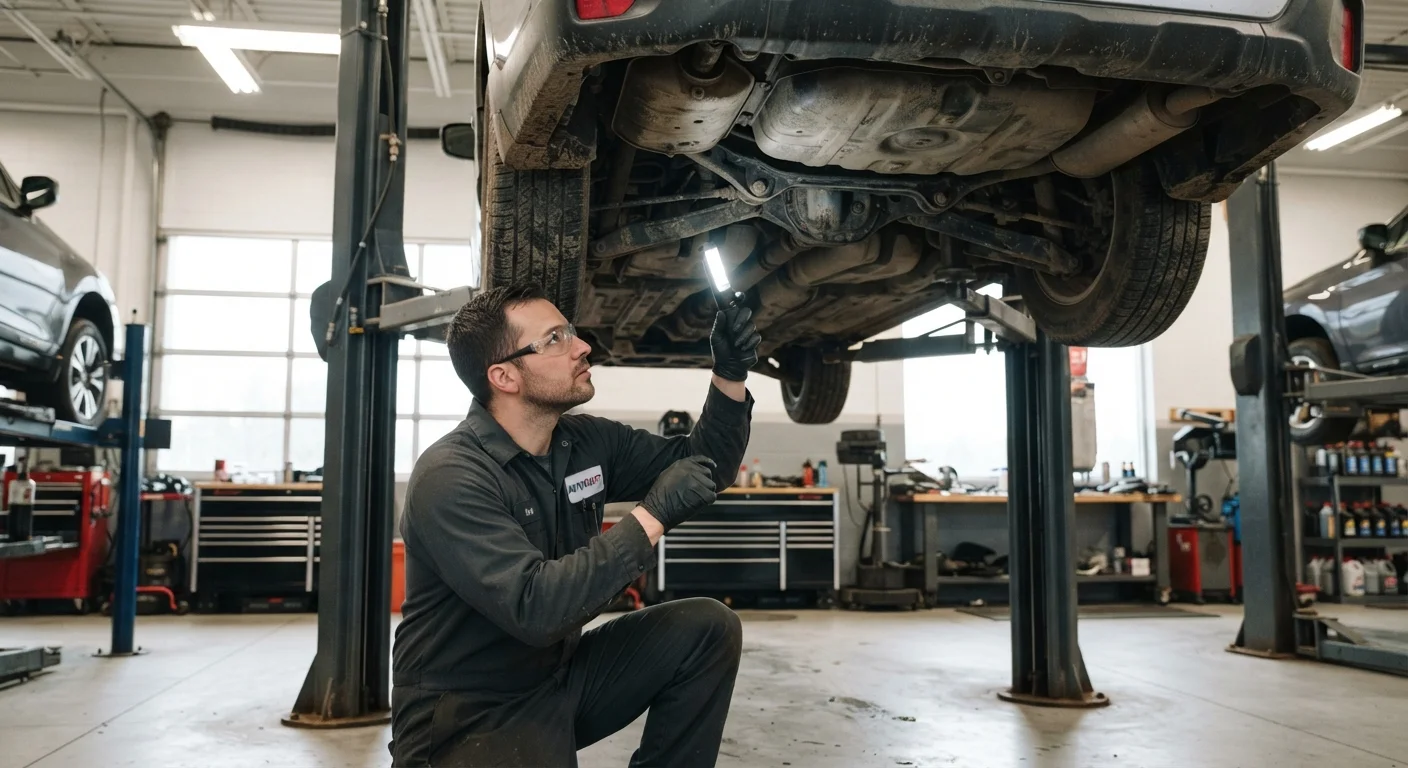
A typical PPI covers the engine, transmission, brakes, suspension, steering, exhaust, tires, body condition, and electrical systems. The mechanic will put the car on a lift, check for fluid leaks, look for signs of prior collision repair, scan for stored diagnostic trouble codes, and road-test the vehicle. You receive a written summary of findings - not a sales pitch.
This is distinct from what a pre-purchase visual checklist can accomplish on your own. Your own walk-around is useful, but it can't replicate the diagnostic tools and trained eye of an experienced mechanic.
Neutral third-party assessment with no sales conflict
An independent mechanic has no stake in the transaction, so their findings reflect the vehicle's actual condition - not what the seller needs you to believe.
Uncovers hidden mechanical and structural issues
A lift inspection can reveal frame damage, oil leaks, rust, worn suspension components, and brake wear that are invisible during a test drive or cursory walk-around.
Creates concrete negotiating leverage
A written list of needed repairs gives you a factual basis to request a price reduction or ask the seller to address specific items before the sale closes.
Low cost relative to potential repair exposure
Most inspections cost $100-$200. A single major undisclosed repair - transmission, head gasket, or structural damage - can easily cost ten times that amount or more.
Provides documented peace of mind
A clean inspection report is tangible confirmation that the vehicle is mechanically sound, which is especially valuable for buyers without automotive expertise.
The Real Limits of Seller and Dealership Inspections
Dealerships and private sellers both have an incentive to present a vehicle favorably. Even a certified pre-owned designation does not guarantee a neutral inspection - CPO standards vary significantly between manufacturers, and the inspection is performed by the selling organization itself.
This isn't necessarily bad faith. It's simply an inherent structural limitation. A mechanic who works for the seller cannot be fully independent, regardless of their personal integrity. An independent shop has no incentive to downplay problems or omit findings to close a deal.
Adds time and coordination to the buying process
Scheduling and completing an inspection can add one to several days to a purchase timeline, which can be a disadvantage in competitive used-car markets where inventory moves quickly.
Upfront cost even if you walk away
You pay the inspection fee regardless of outcome - if the vehicle fails inspection and you decline the purchase, that cost is not recoverable.
Does not catch every possible problem
Intermittent faults, early internal engine wear, and certain transmission issues may not manifest during a standard inspection, meaning some risk always remains.
Seller or dealer may refuse or restrict access
Not every seller will agree to an off-site inspection, and some may impose conditions that limit the mechanic's access to the vehicle or time with it.
How to Arrange One and What to Expect
The process is straightforward. Search for an ASE-certified independent shop near you or near the vehicle's location. Call ahead to confirm they perform pre-purchase inspections and ask what the service includes. Most charge between $100 and $200, though specialty or high-end vehicles may cost more.
For a dealership vehicle, request permission to take the car off-site for the inspection, or ask whether the mechanic can come to them. Many dealers will allow this for a serious buyer. For a private-party sale, the seller should be willing to permit an inspection as a condition of purchase - hesitation or refusal is itself a red flag worth noting.
Seller Refuses an Inspection? Take Note.
A seller who declines to allow an independent inspection - without a reasonable logistical explanation - is a meaningful caution sign. While refusal doesn't automatically mean something is wrong, it removes the one tool that gives you a neutral mechanical assessment. Serious sellers generally welcome inspections because they validate the vehicle's condition and support their asking price.
Once complete, go through the findings carefully. A list of minor wear items is normal; a pattern of deferred maintenance or signs of hidden damage is not. If significant issues emerge, you may be able to negotiate a price reduction, request repairs before purchase, or simply walk away - all better outcomes than discovering the same problems after the title transfers.
Keep in mind that even a thorough inspection has limits: intermittent electrical faults, early-stage internal engine wear, and transmission issues that only appear under load can sometimes evade detection. An inspection substantially reduces risk; it does not eliminate it entirely.
Putting It in Context: Is the Cost Worth It?
Consider that a single overlooked repair - a failing automatic transmission, a cracked engine block, or extensive rust under a respray - can run from several hundred to several thousand dollars. Weighed against a $150 inspection fee, the math strongly favors the inspection.
$100-$200
Typical cost of an independent PPI
Most ASE-certified independent shops charge within this range for a standard pre-purchase inspection, with higher fees for luxury or specialty vehicles.
$1,000+
Average cost of a missed major repair
Common undisclosed issues such as transmission problems, suspension damage, or coolant system failures regularly exceed $1,000 in repair costs when discovered after purchase.
There's also a less-discussed benefit: if the inspection comes back clean, you gain genuine confidence in the purchase. That peace of mind has real value, particularly for buyers who aren't mechanically experienced and would otherwise be relying on hope.
It's also worth keeping in mind that catching problems early is always cheaper than addressing them after they escalate - a principle that applies equally to vehicles you already own, as outlined in our coverage of how small car problems become expensive ones. Once you've made your purchase and have questions about ongoing care, the car maintenance hub covers the upkeep essentials.
Before you leave the lot, it's also worth reviewing the questions worth asking before signing - an inspection gives you the mechanical picture; those questions fill in the contractual and warranty gaps.