

Key Takeaways
Lower premiums for safe, low-mileage drivers
Drivers who brake smoothly, avoid late-night trips, and log fewer miles are often rewarded with meaningful discounts at renewal - sometimes in the range of 10-30%, though results vary widely by insurer and individual profile.
Pricing reflects actual behavior, not just demographics
Traditional rating factors like age and ZIP code can penalize careful drivers unfairly. Telematics gives drivers a way to demonstrate safe habits directly, potentially overriding unfavorable demographic assumptions.
Pay-per-mile plans suit irregular or low-mileage drivers
If you drive significantly fewer miles than the national average, flat-rate premiums effectively charge you to subsidize higher-mileage drivers. Pay-per-mile pricing aligns cost more closely with actual road exposure.
Can encourage safer driving habits
Knowing that hard braking and phone use are being tracked creates a feedback loop that some drivers find motivates more attentive behavior behind the wheel.
Risky driving behavior can raise your rate
Telematics works both ways. If your data reveals frequent hard braking, late-night driving, or speeding events, your insurer may use that to justify a higher premium at renewal rather than a discount.
Significant personal data collection involved
These programs gather detailed location history, driving times, and behavioral data over extended periods. Drivers with privacy concerns should carefully review data retention and sharing policies before enrolling.
High-mileage drivers save little or pay more
For drivers who routinely log 15,000-20,000 miles annually, pay-per-mile costs can exceed standard premiums. UBI programs generally don't reward mileage that's above average.
App-based programs rely on consistent smartphone use
Smartphone-based telematics requires the app to be active on every trip. Forgotten sessions, phone switching, or battery issues can create gaps in your record or be logged as adverse events.
Our Verdict
Usage-based and pay-per-mile insurance offer a compelling alternative to traditional flat-rate pricing, particularly for drivers who log fewer miles or demonstrate consistently safe habits. However, the data collection involved and potential rate increases for riskier driving make these models a mixed proposition. They work best as a pricing tool rather than a universal upgrade.
Drivers who commute infrequently, work from home, or have strong safe-driving records and are comfortable sharing telematics data with their insurer.
What Usage-Based Insurance Actually Is
Traditional auto insurance prices your policy using static factors - your age, ZIP code, credit history, and driving record. Usage-based insurance (UBI), sometimes called telematics insurance, adds a live behavioral layer: it monitors how you actually drive and adjusts your pricing accordingly. For a broader look at how standard premiums are calculated, see what determines your car insurance premium.
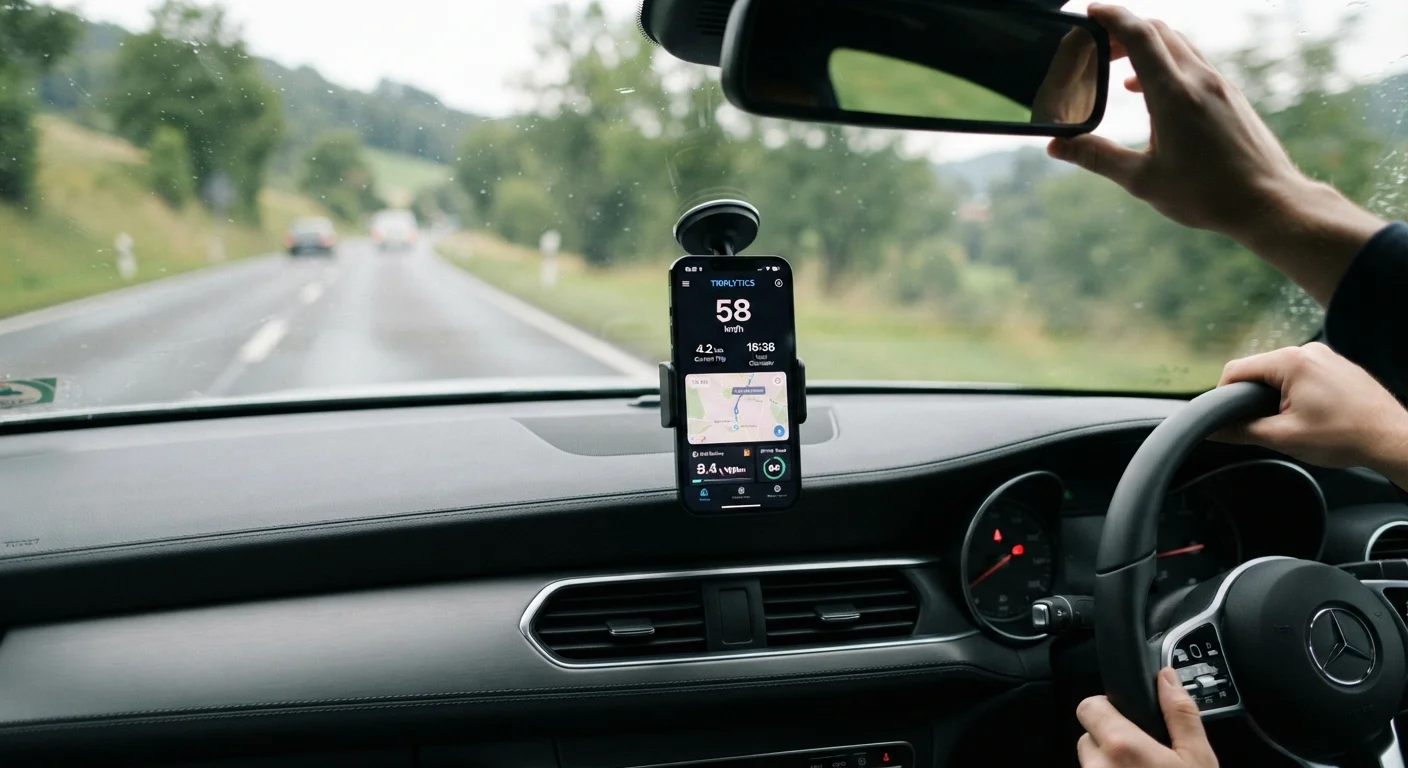
Most UBI programs work through a plug-in device (OBD-II dongle) or a smartphone app. These tools collect data such as:
- Miles driven
- Time of day you drive (nighttime driving is considered higher risk)
- Hard braking and rapid acceleration events
- Phone use while driving (via app-based programs)
- Speed relative to posted limits
Insurers use this data to build a behavioral score. Drivers with high scores - smooth, cautious, low-mileage - typically qualify for discounts at renewal. Drivers whose data reveals riskier habits may see their rate remain flat or increase.
UBI Programs Are Enrollment-Based
You typically opt into a usage-based program - your insurer won't automatically switch you to telematics pricing. Enrollment periods, discount caps, and how behavioral data affects renewal rates differ across providers. Always read the specific program terms before agreeing to data collection.
How Pay-Per-Mile Insurance Differs
Pay-per-mile insurance is a specific subset of UBI that focuses almost entirely on distance rather than behavior. Your monthly premium has two components: a fixed base rate that covers your vehicle when it's parked or minimally used, and a per-mile rate that accumulates as you drive.
For example, a driver might pay a $30 base rate plus $0.06 per mile. A month with 400 miles of driving would cost $54. A month with 900 miles would cost $84. The math rewards anyone who drives less than average - generally considered under 10,000-12,000 miles per year.
~37%
U.S. drivers who drive under 10,000 miles/year
Federal Highway Administration data consistently shows a substantial share of American drivers fall below the commonly cited 12,000-mile annual average, making pay-per-mile pricing potentially advantageous for them.
Up to 30%
Potential discount range cited by some UBI programs
Insurers offering telematics programs generally advertise maximum possible discounts in this range, though actual savings depend heavily on individual driving data and vary by provider.
Pay-per-mile plans are well-suited to drivers who work remotely, live in walkable urban areas, use public transit for most trips, or own a second vehicle that rarely moves. If you're also navigating insurance for a young driver on your policy, how auto insurance works differently for teen drivers explains how mileage and behavior data interact with high-risk rating factors for younger motorists.
The Pros and Cons of Telematics-Based Pricing
These programs have genuine upsides for certain drivers - but they also come with trade-offs that are worth understanding before you enroll.
Lower premiums for safe, low-mileage drivers
Drivers who brake smoothly, avoid late-night trips, and log fewer miles are often rewarded with meaningful discounts at renewal - sometimes in the range of 10-30%, though results vary widely by insurer and individual profile.
Pricing reflects actual behavior, not just demographics
Traditional rating factors like age and ZIP code can penalize careful drivers unfairly. Telematics gives drivers a way to demonstrate safe habits directly, potentially overriding unfavorable demographic assumptions.
Pay-per-mile plans suit irregular or low-mileage drivers
If you drive significantly fewer miles than the national average, flat-rate premiums effectively charge you to subsidize higher-mileage drivers. Pay-per-mile pricing aligns cost more closely with actual road exposure.
Can encourage safer driving habits
Knowing that hard braking and phone use are being tracked creates a feedback loop that some drivers find motivates more attentive behavior behind the wheel.
Risky driving behavior can raise your rate
Telematics works both ways. If your data reveals frequent hard braking, late-night driving, or speeding events, your insurer may use that to justify a higher premium at renewal rather than a discount.
Significant personal data collection involved
These programs gather detailed location history, driving times, and behavioral data over extended periods. Drivers with privacy concerns should carefully review data retention and sharing policies before enrolling.
High-mileage drivers save little or pay more
For drivers who routinely log 15,000-20,000 miles annually, pay-per-mile costs can exceed standard premiums. UBI programs generally don't reward mileage that's above average.
App-based programs rely on consistent smartphone use
Smartphone-based telematics requires the app to be active on every trip. Forgotten sessions, phone switching, or battery issues can create gaps in your record or be logged as adverse events.
One thing these programs do not change: the underlying coverage you carry. Whether you have liability-only or full coverage still matters separately from how that coverage is priced. If you're unclear on those distinctions, liability, collision, and comprehensive coverage explained provides a clear breakdown.
Privacy and Data Considerations
Enrolling in a telematics program means sharing detailed, real-time driving data with your insurer. Most programs disclose what they collect in their terms of service, but the volume of data can be significant - including location, time-of-day patterns, and driving behavior aggregated over months.
Key questions to ask before enrolling include: Can the data be shared with third parties? How long is it retained? Can it be used in a claim dispute? Policies vary by provider, so reviewing the specific program's privacy documentation matters. For a solid grounding in how auto insurance works overall before evaluating these newer models, auto insurance decoded is a useful starting point.
These programs are also voluntary in most cases. You can typically opt out if you find the data-sharing terms unfavorable, though you'll lose any associated discount.
This article provides general information about insurance pricing models and is not personalized insurance or financial advice. Coverage terms, availability, and pricing vary by insurer, state, and individual circumstances. Consult a licensed insurance agent for guidance specific to your situation.