

Key Takeaways
Why Travel Budgets Fall Apart Before You Even Leave Home
A flight looks affordable. The hotel rate seems reasonable. You do the math, feel confident, and book - only to land at your destination and discover the trip costs noticeably more than expected. This is one of the most common frustrations in travel planning, and it rarely comes from one big surprise. It comes from a handful of smaller, easily overlooked charges that compound quietly.
These aren't obscure traps. They're standard parts of the travel industry that aren't always surfaced upfront. Understanding them is the first step toward building a budget that actually holds. See our guide to building a realistic travel budget for a full framework on estimating total trip costs before you commit.
Ignoring mandatory resort fees when comparing hotel rates.
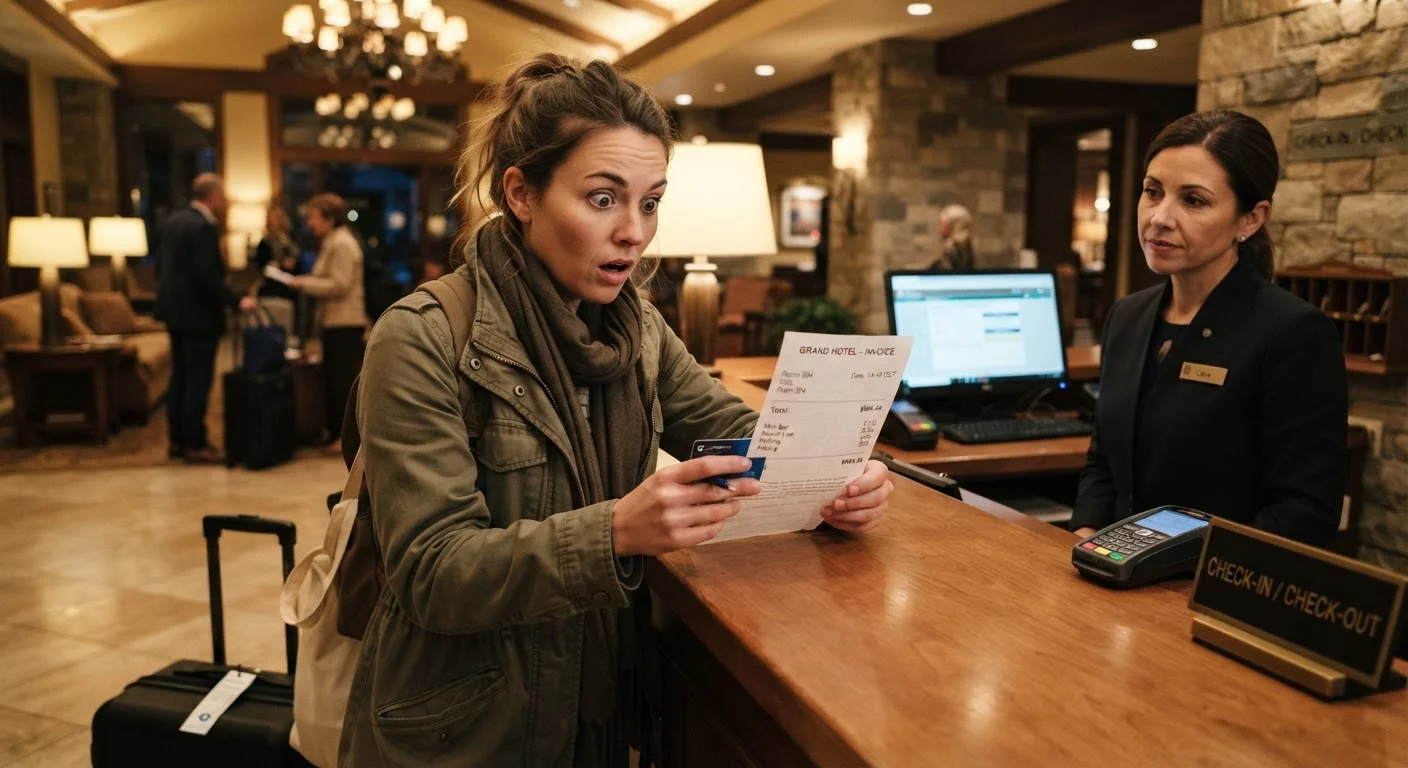
Why it happens: Booking platforms often display the nightly room rate without mandatory resort or destination fees, which are added at checkout or billed separately at the property.
Underestimating airline baggage fees on low-cost carriers.
Why it happens: Ultra-low-cost airlines strip nearly everything from the base fare, including carry-on bags on some carriers. Travelers focused on the ticket price often don't account for these add-ons until checkout.
Using a standard debit or credit card for foreign currency transactions.
Why it happens: Most U.S. bank-issued debit and credit cards charge a foreign transaction fee of around 1-3% on purchases made abroad, plus ATM withdrawal fees. These feel invisible because they appear as small line items on a statement days later.
Accepting dynamic currency conversion at the point of sale.
Why it happens: When paying by card abroad, merchants or ATMs often offer to charge you in U.S. dollars instead of local currency - framed as a convenience. This is called dynamic currency conversion (DCC), and it typically applies an unfavorable exchange rate that benefits the merchant.
Overlooking transportation costs between the airport and the destination.
Why it happens: Travelers budget for flights and hotels but often leave airport transfers as an afterthought. In some cities, getting from the airport to the city center - by taxi, rideshare, or rail - can cost $50-$100 or more each way.
Failing to account for gratuity and service charges in the destination's pricing norms.
Why it happens: Tipping customs vary widely by country, and in some destinations a service charge is added automatically to restaurant bills. Travelers assuming menu prices are all-inclusive can be surprised at the final total.
The Charges Most Travelers Don't See Coming
Once you know where the leaks typically appear, you can account for them - or avoid them entirely. The expenses below consistently catch travelers off guard, not because they're hidden in fine print, but because they're easy to skip past when you're focused on the excitement of booking.
1-3%
Typical foreign transaction fee per card purchase abroad
Most standard U.S. bank-issued credit and debit cards charge this fee on every transaction made in a foreign currency, according to commonly published card terms.
$25-$35
Common checked bag fee per leg on U.S. carriers
Baggage fees vary by airline and fare class; round-trip fees for one checked bag can easily exceed $50-$70 on a domestic itinerary when both legs are counted.
Awareness alone reduces exposure. Pair that with a pre-departure review of all confirmed reservations, and most of these costs either disappear or get factored into your plan. For a structured approach to doing exactly that, the pre-trip planning checklist for budget travelers walks through every category worth checking before you leave.
It's also worth noting that the same habit of missing recurring charges affects travelers at home. The patterns described in identifying recurring charges that quietly drain bank accounts apply just as much on the road as off it.
Don't Rely on Booking Platform Totals Alone
Some third-party booking platforms display estimated totals that exclude mandatory property fees, local taxes, or cleaning charges applied at check-in or checkout. Before finalizing any reservation, cross-check the property's own website or call ahead to confirm the full amount you'll be charged. A booking that appears settled can still carry surprise costs if the displayed total was incomplete.