

Key Takeaways
Scenery is genuinely world-class and memorable
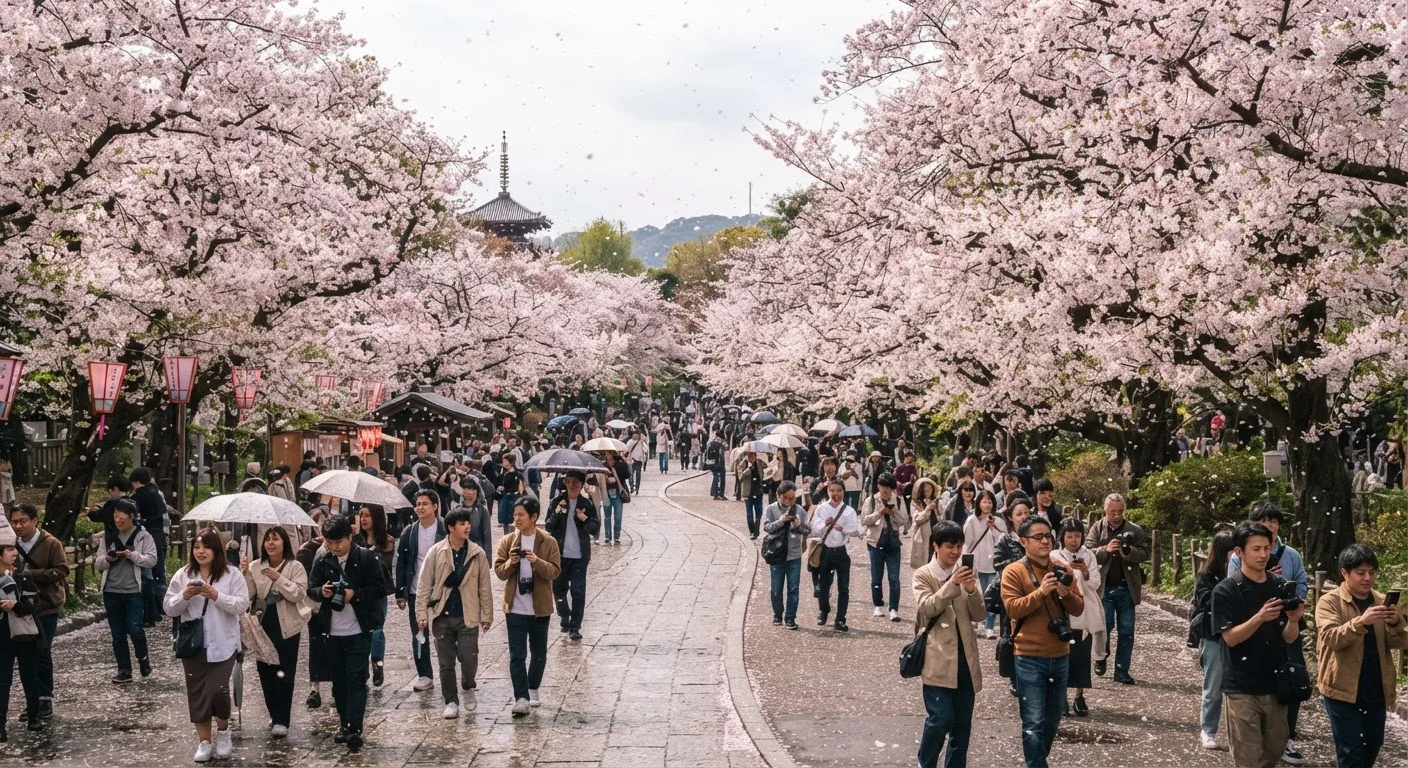
Full bloom transforms ordinary streets, riverbanks, and temple grounds into scenes that are difficult to replicate at any other time of year. The visual impact, especially at dusk or during lit evening events, is exceptional.
Cultural depth of hanami tradition adds meaning
Joining locals for picnic gatherings under the blossoms is an accessible, welcoming cultural experience. Parks become social spaces that reveal everyday Japanese life in a way that many tourist activities do not.
Pleasant spring temperatures suit long sightseeing days
Cool-to-mild conditions across most of Honshu make spring one of the physically easiest seasons for walking-heavy itineraries through cities, temples, and gardens.
Staggered bloom lets you chase sakura across regions
Because bloom timing moves northward through the archipelago, a well-planned trip can catch sakura in multiple regions - from Kyushu into Tohoku - across three to four weeks.
Accommodation prices spike sharply during peak bloom
Hotels in major cities frequently charge rates two to three times higher than the same rooms command in quieter seasons. Budget options disappear early, leaving last-minute travelers with limited and expensive choices.
Famous viewing spots become extremely overcrowded
Iconic locations like Philosopher's Path in Kyoto or Shinjuku Gyoen in Tokyo attract enormous crowds on peak weekend days. Navigating them can feel less like peaceful nature appreciation and more like a busy train platform.
Bloom timing is unpredictable and cannot be guaranteed
Annual bloom dates shift by one to two weeks depending on winter temperatures. Travelers who book rigid itineraries around a specific weekend may arrive before buds open or after petals have fallen.
Rail and flight availability tightens considerably
Bullet train reservations on key routes sell out weeks in advance during the season. Travelers without reserved seats may find themselves waiting for later departures than planned.
Popular restaurants and attractions require advance planning
Well-regarded restaurants often book solid during this period, and some popular gardens charge entry or limit visitor numbers. Spontaneous travel is harder than in quieter seasons.
Our Verdict
Japan during cherry blossom season delivers one of the most visually striking travel experiences available anywhere in the world. The crowds, prices, and logistical demands are real - but for travelers who plan early and set realistic expectations, the payoff is worth it. Those with flexibility around dates or a preference for quieter settings may find more satisfaction visiting just before or after peak bloom.
Travelers who book accommodations and rail passes at least four to six months ahead and prioritize iconic natural beauty over budget or tranquility.
What Cherry Blossom Season Actually Looks Like on the Ground
The Japanese cherry blossom - sakura - is not just a pretty backdrop. It's a cultural event that the country organizes its calendar around. Parks fill with picnic blankets under the trees in a tradition called hanami (flower viewing). Cities light up at night for illuminated blossom walks. Entire neighborhoods seem to pause in appreciation.
The bloom window is genuinely short. In Tokyo, for example, peak bloom typically arrives in late March to early April, and full petals last roughly one to two weeks before wind and rain strip the trees bare. In Kyoto, timing is similar. Northern regions like Tohoku and Hokkaido bloom later, sometimes into May - a fact that experienced travelers use to extend their sakura window across multiple stops.
Understanding that window before you commit to dates is the foundation of any good plan. For a broader sense of what Japan travel actually involves, see our Japan first-timer's overview.
The Real Advantages of Visiting During Bloom
The case for cherry blossom season isn't hype - it holds up to scrutiny.
Scenery is genuinely world-class and memorable
Full bloom transforms ordinary streets, riverbanks, and temple grounds into scenes that are difficult to replicate at any other time of year. The visual impact, especially at dusk or during lit evening events, is exceptional.
Cultural depth of hanami tradition adds meaning
Joining locals for picnic gatherings under the blossoms is an accessible, welcoming cultural experience. Parks become social spaces that reveal everyday Japanese life in a way that many tourist activities do not.
Pleasant spring temperatures suit long sightseeing days
Cool-to-mild conditions across most of Honshu make spring one of the physically easiest seasons for walking-heavy itineraries through cities, temples, and gardens.
Staggered bloom lets you chase sakura across regions
Because bloom timing moves northward through the archipelago, a well-planned trip can catch sakura in multiple regions - from Kyushu into Tohoku - across three to four weeks.
Spring weather is genuinely pleasant in most of Japan's main tourist corridor. Temperatures in Tokyo and Kyoto typically range from the low 50s to mid-60s Fahrenheit, making long days of walking comfortable. Rain is possible but rarely constant, and the filtered light of overcast spring days can actually make blossom photography more flattering than harsh midday sun.
The Trade-Offs That Don't Make the Brochure
The honest version of cherry blossom travel includes some friction points worth knowing before you book.
Accommodation prices spike sharply during peak bloom
Hotels in major cities frequently charge rates two to three times higher than the same rooms command in quieter seasons. Budget options disappear early, leaving last-minute travelers with limited and expensive choices.
Famous viewing spots become extremely overcrowded
Iconic locations like Philosopher's Path in Kyoto or Shinjuku Gyoen in Tokyo attract enormous crowds on peak weekend days. Navigating them can feel less like peaceful nature appreciation and more like a busy train platform.
Bloom timing is unpredictable and cannot be guaranteed
Annual bloom dates shift by one to two weeks depending on winter temperatures. Travelers who book rigid itineraries around a specific weekend may arrive before buds open or after petals have fallen.
Rail and flight availability tightens considerably
Bullet train reservations on key routes sell out weeks in advance during the season. Travelers without reserved seats may find themselves waiting for later departures than planned.
Popular restaurants and attractions require advance planning
Well-regarded restaurants often book solid during this period, and some popular gardens charge entry or limit visitor numbers. Spontaneous travel is harder than in quieter seasons.
Consider Arriving Before Peak Bloom
If your schedule allows any flexibility - even arriving ten days before peak bloom - you'll find significantly easier lodging, lower prices, and far thinner crowds. Early-stage buds are still beautiful, and the anticipation adds its own energy to cities gearing up for the season. See our piece on how seasonal timing affects travel cost and crowds for broader context on this strategy.
If your schedule allows any flexibility - even arriving ten days before peak bloom - you'll find significantly easier lodging, lower prices, and far thinner crowds. Early-stage buds are still beautiful, and the anticipation adds its own energy to cities gearing up for the season. See our piece on how seasonal timing affects travel cost and crowds for broader context on this strategy.
Planning Strategies That Actually Help
Travelers who enjoy cherry blossom season most tend to share a few habits. They book accommodations - especially in Kyoto and Tokyo - four to six months in advance. They purchase Japan Rail Passes before arriving in-country, where they are valid for purchase. They identify two or three well-known viewing spots but also research one quieter neighborhood option in each city as a backup.
Staggering your itinerary northward as the season progresses is also worth considering. Starting in Kyoto or Osaka, then moving to Tokyo, then heading toward the Tohoku region can keep you in bloom for three weeks or more - assuming the season cooperates. Weather forecasting for bloom dates improves closer to March; the Japan Meteorological Corporation publishes annual forecasts that are widely followed, though no forecast guarantees exact timing.
~30M
Annual international visitors to Japan
Japan Tourism Agency data indicates international arrivals have exceeded 30 million in peak pre-pandemic years, with spring among the most popular travel periods.
1-2 weeks
Typical duration of full cherry blossom bloom
Meteorological tracking consistently shows that peak bloom at any given location lasts roughly seven to fourteen days before petals begin to fall.
Finally, set a realistic emotional expectation. Iconic spots like Maruyama Park in Kyoto or the Meguro River in Tokyo will be crowded. Accepting that - and arriving early in the morning or later in the evening - tends to produce a much better experience than fighting the midday rush.