

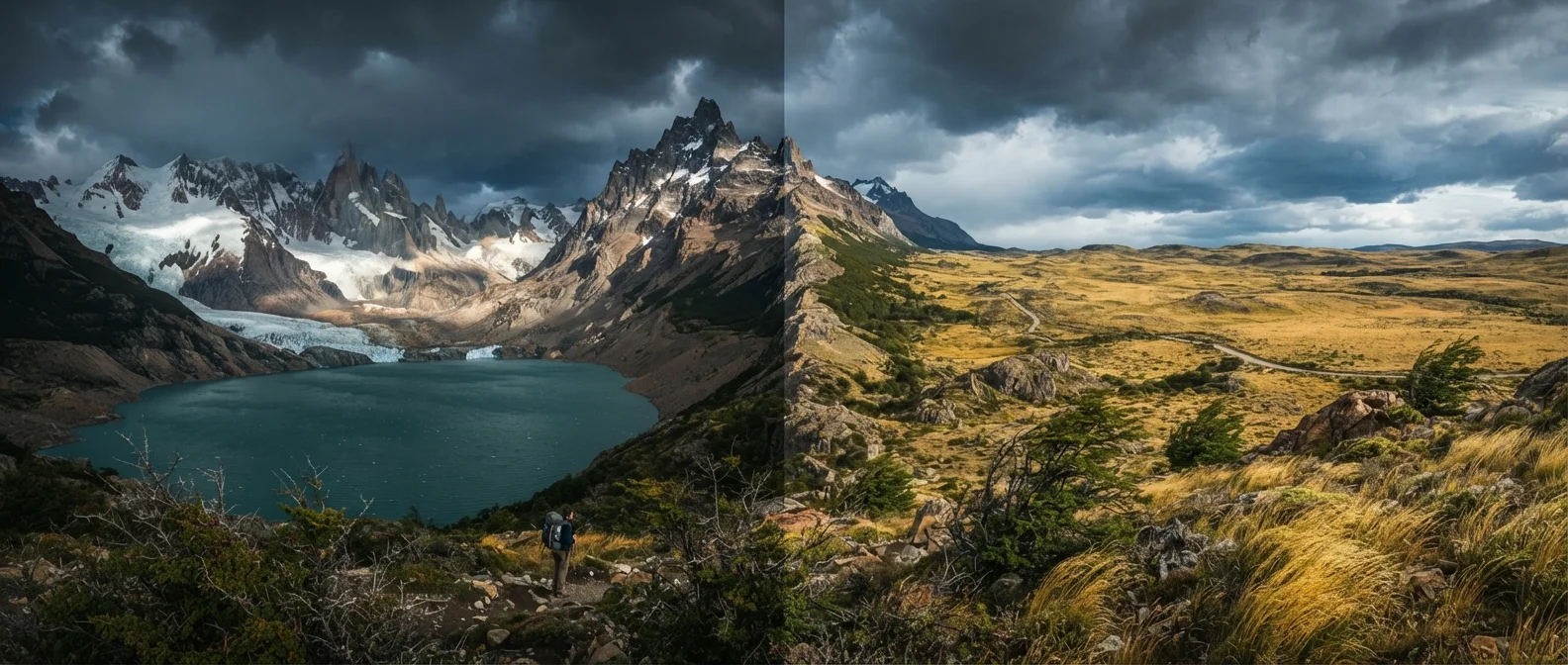
Key Takeaways
Our Verdict
Argentine Patagonia suits travelers who want a broader, more varied trip with easier logistics and lower daily costs. Chilean Patagonia delivers arguably the most iconic mountain scenery on Earth, rewarding those willing to plan further ahead and spend more. For many visitors, the most satisfying approach is combining both sides on a single itinerary.
| Best for | Recommended |
|---|---|
| Budget-conscious travelers and first-timers | Argentine Patagonia |
| Serious hikers seeking iconic, concentrated scenery | Chilean Patagonia |
| Wildlife and glacier enthusiasts | Argentine Patagonia |
| Those who value well-managed park infrastructure | Chilean Patagonia |
The Core Differences at a Glance
Patagonia straddles two countries across roughly 400,000 square miles of steppe, ice fields, and mountain range. Despite sharing geology and weather, the Argentine and Chilean sides operate quite differently for travelers. Understanding those differences upfront prevents misdirected planning.
Argentine Patagonia centers on two main hubs: Bariloche in the Lake District and El Calafate near the Perito Moreno Glacier. The Fitz Roy sector near El Chaltén adds world-class trekking. Chilean Patagonia is anchored by Torres del Paine National Park in the south and the remote Carretera Austral highway in the north.
| Argentine Patagonia | Chilean Patagonia | |
|---|---|---|
| Main gateway cities | El Calafate, El Chaltén, Bariloche | Puerto Natales, Punta Arenas |
| Flight access from U.S. | Easier via Buenos Aires | Requires Santiago connection |
| Relative daily cost | Generally lower | Generally higher |
| Park infrastructure | Good, more informal | Polished, tightly managed |
| Advance booking required | Moderate (peak season) | High - book months ahead |
| Signature experience | Perito Moreno Glacier, Fitz Roy | Torres del Paine W Trek / O Circuit |
| Wildlife viewing | Strong (Valdés, penguins) | Limited in main parks |
| Road trip potential | Good, mostly paved | High (Carretera Austral), mostly gravel |
Both sides require advance planning, but Chile's managed reservation systems and limited camping quotas make early booking especially critical.
Getting There and Getting Around
Argentina has the logistical edge for most North American travelers. Flights into Buenos Aires (EZE) are frequent from major U.S. cities, and domestic connections to El Calafate or Bariloche are straightforward. Paved roads and a functional intercity bus network make independent travel realistic without a rental car in many cases.
Reaching Chilean Patagonia typically involves flying into Punta Arenas or Puerto Natales - often connecting through Santiago. Puerto Natales serves as the gateway town to Torres del Paine, about 70 miles away. Ferries and small planes serve the more remote northern Chilean areas. Renting a vehicle expands options significantly on both sides, though road conditions vary widely.
Combine Both Sides on One Trip
The El Calafate-Puerto Natales bus route makes a cross-border itinerary straightforward for most travelers. A common structure is flying into El Calafate, spending time in the Argentine sector, then crossing into Chile for Torres del Paine before flying home from Punta Arenas. Budget at least two weeks to do both sides justice without feeling rushed.
Crossing between the two countries is genuinely practical. The El Calafate-Puerto Natales border crossing takes roughly 4-5 hours by bus and is popular with travelers doing both sides in sequence. Verify current visa and entry requirements with official government sources before finalizing plans, as these can change.
Scenery, Parks, and What You'll Actually See
Both sides are visually stunning, but their characters differ. Argentine Patagonia offers more variety: the sprawling Perito Moreno Glacier (one of the few advancing glaciers in the world), the jagged Fitz Roy massif near El Chaltén, Valdés Peninsula wildlife (sea lions, elephant seals, penguins), and the lake-studded Bariloche region. There's room to breathe.
Chilean Patagonia's Torres del Paine delivers concentrated, jaw-dropping drama - the iconic granite towers, the turquoise Pehoe Lake, and the full W Trek or O Circuit hiking routes. The scenery hits harder in a smaller geographic area. The tradeoff is crowds during peak season and a reservation system that requires booking refugios or campsites months in advance.
253,000+
Annual visitors to Torres del Paine
Pre-pandemic visitor counts to Torres del Paine National Park regularly exceeded 250,000 annually, driving the park's strict quota system.
750+ miles
Length of the Carretera Austral
Chile's Carretera Austral highway stretches over 750 miles through some of the most remote terrain in South America.
~3 miles/year
Perito Moreno Glacier advance rate
Perito Moreno is one of the rare glaciers in the world that continues to advance, making it a uniquely dynamic natural spectacle.
The Carretera Austral, a mostly gravel road stretching over 750 miles through Chilean Patagonia, is a separate and less-visited experience - better suited to road-trippers with time and a high-clearance vehicle.
Costs, Infrastructure, and Practical Realities
Day-to-day expenses in Argentina have historically run lower than Chile, though currency fluctuations can affect this. Chilean infrastructure inside parks - marked trails, quality refugios, clear signage - tends to be more polished and predictable. Argentine parks like Los Glaciares are well-run but more informal in feel.
Both countries charge national park entrance fees; Torres del Paine's fee is higher than most Argentine parks. Accommodation in gateway towns (El Calafate, Puerto Natales, El Chaltén) ranges from hostels to boutique lodges. El Chaltén, Argentina's self-described trekking capital, has free day-hiking trails that require no advance permits - a meaningful advantage for spontaneous travelers.
Food costs diverge more noticeably: eating out in Argentina is generally less expensive, while resupply towns on the Chilean side can price meals and groceries at a premium given their remote supply chains.
Prices, park fees, and entry requirements change over time. Always verify current costs and booking procedures directly with park authorities and official government sources before your trip.