

Key Takeaways
Option A
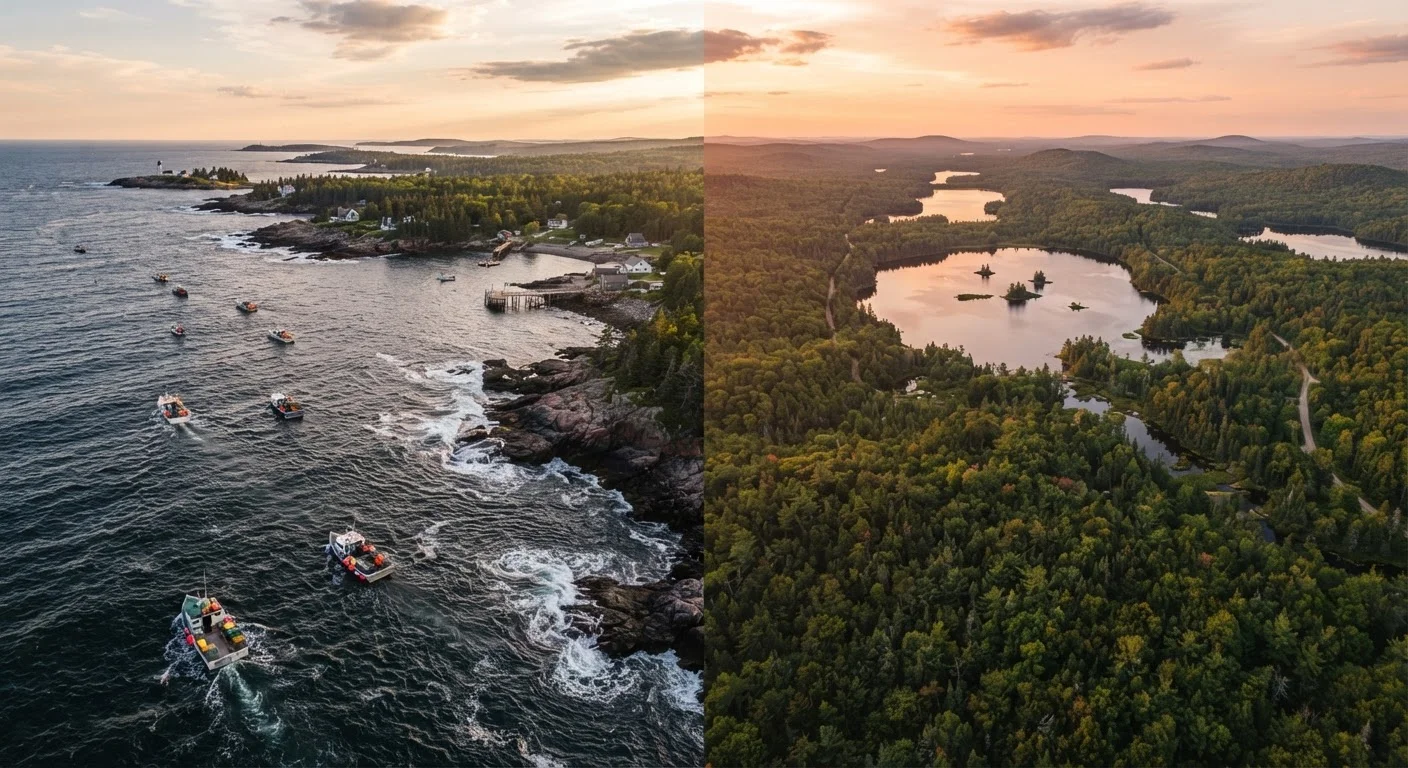
Coastal Maine
The classic, crowd-pleasing Maine most visitors picture.
Best for: Travelers who want scenic harbor towns, fresh seafood, lighthouses, and shoreside activities within easy reach of services.
Option B
The Maine Highlands
The wild, uncrowded interior for those who want to disappear into nature.
Best for: Outdoor enthusiasts seeking canoe routes, moose sightings, remote camping, and genuine solitude in one of the least-developed regions in the eastern U.S.
If you want a relaxed, food-forward trip with scenic scenery and easy navigation
Coastal Maine
The coast's established tourism network means excellent seafood, clear signage, and a wide range of accommodation - from inns to campgrounds - without demanding self-reliance.
If solitude, paddling, and wildlife are your primary goals
The Maine Highlands
Few regions east of the Mississippi offer comparable canoe route networks and moose density. The Highlands deliver genuine wilderness with minimal competition for space.
If you're traveling with children or non-outdoorsy companions
Coastal Maine
Towns like Bar Harbor and Camden offer manageable day hikes, kid-friendly attractions, and fallback options if weather turns, making group management far simpler.
If you want to hike challenging, iconic trails away from the crowds
The Maine Highlands
Baxter State Park's Knife Edge trail on Katahdin is one of the most demanding and rewarding hikes in the Northeast, and the park's permit system keeps numbers manageable.
If you're visiting Maine for the first time
Coastal Maine
Acadia National Park, the Pemaquid Peninsula, and the mid-coast towns offer a strong, accessible introduction to what makes Maine distinctive without logistical complexity.
What Each Region Actually Looks Like
Coastal Maine stretches roughly 3,500 miles of tidal shoreline - far more than the straight-line distance suggests - ranging from the sandy beaches near Ogunquit in the south to the granite-edged peninsulas of Downeast. The mid-coast and Mount Desert Island anchor the tourist circuit, with Acadia National Park drawing well over three million visitors annually. Expect working fishing harbors, weathered lighthouses, lobster shacks perched over tidal inlets, and village greens framed by 19th-century architecture.
The Maine Highlands is a looser geographic label covering the north-central interior: Moosehead Lake (the largest lake in the eastern U.S. by some measures), Baxter State Park, and the vast North Woods surrounding them. Cell service is sparse. Roads become gravel. The nearest grocery store may be 40 miles away. What fills that space instead is spruce-fir forest, glacially scoured lakes, and an animal density - moose, loons, black bears, bald eagles - that feels genuinely wild by American standards.
Side-by-Side: Key Differences at a Glance
The two regions diverge sharply on almost every practical dimension a traveler needs to plan around.
| Criterion | Coastal Maine | The Maine Highlands |
|---|---|---|
| Primary draw | Shoreline, seafood, Acadia NP | Wilderness paddling, Katahdin, wildlife |
| Infrastructure | Dense - towns, restaurants, hospitals | Sparse - gravel roads, limited services |
| Cell coverage | Generally reliable in towns | Frequently absent |
| Summer crowds | High, especially July-August | Low to moderate |
| Accommodation style | Inns, B&Bs, campgrounds, rentals | Campgrounds, sporting camps, remote cabins |
| Trip planning complexity | Moderate - advance booking needed | High - permits, gear, route planning |
| Best season | Late June through September | Late August through early October |
| Ideal group | Families, mixed groups, first-timers | Experienced outdoors travelers, solo or small groups |
These differences aren't just logistical - they define what kind of experience you'll have each day. On the coast, your itinerary can flex with the weather because indoor options exist. In the Highlands, a rainy day means you're still in the canoe or the tent, and that's the point.
Planning and Logistics: What Each Trip Demands
Coastal Maine is a relatively forgiving destination to plan. Major towns have reliable lodging options across price ranges, from historic bed-and-breakfasts to campgrounds within Acadia. Ferry schedules to islands like Vinalhaven and Isle au Haut are publicly posted and run regularly in summer. Peak summer weeks - especially late July through Labor Day - require advance reservations, sometimes months out for popular inns and Acadia campsite spots.
The Maine Highlands requires a different mindset. Baxter State Park uses a reservation system with limited permit availability for Katahdin; popular trailhead dates sell out quickly. Paddling the Allagash Wilderness Waterway - a 92-mile designated wilderness route - demands trip planning through Maine's Bureau of Parks and Lands. Gear matters here: reliable rain gear, a quality tent, and bear canisters are practical necessities, not optional upgrades. For lodging alternatives that fit wilderness-adjacent travel, campground and vacation rental options offer useful context on what to expect.
92 miles
Length of Allagash Wilderness Waterway
Maine's Bureau of Parks and Lands manages this federally designated wilderness canoe route through the remote North Woods.
3M+
Annual Acadia National Park visitors
Acadia consistently ranks among the most-visited U.S. national parks, per National Park Service visitation data.
~200,000
Acres in Baxter State Park
The park was donated to Maine by former Governor Percival Baxter to be kept forever wild, and remains state-managed under that mandate.
Who Each Region Is Really For
The coast excels as a multigenerational destination. A family with young children can cycle the carriage roads in Acadia, eat lobster rolls at a picnic table, and still be back in a comfortable inn by evening. First-time visitors to Maine rarely go wrong starting here - the region offers enough variety to build a satisfying 5-7 day itinerary without any single day feeling forced. It also layers naturally with broader New England road trips if you're covering more ground. If you're thinking through the structure of your overall trip format, it's worth reviewing the trade-offs of all-inclusive versus independent travel planning before booking.
The Highlands suit a traveler who views logistics as part of the adventure. If you've canoed flat water before, want to see a moose at dawn from a kayak, or want to summit Katahdin as the northern terminus of the Appalachian Trail, the interior delivers experiences the coast simply cannot replicate. Go in late August or early September: black flies are largely gone, foliage begins, and the light on the lakes is exceptional. Always verify current park entry rules, road conditions, and permit requirements directly with Maine state park authorities before you travel, as these details change seasonally.
Black Fly Season Is Real
Maine's interior is notoriously buggy from mid-May through late June, with black flies capable of making outdoor activity genuinely unpleasant. Mosquitoes persist through July in the Highlands. If you're planning a Highlands trip, late August through mid-September offers the most comfortable conditions. The coast is affected too, but sea breezes and fewer standing-water habitats reduce the intensity considerably.