

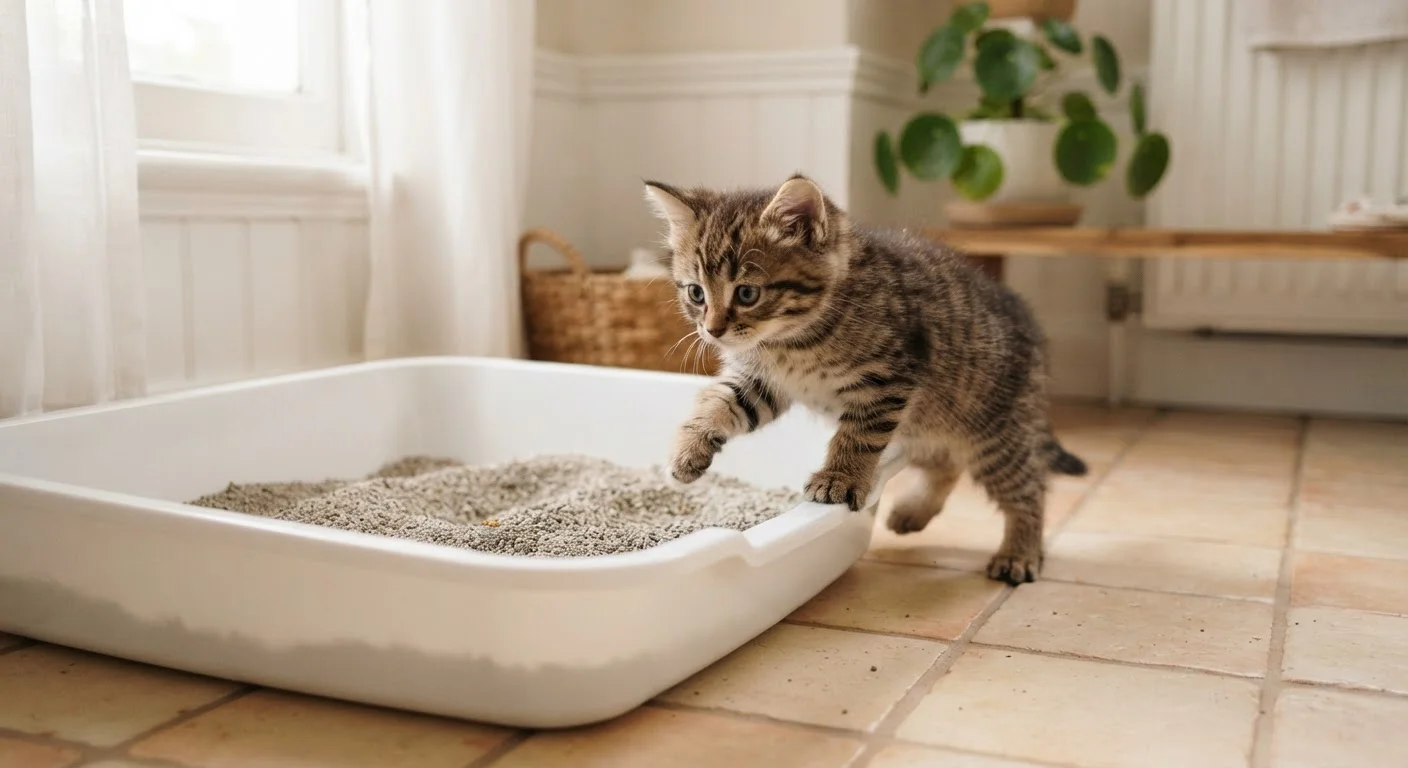
Key Takeaways
Why Kittens Usually Learn This Quickly - and When They Don't
Litter box training is one of the easier parts of welcoming a kitten home. Unlike many behaviors that require deliberate conditioning, cats have a natural instinct to bury their waste - litter simply gives them the right surface to act on it. Most kittens will use a box reliably within a week or two if the setup meets their needs.
That said, instinct alone doesn't guarantee success. Problems almost always trace back to one of a few causes: a box that's too hard to access, litter with a texture or scent the kitten dislikes, a location that feels exposed or unpredictable, or a box that isn't cleaned often enough. Before assuming a kitten is being difficult, it's worth checking these basics first.
It also helps to understand that kittens aren't capable of spite or stubbornness in the way people sometimes attribute to them. If a kitten is eliminating outside the box, they have a reason - even if that reason is simply anxiety about a new environment. Our guide to cat training fundamentals explores how feline learning works and why positive, low-pressure approaches consistently outperform correction-based ones.
What you will need
Setting Up for Success: Box, Litter, and Location
The three biggest variables in litter box training are the box itself, the litter you use, and where you put it. Getting these right before your kitten comes home saves a lot of troubleshooting later. See our room-by-room home setup checklist for broader guidance on preparing your space for a new cat.
Kitten-sized litter box
A smaller box with low sides allows a young kitten to enter and exit without difficulty.
Unscented litter
Fragrance-free litter is less likely to deter sensitive kittens who may reject strongly scented options.
Litter scoop
Daily scooping keeps the box clean enough that kittens are willing to return to it consistently.
Enzyme-based cleaner
Neutralizes odor from accidents, removing scent cues that might draw a kitten back to the wrong spot.
Second litter box
In multi-room homes or with multiple cats, an additional box reduces competition and gives kittens more options.
On litter: kittens raised by a mother cat may already have a preference for whatever litter was used in their early environment. When possible, ask the breeder or shelter what type was used and start with that. Transitioning to a different litter, if needed, is easier once the kitten is already reliably trained.
Scoop Daily, Deep-Clean Weekly
Kittens are fastidious and will avoid a dirty box more readily than an adult cat. Scooping waste at least once a day and doing a full litter replacement with a mild soap wash weekly keeps the box inviting. Avoid strong chemical cleaners - residual scents can deter use.
Step-by-Step Training Guide
Follow these steps during the first few weeks with your new kitten. Most kittens don't need all of them - some will take to the box almost immediately. But having a structured approach helps you stay consistent and troubleshoot early if something isn't working.
Set up the litter box before your kitten arrives
Position the litter box in a quiet corner that's easy for your kitten to reach at all times - away from their food bowls and water dish. Cats instinctively avoid eliminating near their eating area. Avoid high-traffic spots or locations with loud appliances that could startle a young kitten mid-use. Fill the box with about two inches of litter to start.
Introduce your kitten to the box immediately
As soon as your kitten arrives, carry them directly to the litter box and gently set them inside. Let them sniff and explore at their own pace. You don't need to guide their paws - the texture of litter typically prompts natural digging behavior. The goal here is simply establishing familiarity with the location.
Prompt box visits at key moments
Kittens most often need to eliminate after waking up, after eating, and after active play. Use these predictable windows to bring your kitten to the box. Place them inside gently and step back - hovering can make them feel watched and uncomfortable. If they use it, offer soft verbal praise. If they don't, simply let them go without reaction.
Respond to accidents without drama
Accidents will happen, especially in the first week. When you find one, clean the area immediately with an enzyme-based cleaner to fully eliminate odor. Do not scold your kitten. Instead, bring them to the litter box shortly after to reinforce the correct location. Consider whether the accident spot reveals a problem with box placement or accessibility.
Maintain the box consistently
Scoop the litter box at least once daily. Perform a full clean - emptying all litter, washing the box with mild soap, and refilling - about once a week. Kittens are more sensitive to a dirty box than adult cats, and a neglected box is one of the most common reasons training stalls. Keep litter depth at roughly two inches; too much or too little can put kittens off.
Gradually expand your kitten's access as reliability improves
Start by confining your kitten to one or two rooms where the litter box is easily accessible. As they demonstrate consistent use - typically within one to two weeks for most kittens - you can slowly allow access to more of the home. This gradual approach prevents a kitten from wandering too far from the box before they've fully internalized the habit.
Avoid Punishment - It Backfires
Scolding, startling, or physically placing a kitten in the box after an accident creates fear and anxiety around the litter area, often making problems worse. Kittens don't connect after-the-fact corrections to a past behavior. Clean the accident site thoroughly with an enzyme-based cleaner to remove scent markers, then refocus on prevention.
Persistent Avoidance Warrants a Vet Visit
If your kitten repeatedly refuses the litter box or strains without producing waste, this can signal a urinary or digestive health issue rather than a training problem. Do not attempt to self-diagnose or treat. Contact your veterinarian promptly so your kitten can be properly evaluated.
This article is for general informational purposes only and is not a substitute for veterinary advice. If you have concerns about your kitten's health or elimination behavior, consult a licensed veterinarian.