

Key Takeaways
Start here
Why Living Through a Renovation Is Harder Than It Looks
Next
Setting Up a Livable Temporary Household
Then
Managing Noise, Dust, and Daily Disruption
When you're ready
Communicating With Your Contractor Day to Day
Final step
Protecting Your Budget While You Live In
Why Living Through a Renovation Is Harder Than It Looks
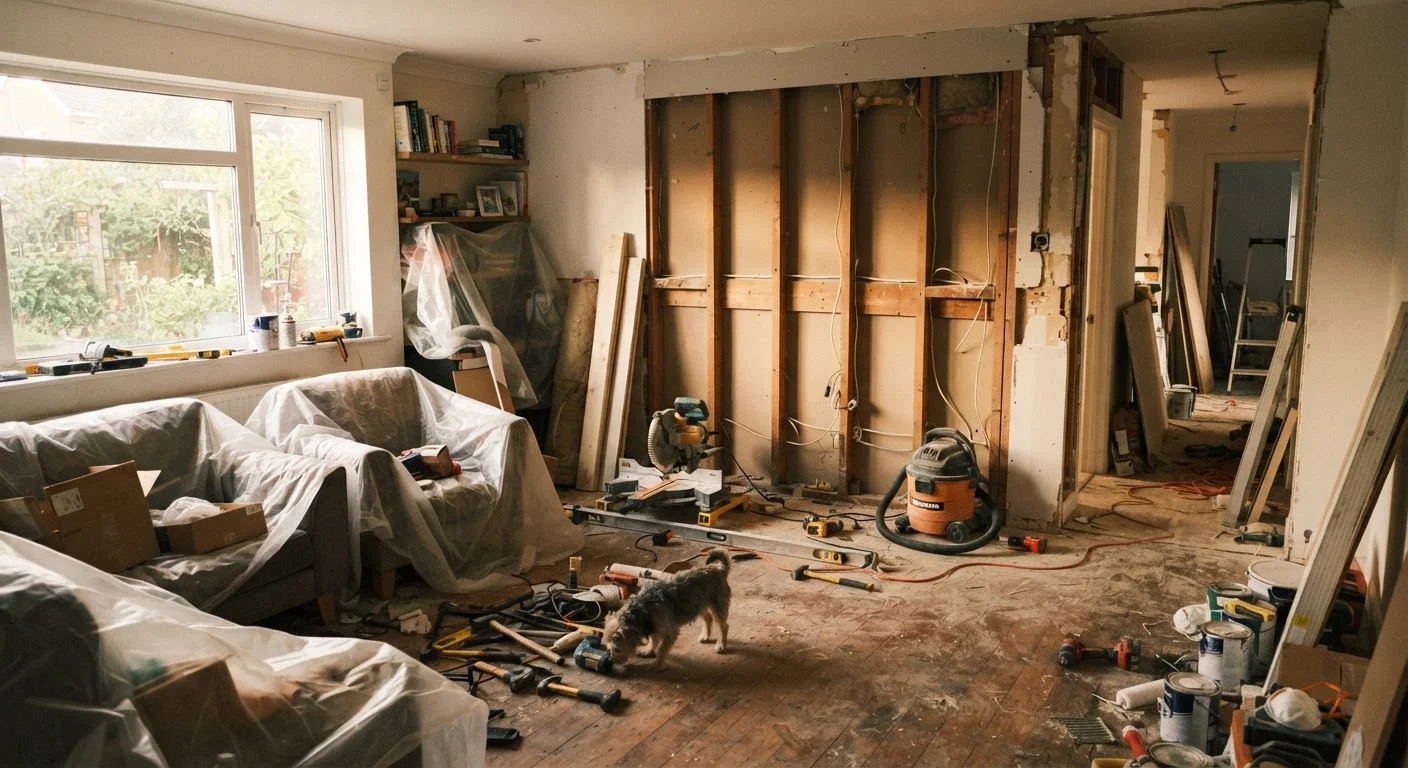
Most homeowners going into a renovation focus entirely on the project itself - the floor plan, the fixtures, the timeline. What catches people off guard is how deeply the construction disrupts ordinary life. A kitchen renovation doesn't just mean no cooking; it can mean no counter space, no sink access, blocked hallways, and workers arriving at 7 a.m. six days a week.
Before the first nail is pulled, it's worth reading a complete renovation roadmap to understand all the phases ahead. Recognizing that disruption is normal - not a sign something is going wrong - is the first mental shift every homeowner needs to make.
Common underestimated impacts include:
- Loss of functional rooms - not just the one being renovated, but adjacent spaces used for staging materials or storing debris
- Noise fatigue - sustained construction sound affects concentration, sleep, and mood
- Air quality changes - dust, adhesive fumes, and disturbed insulation can linger throughout a home
- Routine collapse - meals, work-from-home setups, and bathroom schedules all need to be rebuilt around the project
Also keep in mind that common renovation myths - like assuming the project will run exactly on schedule - set homeowners up for unnecessary frustration. Build in mental flexibility from day one.
Setting Up a Livable Temporary Household
The single most effective thing you can do before work begins is to deliberately design a temporary living setup. Think of it as setting up a small, functional household within your home - covering sleeping, eating, bathing, and working needs before the chaos starts.
Key steps to establish before day one:
- Designate a clean zone. Choose one or two rooms completely outside the work area and keep them sealed. This is where you sleep, eat, and decompress.
- Build a temporary kitchen. A folding table, microwave, electric kettle, toaster oven, and a compact refrigerator can cover most meal needs. Stock shelf-stable foods you actually eat.
- Address bathroom access upfront. If a bathroom is being renovated, confirm with your contractor which facilities remain usable and when. If access will be cut off entirely, discuss timing and alternatives early.
- Pack away what you don't need. Temporarily store non-essential furniture, decor, and electronics in pods or off-site storage to protect them and reduce clutter in your livable zone.
If your project is part of a longer strategy, phasing the renovation across multiple years can reduce how much disruption you absorb at once.
Managing Noise, Dust, and Daily Disruption
Noise and dust are the two most relentless aspects of living through a renovation, and both can be managed better than most homeowners expect with a little proactive planning.
Schedule Your Loudest Days in Advance
Ask your contractor at the start of each week which days will involve the most disruptive work - demolition, saw use, or concrete cutting. Knowing in advance lets you plan to work offsite, run errands, or arrange for children or pets to be elsewhere. A little scheduling coordination goes a long way toward preserving everyone's sanity.
For noise: Agree on working hours before the project begins. Most residential contractors work standard business hours, but confirm this in writing. On days when particularly loud work is scheduled - demolition, jackhammering, framing - plan to be out of the house if possible. Noise-canceling headphones are a worthwhile investment for work-from-home days.
For dust: Ask your contractor about dust containment measures as part of the scope of work. Plastic sheeting over doorways, floor-to-ceiling barriers with zippers, and HEPA air scrubbers are standard tools for containing construction dust. Change HVAC filters more frequently during the project and consider running air purifiers in your clean zone.
For daily flow: Map out your household's movement through the home and identify choke points - places where the work zone forces everyone to detour or wait. Rerouting foot traffic, even temporarily, reduces accidents and friction. Keep a clear path to all exits at all times, and ensure young children and pets are kept well away from active work areas.
Communicating With Your Contractor Day to Day
The relationship between a homeowner and a contractor during construction is a daily working partnership. It's also one of the most common sources of stress when it breaks down. Clear communication protocols - agreed to before work starts - prevent most conflicts.
Establish these habits early:
- Single point of contact. Communicate through the lead contractor or project manager, not individual subcontractors. This prevents mixed messages.
- Daily or end-of-day check-ins. A brief five-minute conversation about what was completed and what's next keeps you oriented without slowing work down.
- Written change orders. Any change to the original scope - even small ones - should be documented in writing with a revised cost and timeline before work proceeds. Verbal agreements too easily create disputes later.
- Scheduled walk-throughs. At key project milestones (rough-in complete, walls closed, finish work beginning), do a formal walk-through with your contractor to verify the work before it's covered up.
For a deeper look at how decisions made in planning affect the entire project, see the full homeowner's renovation roadmap.
Avoid Paying in Full Before Work Is Complete
Never pay the full contract amount upfront, regardless of the payment terms a contractor proposes. Tie each payment installment to a verifiable project milestone - framing complete, rough-in inspected, finishes installed. This protects you if work stalls or disputes arise. A reasonable down payment to secure scheduling and materials is standard, but full prepayment is not.
Protecting Your Budget While You Live In
Living in during a renovation creates budget pressures that homeowners don't always anticipate. Beyond the construction costs themselves, you'll be eating out more, running extra utilities, and potentially paying for storage. These lifestyle costs add up.
More importantly, living on-site means you'll directly witness things that raise questions - a subcontractor mentioning something looks different than expected, a wall opening to reveal unexpected conditions. These discoveries can be legitimate change-order triggers, or they can be scope creep. Knowing the difference matters.
Before work begins, read up on how contingency funds work and ensure yours is fully funded. A typical guideline is to reserve 10-20% of the total project budget for unexpected costs - a range that reflects how widely hidden issues vary by home age and project type.
Staying organized financially means:
- Tracking all invoices and change orders in one place
- Reviewing the payment schedule against actual milestones completed
- Avoiding paying ahead of work completed - tie payments to verified progress
Also consider whether your project scope, timing, or interior versus exterior sequencing could be adjusted to reduce the duration you need to live in disruption. Shorter projects, tightly scoped, are typically easier to endure than sprawling multi-room efforts running in parallel.
This article is for general informational purposes only. Costs, timelines, and permit requirements vary by location and project scope. Consult qualified, licensed contractors and verify local code requirements before beginning any renovation work.