

| Most durable type for door sides | V-strip (tension seal) |
| Best for door bottoms | Door sweep or door shoe |
| Least durable / interior use only | Felt strips |
| Best for uneven or irregular gaps | Closed-cell foam tape |
| Recommended check frequency | Twice yearly (fall and spring) |
Why the Type of Weatherstripping Matters
Not all weatherstripping works in every spot. Use the wrong type and you'll either compress it too quickly, leave gaps that let air through, or create drag that damages your door or window over time. Choosing correctly means matching three factors: the gap size, the surface material, and the level of friction the strip will endure.
This reference covers the most common types found at hardware stores and explains exactly where each one belongs. For a broader look at where air leaks originate and how weatherstripping fits into a complete draft-prevention strategy, see our guide to stopping drafts with caulking and weatherstripping.
| Most durable type for door sides | V-strip (tension seal) |
| Best for door bottoms | Door sweep or door shoe |
| Least durable / interior use only | Felt strips |
| Best for uneven or irregular gaps | Closed-cell foam tape |
| Recommended check frequency | Twice yearly (fall and spring) |
The Main Weatherstripping Types and Their Best Locations
Use this section as a lookup guide. Each type is described with its ideal application, so you can match the product to the problem at hand.
Door stop
The thin strip of molding inside a door frame that the door closes against. Tubular gasket weatherstripping is typically nailed directly to this surface.
Threshold
The strip of material - often aluminum or wood - running along the floor at the base of an exterior door. Door sweeps seal the gap between the door bottom and the threshold.
Closed-cell foam
A foam material with a tightly packed, non-porous structure that resists water absorption. It outlasts open-cell foam in exterior or humid environments.
Tension seal
Another name for V-strip weatherstripping. The folded shape creates spring tension that keeps the strip pressed against both sides of a gap simultaneously.
V-Strip (Tension Seal)
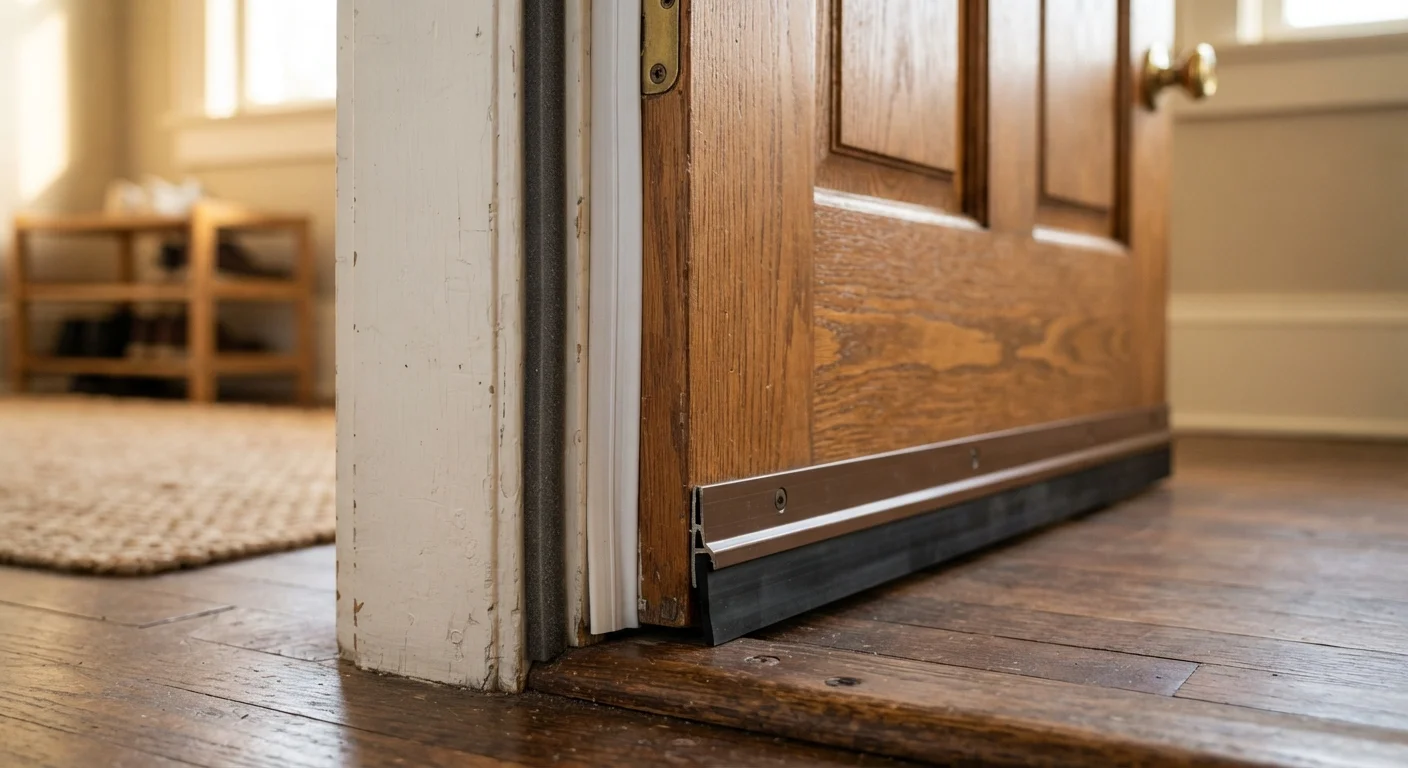
V-strip is a folded piece of plastic or metal that springs open to fill a gap. It installs inside the channel of a door or window frame, where it stays hidden and resists wear exceptionally well. Best for: the sides of double-hung windows, the top and sides of door frames, and sliding door tracks.
Foam Tape (Open- or Closed-Cell)
Self-adhesive foam tape compresses to fill irregular gaps. Closed-cell foam resists moisture better than open-cell and lasts longer outdoors. Best for: window sashes, the top of doors, basement windows, and any surface with an uneven gap. Avoid using it on high-friction surfaces - repeated contact will shred it quickly.
Door Sweeps
A door sweep attaches to the interior bottom edge of a door and drags lightly across the threshold, sealing the gap beneath. They come in brush, rubber, or vinyl styles. Best for: exterior doors and any interior door where you want to reduce noise or prevent drafts between rooms. Brush sweeps work best over uneven thresholds or carpeting.
Door Shoes and Automatic Door Bottoms
A door shoe wraps around the bottom edge of the door itself, providing a more durable seal than a simple sweep. Automatic door bottoms retract as the door opens and drop when it closes - ideal when you don't want the sweep dragging across flooring. Best for: heavily used exterior doors and entryways with hardwood or tile floors.
Tubular Rubber or Vinyl Gasket
This soft, hollow tube compresses when the door or window closes, creating a tight seal. It nails or staples onto the door stop (the thin strip the door closes against). Best for: exterior door frames and casement windows that close firmly against the stop molding.
Felt Strips
Felt is the oldest form of weatherstripping and the least durable. It absorbs moisture and compresses permanently over time. Best for: interior applications only - attic hatches, cabinet doors, or other low-traffic spots where moisture is not a concern.
Permits Are Not Required for Weatherstripping
Replacing or installing weatherstripping is a straightforward maintenance task that does not require permits or licensed tradespeople in any U.S. jurisdiction. It does not alter the structure of the door or window frame. However, if you discover rot, structural damage, or failing door hardware during inspection, those repairs may require professional assessment.
Measuring and Replacing Weatherstripping
Before buying, measure the full perimeter of the door or window you're sealing. Add about 10% extra to account for corners and cutting errors. Clean the surface thoroughly before applying adhesive-backed types - oils and dust prevent bonding. For V-strip and tubular gasket that must be nailed in place, a utility knife and tin snips will handle most cutting tasks.
Replace weatherstripping as soon as you notice cracks, compression, missing sections, or visible daylight around a closed door. A quick visual check each fall before heating season and each spring before cooling season is a reliable maintenance habit that keeps energy costs in check without requiring professional help.