

Key Takeaways
Why Grout Fails Before Its Time
Grout is one of the most overlooked surfaces in a home - until it turns gray, cracks, or starts pulling away from tile edges. Most homeowners treat it as a fixed, permanent material, but grout is actually porous and relatively fragile. Without proper care, it absorbs moisture, soap residue, oils, and bacteria, leading to staining, crumbling, and eventually structural failure of the tile installation.
The good news: grout problems are almost always preventable. The most damaging mistakes happen not from neglect alone, but from active misuse - wrong cleaners, missed sealing, and overcorrection when stains appear. Understanding what goes wrong (and why) is the first step toward a tile surface that actually holds up. If you're building out your overall home upkeep habits, see our guide for first-time homeowners for a broader maintenance framework.
The Most Common Grout Maintenance Mistakes
Using acidic cleaners like vinegar or citrus-based sprays on grout.
Why it happens: Vinegar is promoted widely as a natural, effective household cleaner - and it works well on many surfaces. Homeowners reasonably assume it's safe for tile and grout.
Skipping or delaying grout sealer after installation or cleaning.
Why it happens: Sealing feels like an optional finishing step rather than a protective necessity. New homeowners often aren't told that most cement-based grouts ship completely unsealed.
Scrubbing grout with metal brushes, steel wool, or overly abrasive pads.
Why it happens: When grout looks stained, the instinct is to scrub harder. Metal bristles seem more effective than soft alternatives, especially when stains don't respond immediately.
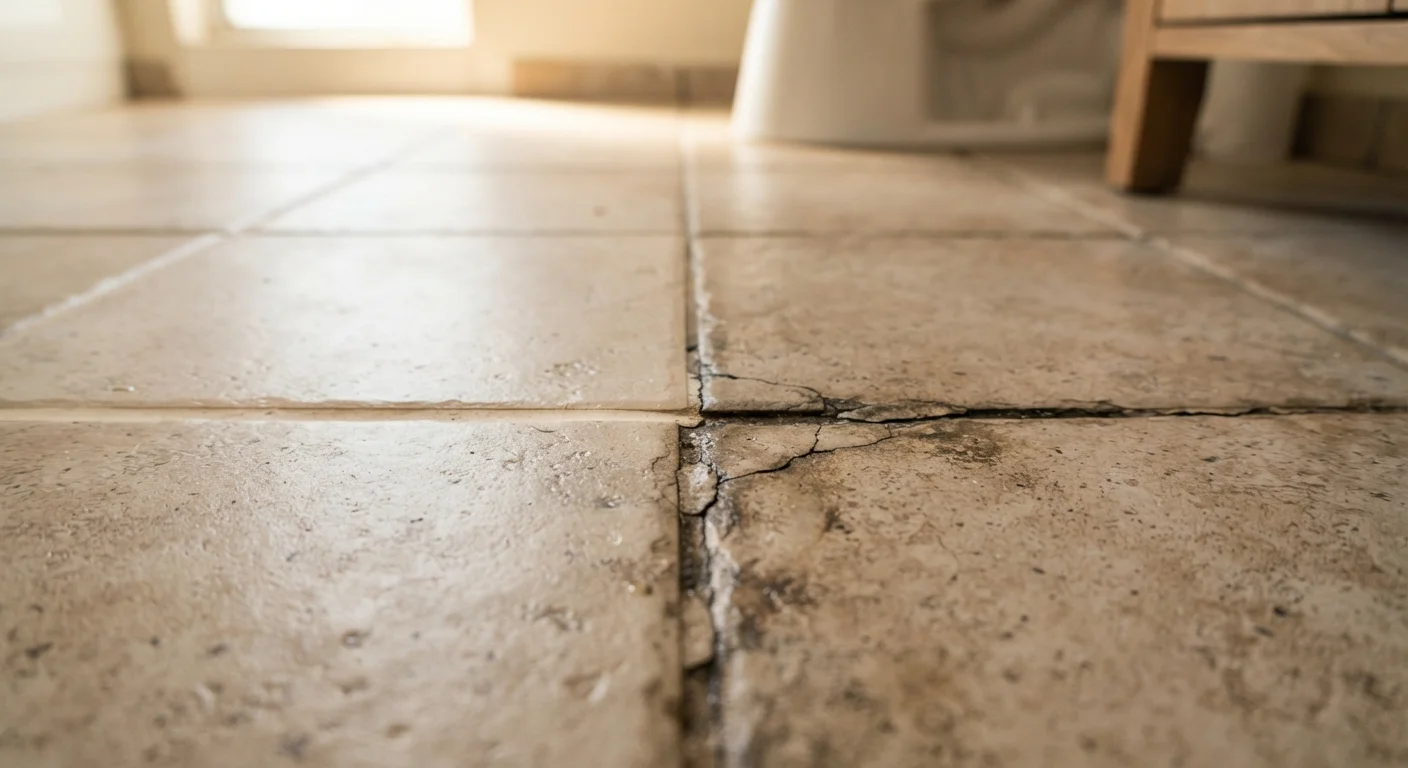
Ignoring hairline cracks and small gaps in grout lines.
Why it happens: Minor cracks look cosmetic and don't seem urgent. Many homeowners assume visible damage only matters once it becomes obvious or aesthetically disruptive.
Leaving standing water or wet surfaces on grouted tile without drying.
Why it happens: Tile looks water-resistant, so homeowners assume grout handles moisture equally well. In reality, unsealed or aging grout absorbs water readily.
These errors are remarkably common across households - and they tend to compound. A wrong cleaner weakens grout; weakened grout absorbs more moisture; absorbed moisture leads to mold that prompts even harsher scrubbing. Breaking any point in that chain makes a real difference.
~3-5 years
Typical unsealed grout lifespan in wet areas
Industry tile installation guidelines generally note that unsealed cement grout in showers and wet bathrooms can begin to degrade within a few years without regular sealing.
1x per year
Recommended grout sealing frequency
Most grout sealer manufacturers and tile industry professionals recommend resealing high-moisture areas annually to maintain effective water resistance.
What Proper Grout Care Actually Looks Like
Grout maintenance doesn't require specialized tools or professional visits for most situations. A pH-neutral tile and grout cleaner, a nylon-bristle brush, and a quality penetrating sealer are the core supplies. Clean grout lines regularly with light agitation - weekly in high-traffic or wet areas, monthly elsewhere. Allow surfaces to dry fully before applying sealer, and reapply sealer annually in bathrooms or kitchens where moisture exposure is constant.
Don't Use Bleach as a Routine Grout Cleaner
Undiluted bleach can lighten and weaken grout over time, especially with repeated use. While a diluted bleach solution may be appropriate for occasional mold treatment, it should not be part of your regular cleaning routine. Always rinse thoroughly after any bleach application, and ventilate the area well. If mold recurs persistently, the underlying moisture source - not the surface - needs to be addressed.
When cracks or significant crumbling do appear, regrouting a small section is a manageable DIY task for most homeowners. Remove damaged grout with a grout saw or oscillating tool fitted with a grout blade, taking care not to chip adjacent tile. Apply fresh grout according to the manufacturer's mix and curing instructions, then seal once cured. For issues that extend to the substrate - hollow-sounding tiles, widespread cracking, or moisture damage beneath the surface - consult a licensed tile contractor. Grout problems near plumbing fixtures can sometimes signal a larger issue; our article on plumbing maintenance myths covers related warning signs worth knowing.
Grout care is one of the simpler home maintenance routines to sustain once you establish it. The common thread across every mistake below is that small, correct actions consistently outperform occasional aggressive fixes.