

Key Takeaways
The Stress Response
The stress response is your body's automatic reaction to perceived threats or demands, triggering a surge of hormones that prepare you to act quickly. It's a survival mechanism - useful in short bursts, but potentially harmful when activated continuously. Modern stressors like work deadlines or financial pressure can trigger the same biological cascade as physical danger.
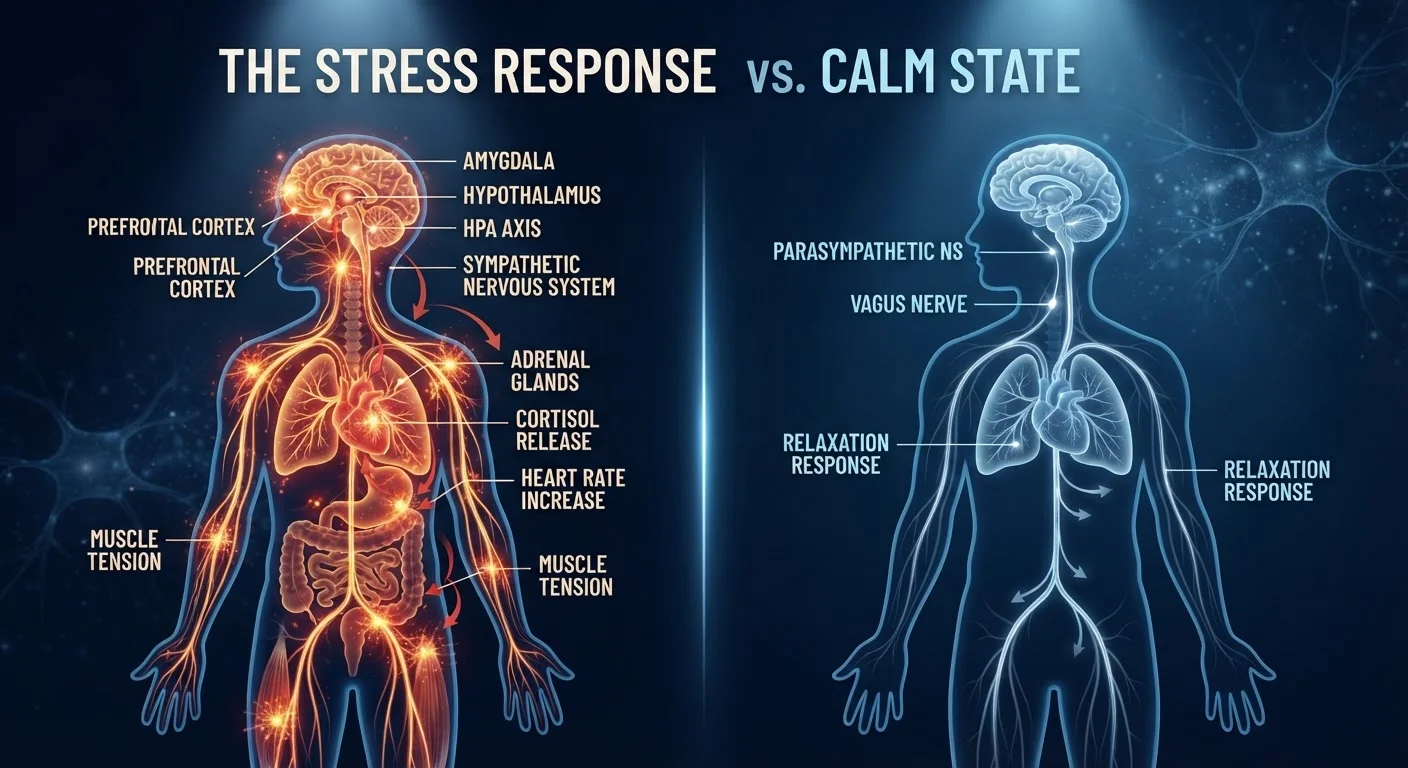
The stress response is primarily mediated by the hypothalamic-pituitary-adrenal (HPA) axis, which regulates cortisol release, and the sympathetic nervous system, which drives the immediate 'fight-or-flight' reaction via adrenaline and noradrenaline.
The Biology Behind the Feeling
When your brain perceives a threat - whether it's a near-miss on the highway or an overflowing inbox - it sets off a rapid chain of biological events. The hypothalamus signals the adrenal glands to release adrenaline and noradrenaline almost instantly, producing the familiar sensations: heart pounding, muscles tightening, senses sharpening. This is the fight-or-flight response, an evolutionary mechanism designed to help you react fast.
Seconds later, a second hormonal wave kicks in. The hypothalamic-pituitary-adrenal (HPA) axis triggers the release of cortisol, often called the primary stress hormone. Cortisol increases blood sugar to fuel muscles, suppresses digestion and immune activity, and keeps you alert. Under normal circumstances, once the stressor passes, cortisol levels fall and the body returns to baseline - a state called allostasis.
“Stress is not merely a psychological state - it is a whole-body event with measurable effects on virtually every organ system. Understanding this helps us treat it with the seriousness it deserves.”
— Robert Sapolsky, Neuroendocrinologist and author of 'Why Zebras Don't Get Ulcers'
What Chronic Stress Does Differently
Acute stress - the short-lived kind - is generally manageable and can even sharpen performance. The problem arises when the stress response never fully switches off. Chronic stress occurs when demands consistently outpace recovery, keeping cortisol elevated for weeks or months at a time.
The downstream effects are measurable and significant. Research consistently links chronic stress to:
- Sleep disruption: Elevated cortisol interferes with the normal sleep-wake cycle, making it harder to fall and stay asleep.
- Immune suppression: Prolonged cortisol exposure reduces the body's ability to fight infection and manage inflammation.
- Cardiovascular strain: Persistent activation of the sympathetic nervous system raises blood pressure and resting heart rate over time.
- Cognitive changes: The hippocampus, vital for memory and learning, is particularly sensitive to sustained cortisol exposure, which can impair focus and recall.
77%
Americans reporting physical stress symptoms
According to the American Psychological Association's Stress in America survey, roughly three in four adults report experiencing physical symptoms related to stress.
3x
Higher cardiovascular risk with chronic stress
Research published in peer-reviewed cardiology literature suggests chronically high psychosocial stress is associated with a significantly elevated risk of cardiovascular events compared to low-stress populations.
For a broader look at how these systems interconnect with sleep and emotional health, see the full picture of mental wellbeing.
The Brain Under Pressure
Stress doesn't just affect the body - it reshapes how the brain operates in real time. The amygdala, which processes emotional threats, becomes more reactive under chronic stress, making everyday situations feel disproportionately alarming. Meanwhile, the prefrontal cortex - responsible for rational decision-making and impulse control - becomes less effective, which is why stressed people often find it harder to think clearly or regulate their emotions.
This isn't a character flaw; it's neurobiology. Understanding that dynamic can itself reduce the self-blame many people experience when they feel overwhelmed.
Tracking Your Own Patterns Helps
Stress often feels constant partly because we don't notice when it eases. Keeping a brief daily note - even just a one-to-ten rating of how pressured you felt - can reveal patterns you'd otherwise miss. Over two or three weeks, that data becomes genuinely useful context for a conversation with a healthcare provider.
If you've noticed stress affecting your breathing or triggering anxiety, breathing exercises have a well-documented physiological basis that's worth understanding.
Recognizing When Stress Crosses a Line
Everyday pressure is normal - and distinguishing it from a more entrenched pattern matters. Warning signs that stress may have become chronic include persistent fatigue that sleep doesn't fix, frequent illness, difficulty concentrating, irritability, and physical symptoms like headaches or muscle tension that have no other clear cause.
Chronic stress can also be a stepping stone toward burnout, a distinct state of emotional and physical exhaustion. Recognizing the early signs of burnout before they escalate is an important act of self-awareness. You might also find value in a structured weekly mental wellness check-in to help you track patterns over time.
This article is for general informational and educational purposes only and is not a substitute for professional medical advice, diagnosis, or treatment. If you are concerned about your stress levels or mental health, please consult a qualified healthcare professional.