

Key Takeaways
Mindfulness Meditation
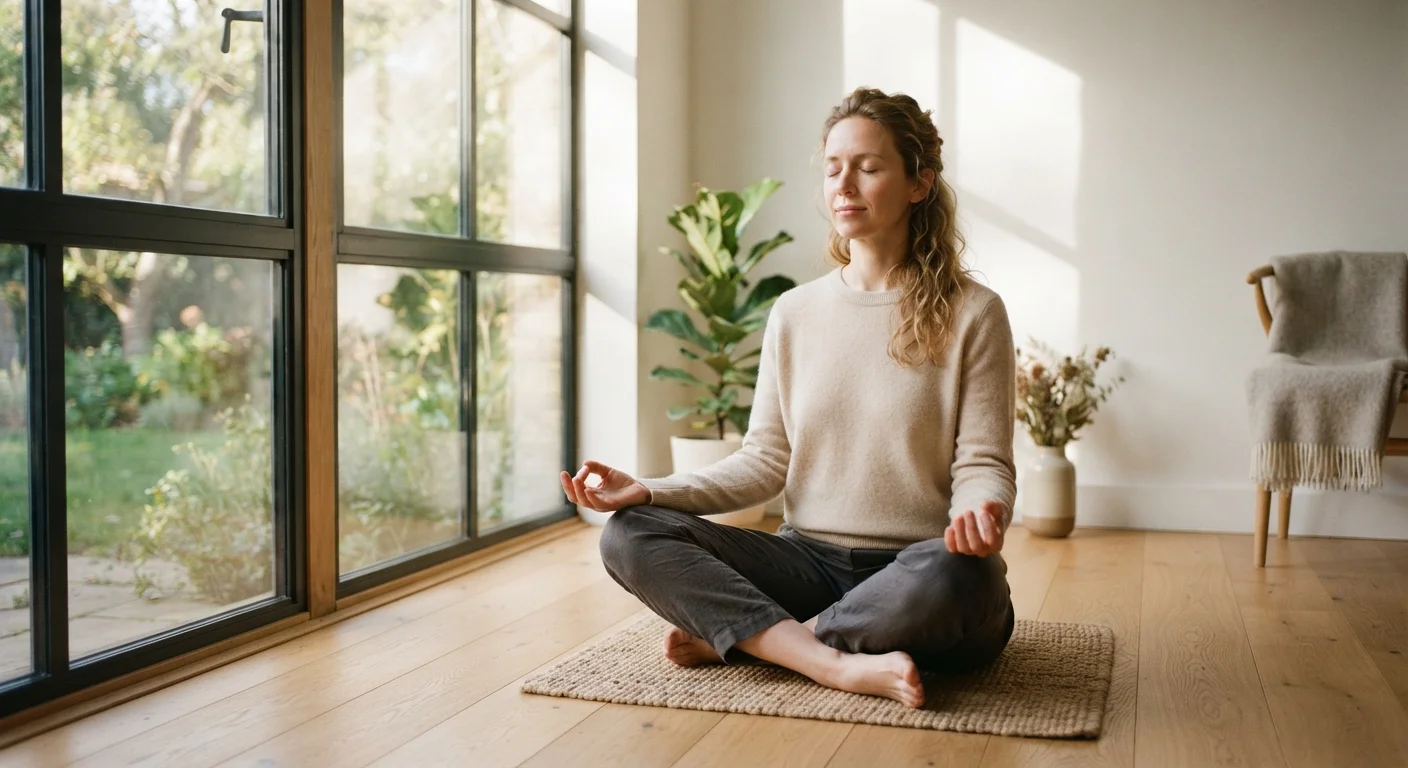
Mindfulness meditation is the deliberate practice of paying attention to your present-moment experience - thoughts, feelings, and physical sensations - without judging them as good or bad. Rather than trying to stop thinking, it trains you to observe your mental activity with a sense of calm awareness. It draws on ancient contemplative traditions but has been adapted into secular, clinically studied formats over recent decades.
In clinical research, mindfulness is often operationalized as a measurable psychological skill involving two components: sustained attention regulation and an open, non-evaluative orientation toward experience.
What Mindfulness Actually Means
The word mindfulness appears on everything from meditation apps to cereal packaging, which has diluted its meaning considerably. At its core, mindfulness refers to a specific quality of attention: deliberately noticing what is happening right now - in your body, your thoughts, and your surroundings - without immediately reacting to or judging it.
The clinical framing most commonly used in research comes from psychologist Jon Kabat-Zinn, who developed Mindfulness-Based Stress Reduction (MBSR) at the University of Massachusetts in 1979. He defined mindfulness as "paying attention in a particular way: on purpose, in the present moment, and non-judgmentally." That formulation has guided decades of scientific study and remains the standard reference point in peer-reviewed literature.
Importantly, mindfulness is a skill, not a state you either have or don't. Like physical fitness, it develops with practice and can fluctuate depending on how consistently it is exercised. This framing matters because it sets realistic expectations: beginners should expect their minds to wander constantly, and that's completely normal.
Mindfulness and Mental Health Conditions
Mindfulness differs from mental illness in the same way that fitness differs from physical medicine - it supports general wellbeing but is not a clinical intervention for diagnosable conditions. For a clear breakdown of how mental health and mental illness relate to each other, see our explainer on mental health vs. mental illness. If you are managing a diagnosed condition, always discuss complementary practices with your care provider.
What Mindfulness Is Not
Several persistent myths discourage people from trying mindfulness or lead them to misuse it. Understanding what it isn't is as important as understanding what it is. For a broader look at how misconceptions can delay mental wellness support, see our piece on persistent myths about mental health.
- It is not about emptying your mind. The goal is not to stop thoughts from arising - that's neurologically impossible - but to observe them without being swept away.
- It is not a religion. Although mindfulness derives from Buddhist meditation traditions, its secular clinical form carries no doctrinal content. It requires no belief system.
- It is not a cure-all. Mindfulness is a skill and a tool, not a medical treatment. It complements professional care; it does not replace it.
- It is not the same as relaxation. You may feel calm after a session, but the practice also involves sitting with difficult thoughts and sensations rather than escaping them.
- It does not require hours a day. Research-backed protocols typically involve sessions of 20-45 minutes, though shorter daily practices also show measurable benefits.
Starting Small Is Scientifically Defensible
You do not need to begin with lengthy sessions. Research indicates that even five to ten minutes of daily breath-focused attention can begin building the attentional and emotional regulation skills mindfulness targets. Consistency across days matters more than duration per session, especially at the start.
What the Research Actually Shows
Mindfulness has one of the larger evidence bases in non-pharmacological mental health research. A widely cited 2014 meta-analysis published in JAMA Internal Medicine reviewed 47 randomized controlled trials and found moderate evidence that mindfulness meditation programs improved anxiety, depression, and pain outcomes. The American Psychological Association recognizes Mindfulness-Based Cognitive Therapy (MBCT) as an evidence-based intervention for preventing relapse in recurrent depression.
47
Randomized controlled trials reviewed
A 2014 meta-analysis in JAMA Internal Medicine analyzed 47 trials and found moderate evidence for mindfulness reducing anxiety, depression, and pain.
~40%
Reduction in depressive relapse risk
Multiple trials of Mindfulness-Based Cognitive Therapy (MBCT) show roughly a 40% reduction in relapse risk for people with three or more prior depressive episodes, according to a Lancet meta-analysis.
8 weeks
Standard MBSR program length
The most widely studied mindfulness protocol - MBSR - involves an eight-week structured course, with sessions typically ranging from 20 to 45 minutes.
Research also shows benefits for attention regulation, emotional reactivity, and certain markers of physiological stress. However, the field has faced scrutiny over study quality - many early trials used small samples or lacked active control groups. More recent, rigorously designed studies continue to confirm core benefits while moderating more sweeping claims. The honest summary: mindfulness reliably helps many people manage stress and emotional difficulty; it is not a universal solution, and effect sizes are typically modest rather than dramatic.
For context on how mindfulness fits within a wider approach to emotional wellbeing, see our beginner's orientation to mental wellness.
Putting It Into Practice Realistically
Starting a mindfulness practice does not require an app, a cushion, or a class - though structured programs can help beginners build consistency. The most studied entry point is formal breath-focused meditation: sitting quietly, directing attention to the physical sensations of breathing, and gently redirecting when the mind wanders. That redirect - noticing distraction and returning focus - is the actual exercise.
Mindfulness can also be practiced informally, by bringing deliberate attention to routine activities like eating, walking, or washing dishes. This informal practice is less studied than structured programs but may be easier to sustain for people with demanding schedules.
If written reflection appeals to you as a complementary approach, our guide on journaling for mental clarity covers evidence-backed styles worth exploring. For those interested in technology-assisted options, our article on digital mental health tools offers a balanced look at what apps can and cannot provide.
Anyone managing a diagnosed mental health condition should discuss whether mindfulness practice is appropriate with their provider. Mindfulness is generally considered low-risk for most people, but it is not universally suitable, and professional guidance ensures it complements - rather than delays - appropriate care.
This article is for general informational and educational purposes only and is not a substitute for professional medical or mental health advice. If you have concerns about your mental health, please consult a qualified healthcare provider.