

Key Takeaways
Low-Impact Exercise
Low-impact exercise refers to physical activity in which at least one foot remains in contact with the ground - or the body is otherwise supported - at all times, reducing the shock and stress placed on joints. Common examples include walking, swimming, cycling, and elliptical training. The term describes how the body moves, not how hard you work.
Impact is measured by ground reaction force - the force the ground exerts back on the body during movement. High-impact activities like running can generate forces two to three times body weight, while low-impact activities keep those forces substantially lower.
What Makes an Exercise 'Low-Impact'?
The word "impact" in exercise science has a precise meaning: it refers to the force transmitted through the body when it makes contact with a surface. In high-impact activities like running or jumping, both feet leave the ground simultaneously, and the landing generates substantial forces through the ankles, knees, hips, and spine. Low-impact activities avoid that abrupt landing - either by keeping contact with the ground, using water buoyancy, or using equipment that cushions movement.
This distinction matters because it determines how much cumulative stress joints absorb over time. It does not determine how effective the workout is. A common misconception - explored in more detail in our article on exercise myths that hold people back - is that if you're not feeling heavy joint strain, you're not working hard enough. That's simply not true.
Impact vs. Intensity: A Key Distinction
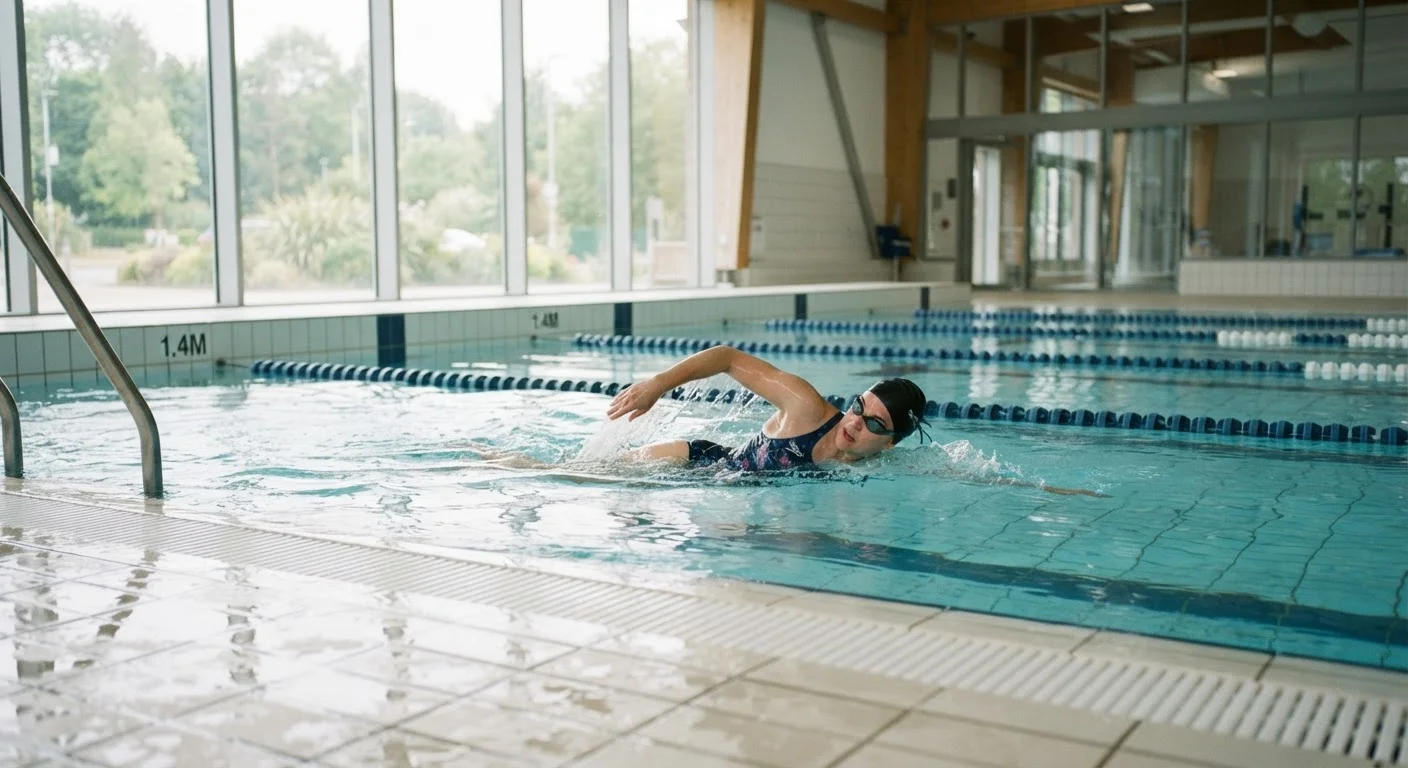
Low-impact exercise can be performed at both moderate and vigorous intensity levels. A brisk swim or a challenging cycling session can elevate your heart rate significantly while still keeping joint forces low. Don't equate 'low-impact' with 'easy' - they're separate dimensions of any workout.
Common low-impact activities include swimming, water aerobics, cycling (stationary or outdoor), elliptical training, walking, yoga, tai chi, and rowing. Each reduces joint loading in a different way - water supports body weight, ellipticals eliminate the heel-strike phase of running, and cycling keeps the body seated and cushioned.
Who Tends to Benefit Most?
Low-impact exercise isn't exclusively for any one group, but certain populations find it particularly well-suited to their needs.
- Older adults: As joints accumulate wear and bone density can decrease with age, lower-force movement helps maintain cardiovascular fitness and muscle strength with reduced injury risk. Our guide on how exercise needs shift with age explores these changes in detail.
- People with joint conditions: Those managing osteoarthritis, rheumatoid arthritis, or recovering from orthopedic procedures often need to exercise in ways that don't aggravate inflamed or surgically repaired tissue. A physician or physical therapist should guide specific programming.
- Beginners: Starting with low-impact movement allows the body's connective tissues - tendons and ligaments - to adapt gradually before progressing to higher-intensity or higher-impact training.
- People returning after injury or illness: Reconditioning the cardiovascular system and rebuilding strength following a health setback generally calls for a measured approach where load is carefully controlled.
- Those with limited mobility or balance concerns: Chair-based exercise, water aerobics, and supported cycling can accommodate a wide range of functional abilities.
54 million+
Americans living with diagnosed arthritis
According to the Centers for Disease Control and Prevention, arthritis is one of the most common reasons adults seek low-impact physical activity options.
150 min
Weekly moderate activity recommended for adults
U.S. Department of Health and Human Services physical activity guidelines recommend at least 150 minutes of moderate-intensity aerobic activity per week - achievable through low-impact formats.
~25%
Lower injury rate in low-impact vs. running programs
Research published in sports medicine literature suggests recreational runners experience meaningfully higher injury rates than participants in low-impact aerobic programs over comparable training periods.
Pregnant individuals are often advised to favor low-impact movement, though exercise recommendations during pregnancy are highly individual. Always consult an obstetrician or midwife for guidance specific to your situation.
The Real Health Benefits - Backed by Evidence
Low-impact exercise produces measurable improvements across several dimensions of health when performed consistently and at sufficient duration. These benefits are not second-tier versions of what high-impact exercise delivers - in many cases, the outcomes are comparable.
Cardiovascular health: Activities like swimming, cycling, and brisk walking elevate heart rate and challenge the aerobic system. Public health guidelines - summarized in our plain-language breakdown of physical activity recommendations for adults - do not distinguish between high- and low-impact activity when describing weekly cardiovascular targets. What matters is sustained effort at moderate or vigorous intensity.
Musculoskeletal health: Resistance-based low-impact activities maintain and build muscle mass, which supports bone density and functional strength. To understand how low-impact cardio and strength training can work together, see our explainer on what strength training and cardio each do for the body.
Mental wellbeing: Exercise-associated improvements in mood, anxiety management, and sleep quality are not unique to high-impact formats. Regular low-impact activity is associated with reduced symptoms of depression and improved cognitive function in the research literature.
Progress at Your Own Pace
Low-impact doesn't mean static. As your fitness improves, gradually increase the duration or resistance of your sessions to continue making progress. Small, consistent increments are more effective - and safer - than dramatic jumps in workload.
Walking - often underestimated - deserves particular attention. Research consistently supports its wide-ranging benefits, which our editorial team examines in depth in the science behind walking as exercise.
Making Low-Impact Exercise Work for You
Sustainability is among the strongest arguments for low-impact exercise. An activity you can maintain week after week - without repeated injury setbacks or excessive soreness - accumulates far more total health benefit than an aggressive approach that leads to burnout or time off.
If you're working within a packed schedule, low-impact activities also tend to integrate easily into daily life. Our piece on fitting movement into a busy day offers practical strategies that apply just as well to low-impact options as to any other format.
Progression still matters. As fitness improves, increasing duration, frequency, or resistance keeps the stimulus meaningful. You might also explore Zone 2 cardio, a heart-rate-based approach to aerobic training that pairs naturally with low-impact modalities like cycling or brisk walking.
This article is for general informational purposes only and does not constitute medical advice. Speak with a qualified healthcare professional before beginning any new exercise program, particularly if you have an existing health condition, are pregnant, or are recovering from injury or surgery.