

Three Concepts, One Common Confusion
Walk into any gym or scroll through any fitness account, and you'll hear the words flexibility, mobility, and stretching used interchangeably. They're related - but they're not the same thing. Mixing them up can lead to training gaps and unrealistic expectations about what a yoga class or a post-run stretch will actually do for your body.
The simplest way to frame the distinction: flexibility and mobility are qualities your body possesses; stretching is a tool you use to train those qualities. Understanding this triangle helps you make smarter choices about movement - at any fitness level.
As exercise needs shift across life stages - something covered in depth in our article on how exercise needs change with age - the relative importance of flexibility and mobility work tends to grow. But the foundational definitions apply at every decade.
Flexibility vs. Mobility: The Core Difference
Flexibility is a passive property. It describes how far your muscle tissue can be lengthened when an external force - gravity, a strap, a partner, your own body weight - is applied. A gymnast touching her nose to her knee in a split is displaying remarkable flexibility in her hamstrings and hip flexors. But that range is achieved with assistance from gravity and positioning, not from muscular effort alone.
Mobility, by contrast, is active. It's the ability to move a joint through its full range under your own muscular control. A person can have excellent passive flexibility yet limited mobility in the same joint - meaning they can be moved into a deep squat position by an external force but cannot hold or control that position independently. This gap is why some very flexible individuals still move poorly or sustain overuse injuries.
A useful analogy: flexibility is the potential range; mobility is the range you can actually use. Both matter, and they're not always proportional.
What Stretching Actually Does
Stretching is the practice - the collection of techniques - that can improve flexibility, support mobility development, or both, depending on how it's applied. The main categories recognized by exercise science include:
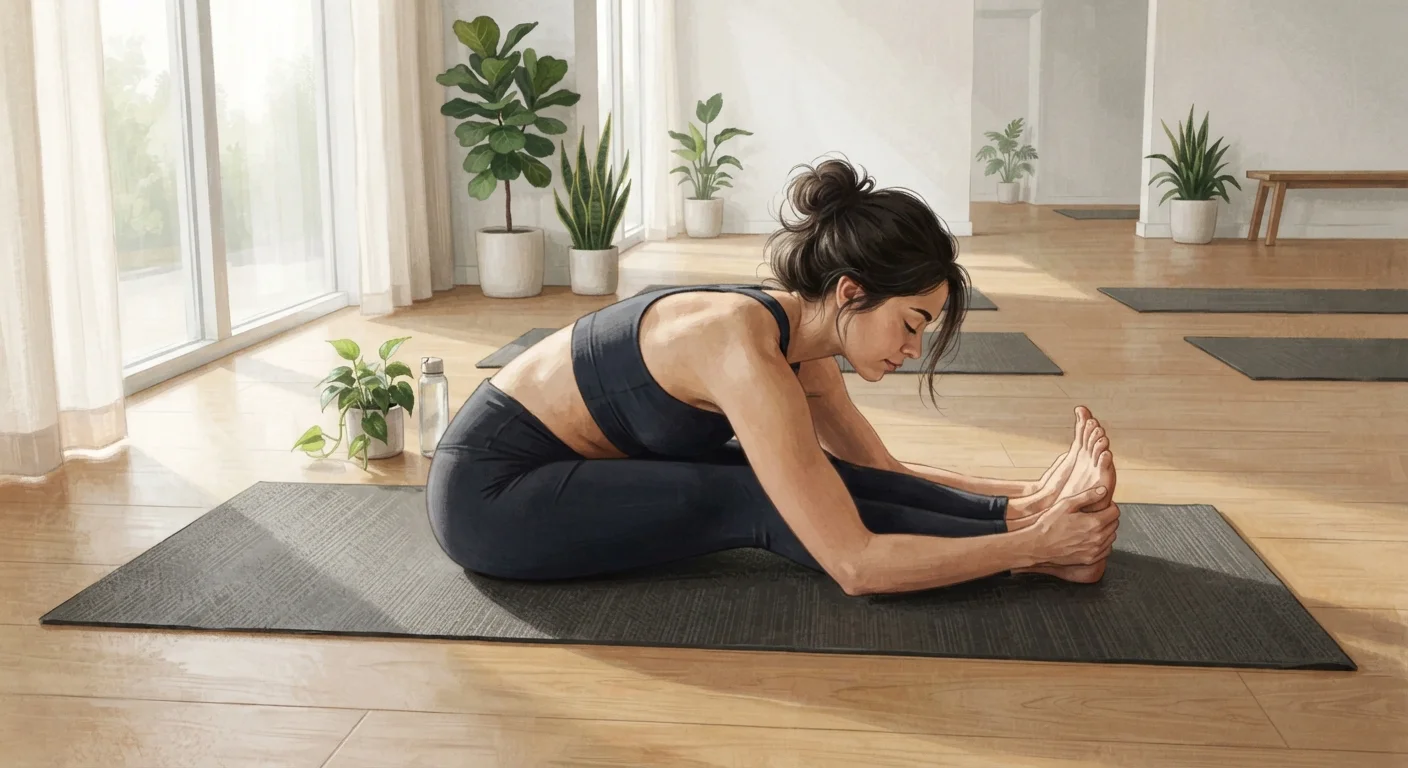
- Static stretching: Holding an elongated position for 20-60 seconds. Effective for increasing passive range of motion over time when performed consistently, particularly after exercise when muscles are warm.
- Dynamic stretching: Controlled, repetitive movements through a range of motion - leg swings, hip circles, shoulder rolls. Used primarily as part of a warm-up to activate muscles and prepare joints for load.
- PNF (proprioceptive neuromuscular facilitation): A more advanced technique typically used with a partner or therapist, involving cycles of contraction and relaxation to achieve deeper tissue lengthening. Often used in physical therapy and high-level athletic training.
Research generally supports static stretching after exercise rather than before, as pre-activity static holds may temporarily reduce force production in some individuals. Dynamic movement is the better pre-exercise choice for most people.
Stretching alone won't automatically produce mobility. To translate flexibility gains into usable range, you also need to train the muscles to actively control that new range - through targeted strengthening exercises, movement practice, and progressive loading.
Why the Distinction Matters in Practice
Knowing the difference helps you set realistic goals and design more effective routines. If your aim is to move better in daily life - getting off the floor easily, reaching overhead without discomfort, squatting to pick something up - mobility training is likely more directly relevant than passive stretching alone.
If injury prevention or post-exercise recovery is the priority, a consistent static stretching routine targeting major muscle groups can be genuinely beneficial over time. The American College of Sports Medicine recommends stretching each major muscle group at least twice per week for general health.
For everyday Americans at all activity levels, movement priorities shift meaningfully across decades - and so does the balance between flexibility work and functional mobility training. What matters most in your 20s may look different in your 50s or 70s.
The bottom line: don't rely on one concept to do another's job. A well-rounded approach to movement health weaves together passive flexibility work, active mobility practice, and the right stretching techniques for the right moments.
This article is for general informational and educational purposes only and does not constitute medical or fitness advice. Consult a qualified healthcare provider or certified fitness professional before beginning any new exercise or stretching program, particularly if you have an existing injury or health condition.