

Key Takeaways
Summary
18 items · 20-45 minutes
Why Preparation Makes the Difference
Most new exercise routines don't fail because people lack willpower. They fail because key decisions were left unmade before day one - which type of exercise, when, at what intensity, and what happens when life gets in the way. Working through a structured checklist before you begin helps you design a routine that fits your actual life rather than an idealized version of it.
This checklist is built for everyday Americans at any activity level - whether you've been sedentary for years or are returning to exercise after a break. It won't tell you exactly what program to follow; that's a conversation for you and your healthcare provider or fitness professional. What it will do is help you think through the factors that determine whether a program sticks.
This Is Information, Not Medical Advice
The content in this checklist is for general educational purposes only. It is not a substitute for personalized guidance from a licensed healthcare provider, physical therapist, or certified fitness professional. Always consult a qualified professional before making decisions about exercise if you have any medical concerns or health conditions.
What to Work Through Before You Begin
The items below are organized into five areas: health readiness, goal setting, program selection, logistics, and mindset. Work through each group before your first session. Some items take minutes; a few - like talking with your doctor - may take a day or two to complete. That lead time is well spent.
Health & Medical Readiness
Goal Setting
Program Selection
Logistics & Setup
Mindset & Sustainability
For a deeper look at the role recovery plays in any program, see how rest days support fitness progress - building them in from the start is one of the most effective things a new exerciser can do.
Tools That Help You Stay on Track
You don't need expensive equipment to get organized before you start. The tools below range from a free form to a simple notebook - what matters is having the basics in place so the logistics don't become a barrier on day one.
PAR-Q Self-Screening Form
Helps identify any symptoms or conditions that suggest you should get medical clearance before exercising.
Weekly Planner or Calendar App
Used to schedule workouts in advance and protect those time blocks from other commitments.
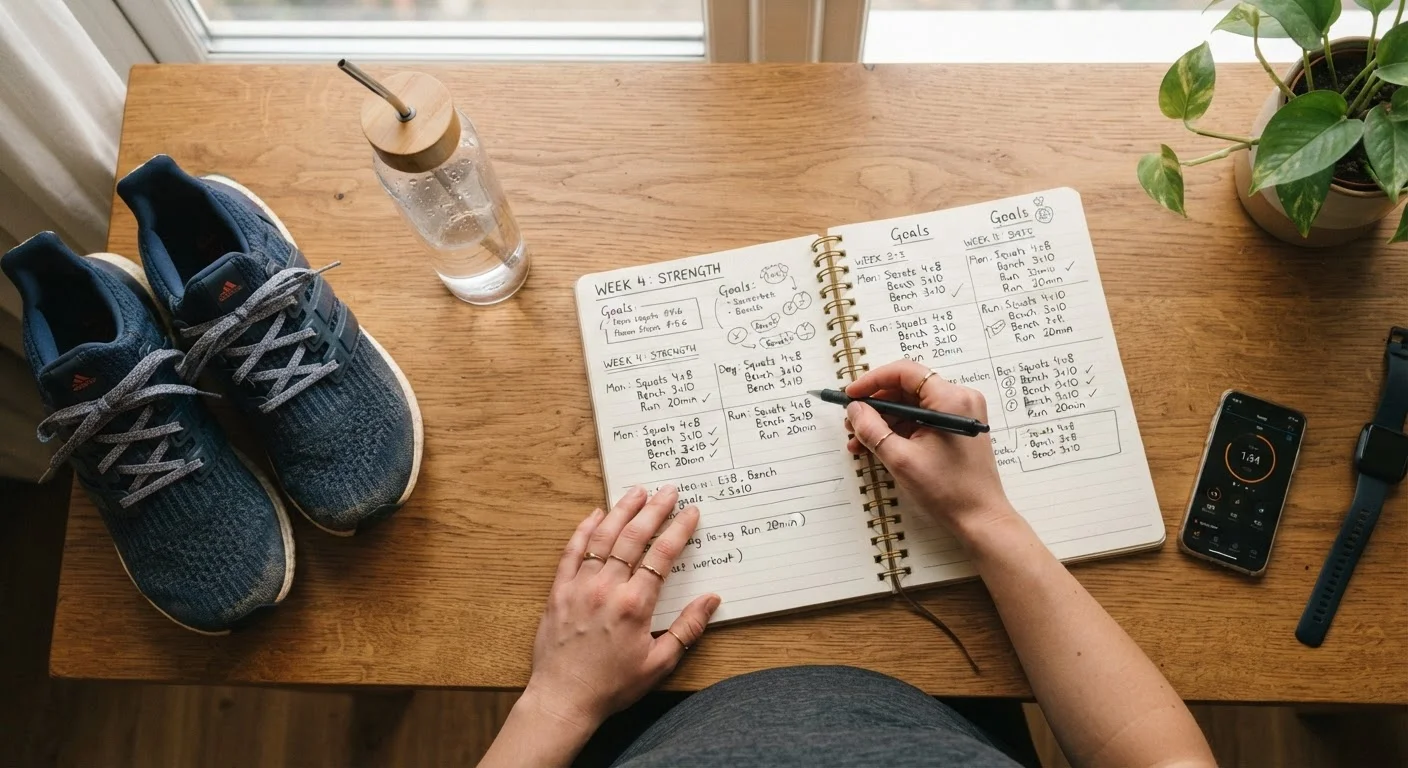
Notebook or Fitness Journal
For recording your goals, baseline measurements, and weekly progress in one place.
Activity Tracker or Smartphone
Tracks steps, heart rate, or workout duration to give you objective data on your progress.
Don't Skip the Medical Check-In
The American Heart Association and other major health organizations recommend that adults with cardiovascular risk factors, chronic conditions, or extended inactivity consult a healthcare provider before significantly increasing their physical activity. Skipping this step is not a time-saver - it can expose you to preventable injury or complications. If you're unsure whether you need clearance, err on the side of asking.
Ramping Up Too Fast Backfires
Overuse injuries - stress fractures, tendinitis, muscle strains - are one of the leading reasons new exercisers quit within the first few months. Starting at a level that feels "too easy" is deliberate strategy, not weakness. Progressive overload works best when the progression is gradual and consistent.
If you're also considering supplements alongside a new fitness routine, review what's involved in starting supplements safely for the first time - the same principle of medical consultation applies there too.
Setting Yourself Up to Stay With It
Exercise consistency is less about motivation - which fluctuates - and more about structure. Scheduling workouts as fixed appointments, planning realistic responses to missed sessions, and connecting exercise to your broader wellbeing (sleep, stress, energy) are all evidence-supported strategies for adherence.
Mental wellbeing and physical activity are deeply connected. If stress, anxiety, or low mood is part of what you're hoping to address through movement, a grounded introduction to mental wellness offers a useful companion framework for thinking about your overall health picture.
Starting an exercise program is a meaningful step. Taking 20 to 45 minutes to work through this checklist before your first session increases the chances that it becomes a lasting part of your routine rather than a short-lived attempt.
This article is for general informational and educational purposes only and does not constitute medical advice. Consult a qualified healthcare provider before beginning any new exercise program, particularly if you have existing health conditions or concerns.