

Key Takeaways
Why You Don't Need a Named Diet to Eat Well
Formal diets - keto, paleo, Mediterranean, Whole30, and countless others - each come with rules, restrictions, and usually a learning curve. Many Americans try one, maintain it for a few weeks, and abandon it when real life intervenes. The underlying problem isn't lack of willpower; it's that rigid systems don't adapt well to busy schedules, tight budgets, or the actual diversity of American eating.
What most of those diets share, stripped of their branding, is a common structure: more vegetables, adequate protein, moderate carbohydrates from better sources, and limited ultra-processed food. That structure doesn't belong to any one diet. It's simply a framework - and it's one you can apply to whatever you already cook.
The plate method used in the steps below is built on that framework. It's visual, flexible, and doesn't require tracking apps, special foods, or strict schedules. If you want to reinforce the habit further, our guide on grocery shopping habits that support balanced eating shows how the choices you make at the store set the tone for the whole week.
What you will need
Standard Dinner Plate (9-10 inches)
Used as a visual portioning tool - dividing it into sections guides food group proportions without measuring.
Measuring Cup (optional)
Helpful for learning portion sizes when you're first getting familiar with grain and protein amounts.
Putting the Plate Method Into Practice
The five steps below walk through how to build a balanced plate using proportions rather than measurements. Apply them to a meal you already make - tacos, stir-fry, pasta, a grain bowl - and you'll quickly see how the structure fits around existing habits rather than replacing them.
Fill Half Your Plate With Vegetables or Fruit
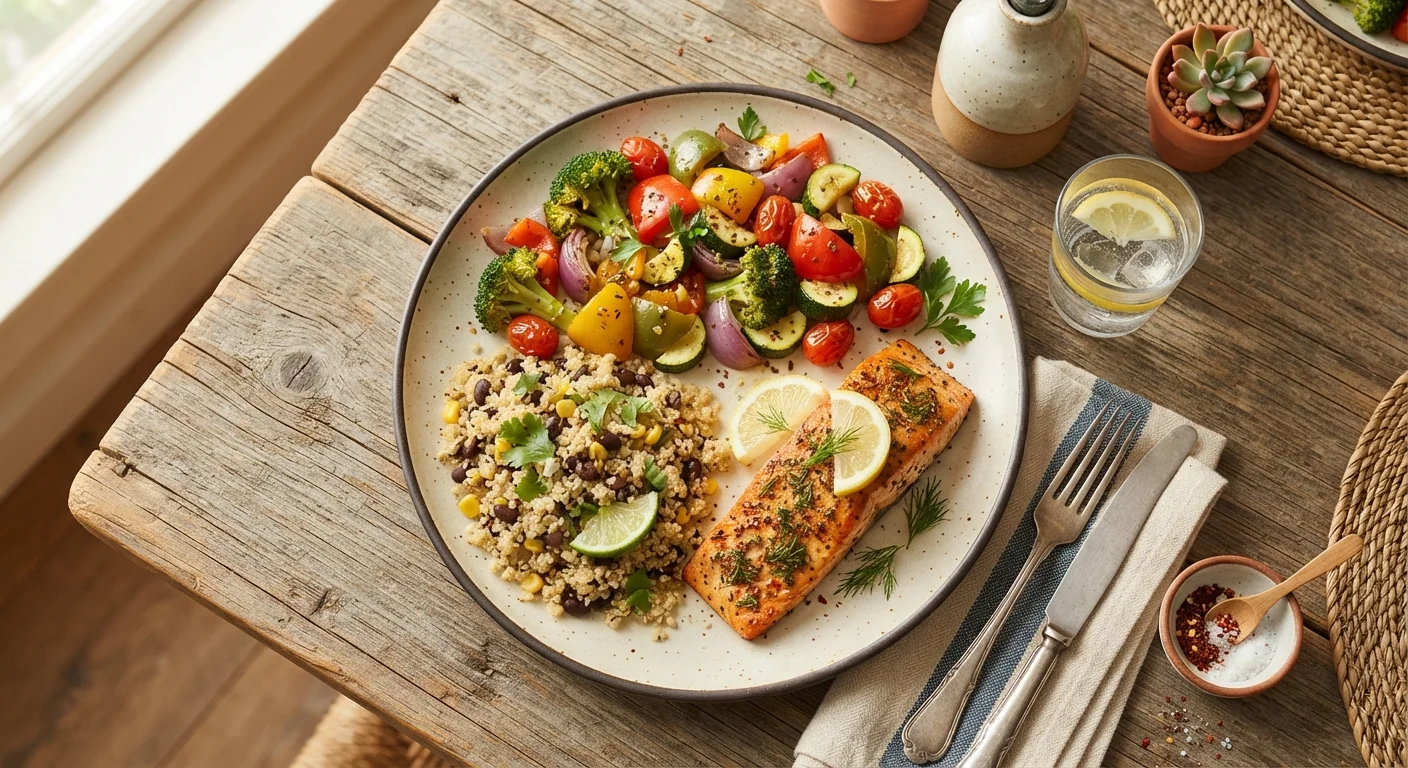
This is the structural foundation. Before anything else goes on the plate, claim half of it for non-starchy vegetables - think leafy greens, broccoli, bell peppers, cucumbers, carrots, zucchini, or whatever is in season or already in your fridge. Frozen vegetables count equally. Fruit is a good addition at breakfast or as part of a mixed plate.
The goal here is volume and variety. Eating a range of colors across the week brings in a wider spectrum of vitamins, minerals, and fiber. You don't need to eat every color at every meal - just avoid defaulting to one or two vegetables indefinitely.
Add a Quality Protein Source to One Quarter of the Plate
Protein supports muscle maintenance, satiety, and a range of body functions. Aim for it to occupy roughly a quarter of your plate. Good options include eggs, chicken, fish, beans, lentils, tofu, plain Greek yogurt, cottage cheese, or lean cuts of meat.
You don't need an expensive or elaborate protein. Canned beans and eggs are among the most affordable and nutritious choices available. If you're interested in how plant-based proteins compare, our article on plant-based eating's benefits and trade-offs offers an honest look at both sides.
Reserve the Remaining Quarter for Whole Grains or Starchy Vegetables
Carbohydrates are not the enemy - the form they come in makes a significant difference. Whole grains like brown rice, quinoa, oats, farro, or whole wheat bread contain fiber that slows digestion and supports steadier energy. Starchy vegetables like sweet potato, corn, or winter squash serve a similar role.
Refined grains (white bread, white rice, most crackers) aren't forbidden, but swapping even some of them for whole-grain versions over time is one of the most manageable upgrades you can make. If cooking grains from scratch sounds like a time barrier, our guide on eating well on a tight schedule covers batch cooking and other time-saving strategies.
Add a Small Amount of Healthy Fat
Fat supports nutrient absorption - particularly fat-soluble vitamins A, D, E, and K - and makes meals more satisfying. A small addition is all that's needed: a drizzle of olive oil used in cooking, a few slices of avocado, a small handful of nuts or seeds, or a light dressing on a salad.
Fat is calorie-dense, so portions matter more here than with vegetables. A tablespoon of oil or a small handful of nuts is typically sufficient to serve its nutritional purpose without crowding out other components.
Review the Whole Plate Before Eating
Take a brief look at the assembled meal. Does it have color? Is something green or bright present? Is protein visible? Are you relying heavily on one food group? This visual check takes seconds and builds awareness without requiring calorie counting or tracking apps.
Over time, this habit becomes intuitive. You'll start noticing when a meal is mostly beige (usually a signal that vegetables are missing) or when it's all carbohydrate with little protein. The plate method works because it trains proportion recognition, not compliance with a specific diet.
Start With One Meal, Not Your Whole Diet
Trying to transform every meal at once is a common reason people abandon good intentions. Pick one meal - lunch or dinner is usually easiest - and practice building a balanced plate there first. Once it feels natural, apply the same framework to other meals gradually.
This Is General Nutrition Education
The guidance in this article is for general informational purposes and is not a substitute for personalized medical or dietary advice. Nutritional needs vary by individual, and factors like age, health conditions, and medications can affect what eating patterns are appropriate for you. Consult a registered dietitian or your healthcare provider before making significant changes to your diet.
Avoid Extreme Restriction
Balanced eating is not about eliminating food groups or drastically cutting calories. Overly restrictive approaches can be difficult to sustain and may lead to nutritional gaps. If you find yourself anxious around food or struggling with eating patterns, speaking with a healthcare professional is a worthwhile step.
This article is for general informational and educational purposes only and does not constitute medical or dietary advice. Nutritional needs vary by individual. Consult a registered dietitian or qualified healthcare provider before making significant changes to your diet.