

Key Takeaways
Tex-Mex Cuisine
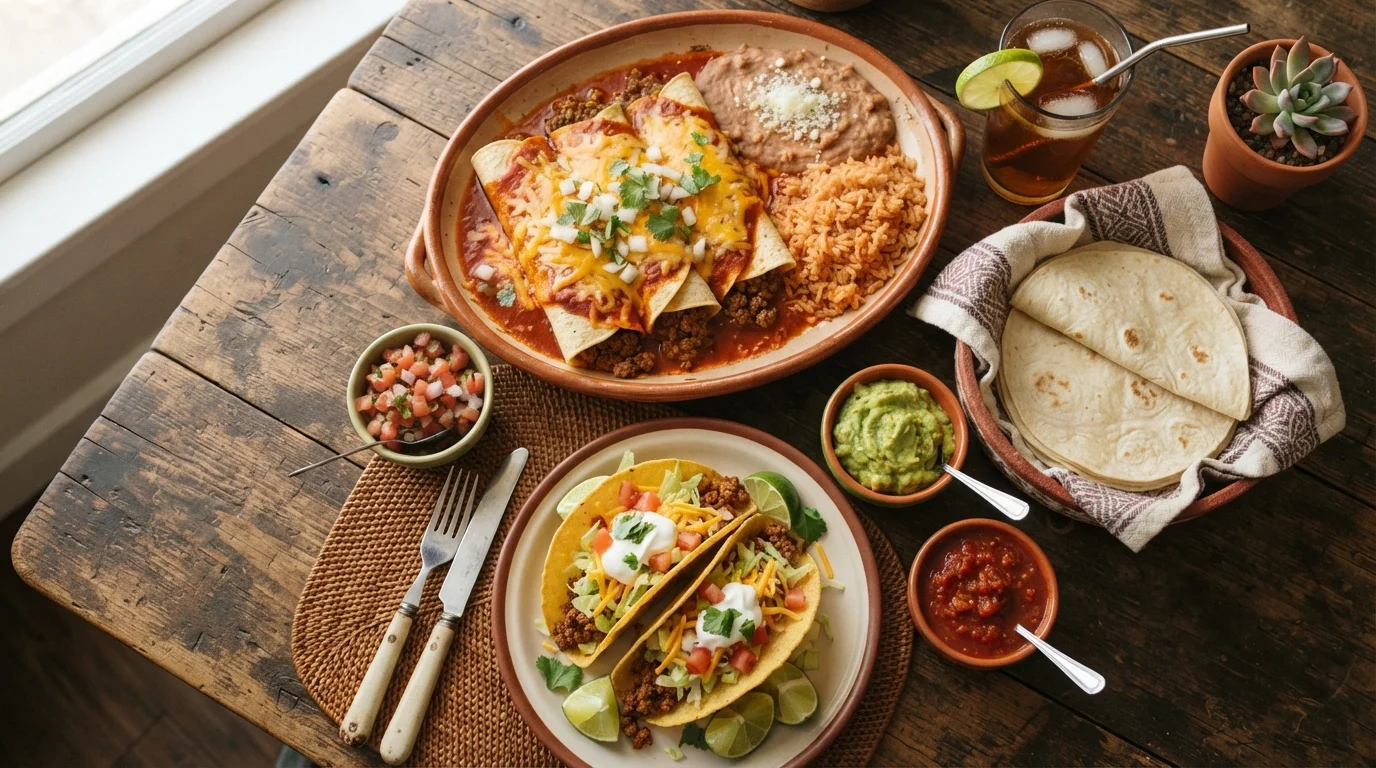
Tex-Mex is a regional American cuisine that evolved along the Texas-Mexico border, blending Mexican culinary traditions with ingredients and cooking styles brought by Texas ranchers, settlers, and the broader American food system. It is distinct from interior Mexican cooking - not a lesser version of it, but a fully formed culinary tradition in its own right. Think yellow cheese, flour tortillas, chili gravy, and ground beef as signature markers.
Culinary historians trace the term 'Tex-Mex' to Tejano communities - Texans of Mexican descent - whose foodways predated Texas statehood and fused over generations with Anglo-American ranching culture and available pantry staples.
A Cuisine Born on the Border
The story of Tex-Mex begins long before the term existed. Tejanos - Texans of Mexican descent whose families had lived in the region for generations - developed a cooking style shaped by the land, available ingredients, and a blending of cultures that accelerated after Texas joined the United States in 1845. As Anglo settlers and ranchers moved into the region, their foodways mingled with those already present, producing something genuinely new.
What resulted wasn't Mexican food adapted for American tastes. It was a living regional cuisine that reflected who was cooking, what was on hand, and how communities shared meals across cultural lines. Beef raised on Texas ranches, wheat flour milled locally, and pantry staples from the American supply chain all left their mark - as did the Mexican cooking techniques and flavor foundations that Tejano cooks never abandoned.
“Tex-Mex is the food of my people. It's the food of people who were here before the border crossed them.”
— Gustavo Arellano, Author of 'Taco USA: How Mexican Food Conquered America'
The Ingredients That Set Tex-Mex Apart
The clearest way to distinguish Tex-Mex from Mexican regional cooking is to look at what's on the plate. Tex-Mex leans heavily on a handful of signature elements that rarely appear in the same form south of the border.
- Yellow cheese: Melted cheddar or processed American cheese draped over enchiladas and nachos is a Tex-Mex calling card. Mexican regional cooking more commonly uses fresh cheeses like queso fresco, Oaxacan string cheese, or cotija.
- Flour tortillas: While flour tortillas do exist in some northern Mexican states, they dominate Tex-Mex in a way that corn tortillas - the foundation of most Mexican cooking - do not.
- Chili gravy: This thick, cumin-forward sauce made with dried chiles and meat drippings is distinctly Texan. It bears little resemblance to the complex mole or fresh salsa verde sauces found in Mexican kitchens.
- Ground beef seasoned with cumin: Cumin is used in Mexican cooking, but the heavy-handed, uniform spicing of ground beef in Tex-Mex tacos and burritos reflects a different culinary logic than the region- and dish-specific spicing common in Mexico.
31
Distinct states with regional Mexican cuisine traditions
Mexico's 31 states each have recognizable culinary traditions, underscoring how varied 'Mexican food' actually is - far beyond what any single menu category can represent.
1943
Year nachos were reportedly invented
Nachos are widely attributed to Ignacio 'Nacho' Anaya, who created the dish near the Texas border in Piedras Negras, Coahuila - a telling example of just how blurry and creative the border food tradition has always been.
Meanwhile, authentic Mexican cuisine is astonishingly diverse. A mole negro from Oaxaca, a cochinita pibil from the Yucatán, and a carnitas taco from Michoacán are as different from each other as they are from anything on a Tex-Mex menu.
How Tex-Mex Got Its Reputation - and Why It's Worth Defending
For much of the 20th century, Tex-Mex was the face of 'Mexican food' for millions of Americans who had little exposure to actual regional Mexican cooking. When food writers and culinary critics began drawing distinctions in the 1970s and 1980s, Tex-Mex sometimes took a beating - dismissed as inauthentic or overly commercialized.
That framing doesn't hold up well on closer inspection. Every regional cuisine evolves from cultural contact, available ingredients, and the practical realities of feeding people. Italian-American food isn't lesser because it diverged from Italian cooking. The same logic applies here.
How to Tell Tex-Mex from Mexican on a Menu
Look for these cues: if the menu features chili gravy, shredded yellow cheese, sour cream as a standard topping, or flour tortillas as the default, you're likely looking at Tex-Mex. If dishes are organized by regional Mexican origin - Oaxacan, Yucatecan, Veracruzano - and use corn masa, fresh salsas, and queso fresco, you're in more traditionally Mexican territory. Neither is a better meal - they're just different traditions telling different stories.
Today, food historians and chefs increasingly recognize Tex-Mex as a legitimate and historically significant American cuisine. Dishes like chili con carne, cheese enchiladas with chili gravy, and crispy beef tacos have deep roots in Tejano cooking traditions - roots that deserve respect rather than dismissal.
If you're curious about what regional Mexican cooking actually looks like on its home turf, our guide to Mexico City's food scene offers a helpful reset on what to expect.
Appreciating Both on Their Own Terms
The goal isn't to rank one cuisine above the other - it's to appreciate each for what it actually is. When you sit down to a plate of smothered cheese enchiladas with chili gravy and a side of refried beans, you're eating Tex-Mex: a food tradition born from a specific place, a specific history, and generations of cooks who made something lasting from what they had.
When you want to explore the layered complexity of Mexican cooking - the 30-ingredient moles, the regional tamale traditions, the fresh market salsas - that's a different and equally rewarding journey. Knowing the difference doesn't diminish your enjoyment of either. It deepens it.