

Key Takeaways
Sourdough Starter
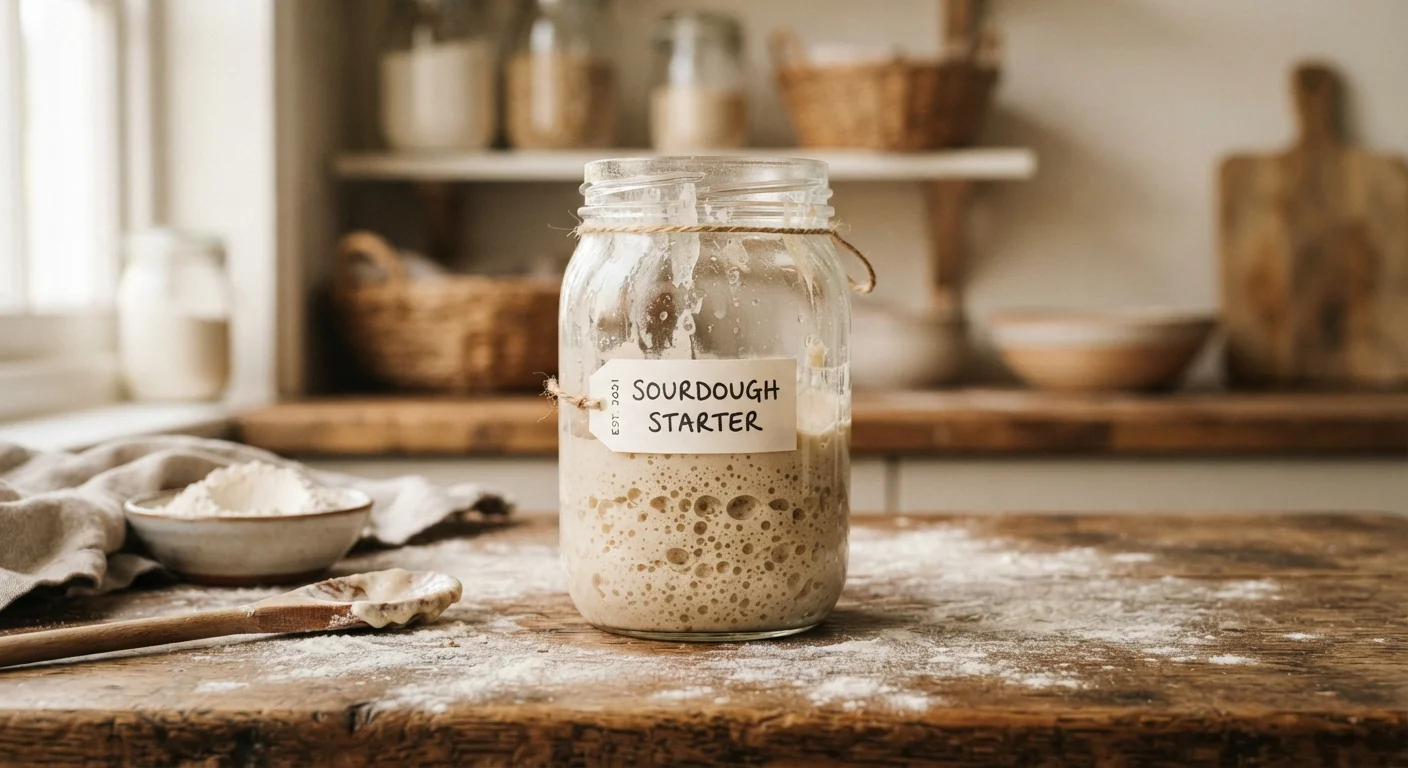
A sourdough starter is a living mixture of flour and water that contains naturally occurring wild yeast and beneficial bacteria. When maintained regularly by adding fresh flour and water - a process called feeding - these microorganisms remain active and produce the gases and acids that make sourdough bread rise and develop its signature tangy flavor. Unlike commercial yeast packets, a starter is an ongoing, self-sustaining culture that bakers keep alive for months or even years.
The two primary actors in a sourdough starter are wild yeast (commonly Saccharomyces cerevisiae and related species) and lactic acid bacteria (LAB), particularly Lactobacillus strains. Their metabolic byproducts - carbon dioxide, lactic acid, and acetic acid - are responsible for leavening and flavor development.
The Living Engine Behind Every Loaf
Before there were packets of commercial yeast at the grocery store, bakers relied on something they couldn't fully see or explain: a small pot of fermented flour and water that reliably made bread rise. That culture - what we now call a sourdough starter - is one of humanity's oldest food technologies, and it's experiencing a genuine revival in American home kitchens.
At its core, a sourdough starter is an ecosystem. Flour provides carbohydrates that feed wild yeast and bacteria present naturally in the environment and on grain. Water activates those microorganisms, and regular feeding keeps the population thriving. The culture isn't just alive in a poetic sense - it is genuinely biological, metabolizing, reproducing, and changing over time.
Understanding what's actually happening inside the jar demystifies the process and makes you a more confident, adaptable baker. Sourdough is often portrayed as temperamental or mysterious, but the underlying science is straightforward once you know what you're working with.
“Sourdough is not a recipe - it's a relationship. The baker has to pay attention to what the starter is telling them, not just follow a fixed set of steps.”
— Chad Robertson, Baker and co-founder of Tartine Bakery, San Francisco
What Wild Yeast and Bacteria Actually Do
Two groups of microorganisms do the real work in a sourdough starter, and they have a cooperative relationship.
Wild yeast consumes simple sugars in flour and produces carbon dioxide gas as a byproduct. That gas gets trapped in the elastic gluten network of bread dough, creating the bubbles that cause a loaf to rise. This is the same fundamental mechanism that commercial yeast performs - the difference is that wild yeast is slower, more variable, and contributes additional flavor compounds along the way.
Lactic acid bacteria (LAB) work alongside the yeast, breaking down starches and producing two types of acid: lactic acid (which creates a mild, yogurt-like tang) and acetic acid (which produces a sharper, more vinegary note). These acids do more than flavor the bread - they inhibit harmful pathogens, improve shelf life, and alter the texture of the crumb.
Importantly, the yeast and bacteria in a starter don't compete; they occupy different metabolic niches. The bacteria actually create conditions - lower pH, byproducts - that protect the yeast. This is part of why a well-established starter is so resilient.
5,000+
Years sourdough fermentation has been practiced
Archaeological and historical evidence suggests leavened bread made through natural fermentation dates back to ancient Egypt and possibly earlier.
~50
Microbial species identified in sourdough starters
Research published in food microbiology journals has catalogued dozens of yeast and bacterial species across sourdough starters from different regions and flour types.
4-6 hours
Typical peak activity window after feeding
At average room temperature, a healthy, mature starter typically reaches peak rise and gas production within 4 to 6 hours of a regular feeding - the optimal window for mixing into dough.
Building a Starter: What Happens Day by Day
Creating a starter from scratch is a study in patience. On days one and two, you mix flour and water and wait. You may see some bubbling from early microbial activity, but the culture isn't stable yet. Undesirable bacteria that can't tolerate acid are actually the first to appear - their activity is what produces the initial (sometimes unpleasant) smell some new bakers notice.
By days three through five, as acidity builds from LAB activity, those early bacteria die off and the acid-tolerant organisms - the wild yeast and beneficial LAB strains you actually want - begin to dominate. Bubbling becomes more consistent and the aroma shifts toward something pleasant: yeasty, slightly sour, almost fruity.
Between days seven and fourteen, the culture stabilizes into a predictable rhythm. A healthy, mature starter reliably doubles in volume within a few hours of feeding and collapses back down as the food supply depletes. That rise-and-fall pattern is your clearest signal that the starter is ready to leaven bread.
Use Your Senses to Read Your Starter
You don't need a pH meter or lab equipment to know if your starter is healthy. A pleasant, tangy aroma (somewhere between yogurt and beer), consistent bubbling, and a reliable rise-and-fall cycle after feeding are the clearest signs of a thriving culture. If something smells off or growth has stalled for several days, adjust your feeding schedule or room temperature before assuming something is wrong.
Sourdough fermentation is part of a broader family of techniques that have shaped American food culture. To explore how fermentation works across other foods - from kimchi to kombucha - see our guide to fermented foods in the American kitchen.
Keeping Your Starter Healthy Long-Term
Once established, a sourdough starter is surprisingly durable - many bakers maintain the same culture for years. The two variables that matter most are temperature and feeding frequency.
At room temperature (roughly 70-75°F), a starter is most active and should be fed at least once daily. In the refrigerator, metabolic activity slows dramatically, and feeding once a week is typically sufficient. Cold storage is ideal for bakers who don't bake every day - it puts the culture into a kind of slow-mode without killing it.
The ratio of old starter to fresh flour and water at each feeding also matters. A higher proportion of fresh flour dilutes acidity and gives the culture more to eat, resulting in a milder flavor and more energetic rise. A smaller proportion of fresh flour leads to a more sour, slower-rising starter. Most recipes use a 1:1:1 ratio by weight (starter : flour : water) as a reliable starting point.
Hydration Affects Flavor and Texture
The ratio of water to flour in your starter - its hydration level - influences both flavor and how it behaves in dough. A stiffer, lower-hydration starter (around 60-70% water by weight) tends to produce more acetic acid and a sharper sour flavor. A looser, higher-hydration starter (100% or more) favors lactic acid and a milder tang. Neither is correct - they just produce different results, and many bakers experiment with both.
There's no single correct way to maintain a starter - experienced bakers adjust feeding ratios, flour types, and schedules based on how their culture behaves. That adaptability is part of what makes sourdough such a satisfying long-term practice.