

Key Takeaways
Out-the-Door Price
The out-the-door price is the total amount you actually pay to drive a vehicle off the dealership lot. It includes the vehicle's sale price plus every tax, fee, and charge added on top - leaving no hidden costs. This is the only figure that tells you the true cost of your purchase.
The out-the-door price is sometimes abbreviated as OTD price. It differs from the MSRP (Manufacturer's Suggested Retail Price) and the negotiated sale price, both of which exclude government taxes and dealer fees.
Why the Sticker Price Is Just the Beginning
Walk onto any dealership lot and you'll see a price prominently displayed on every vehicle. That number - the MSRP, or Manufacturer's Suggested Retail Price - tells you roughly what the automaker recommends the car sell for. What it doesn't tell you is what you'll actually pay when you hand over your money or sign financing papers.
Between the sticker price and the final bill, a series of charges get stacked on top. Some are unavoidable government fees. Others are dealer charges that vary widely. A few may be optional add-ons presented as standard. Together, they can add $1,500 to $4,000 or more to the price you saw on the window.
This is exactly why automotive professionals consistently recommend negotiating and comparing using only one number: the out-the-door price. It's the complete, all-in figure - and it's the only one that allows for meaningful comparison across vehicles and dealerships.
$1,000-$4,000+
Typical gap between sticker and out-the-door price
The exact difference depends on state tax rates, registration fees, and dealer-specific doc fees and add-ons.
Varies by state
Sales tax rate applied to vehicle purchases
Some states have no sales tax on vehicles; others apply combined state and local rates exceeding 9%, making tax the single largest addition to the sale price.
$85-$800+
Range of dealer documentation fees
Doc fee amounts vary widely across dealers and states; some states set a legal cap while others leave the amount entirely to the dealer's discretion.
What Makes Up the Out-the-Door Price
Understanding the OTD price means knowing what goes into it. Here's a breakdown of the typical components:
Negotiated Vehicle Sale Price
This is the agreed-upon price of the car itself - not necessarily the MSRP. If you've negotiated successfully, this number should be lower than the sticker. This is the figure most people focus on, but it's only the foundation.
Sales Tax
State and sometimes local sales tax is applied to the vehicle sale price (and in some states, to add-ons as well). Tax rates vary significantly by state - from zero in states with no sales tax to over 9% in some jurisdictions. This is non-negotiable and set by law.
Title and Registration Fees
Every state charges fees to transfer the vehicle's title into your name and register it for road use. These amounts are set by state agencies and differ based on the vehicle type, weight, or value depending on local law. Like sales tax, these are fixed costs.
Dealer Documentation Fee
Often called a "doc fee," this covers the dealership's cost of processing the purchase paperwork. It's a legitimate charge, but the amount is almost entirely up to the dealer - unless your state caps it. Doc fees can range from under $100 to over $800. Some dealers will reduce this fee if asked during negotiation.
Dealer Add-Ons
This is where OTD prices can balloon unexpectedly. Paint protection, fabric sealant, nitrogen-filled tires, and extended warranties are frequently bundled into quotes and presented as already installed or part of the package. Many of these are optional and negotiable. Always ask which add-ons were included and whether they can be removed. For a deeper look at how add-ons are presented after you've agreed on a price, see our guide on what happens in the F&I office.
Ask for the OTD Price Upfront
When contacting a dealer by email or phone, ask for a complete out-the-door price quote before visiting in person. Specify the exact vehicle, trim level, and any options. Getting this in writing before you arrive removes ambiguity and gives you a firm basis for comparison.
How to Use the OTD Price When Shopping
The out-the-door price becomes most powerful when you use it as the basis for all your comparisons. When contacting multiple dealerships - whether by phone, email, or in person - ask each one for a complete out-the-door price quote in writing. Specify the exact vehicle trim, color, and any options you want, so you're comparing equivalent vehicles.
Once you have written OTD quotes from multiple dealers, comparing them is straightforward. A dealer advertising a lower sale price but charging a $600 doc fee and bundling $900 in add-ons may actually cost more than a dealer with a slightly higher sale price and minimal fees.
Avoid negotiating around monthly payments. When discussions focus on monthly payment amounts, it becomes easy to lose track of the total vehicle cost - loan term adjustments and interest rates can make an expensive car seem affordable month-to-month while costing significantly more overall. For strategies on moving the actual vehicle price, our article on negotiating at a dealership covers the levers that actually work.
If you're also curious about common misconceptions that can cost buyers money, car buying myths worth knowing is a useful companion read.
Trade-In Values Are Separate
If you're trading in a vehicle, its value should be negotiated separately from the OTD price of the new car. Bundling the trade-in into a single monthly payment or "net price" makes it difficult to assess whether you're getting fair value on either transaction. Establish the OTD price first, then discuss trade-in separately.
Getting the OTD Price in Writing
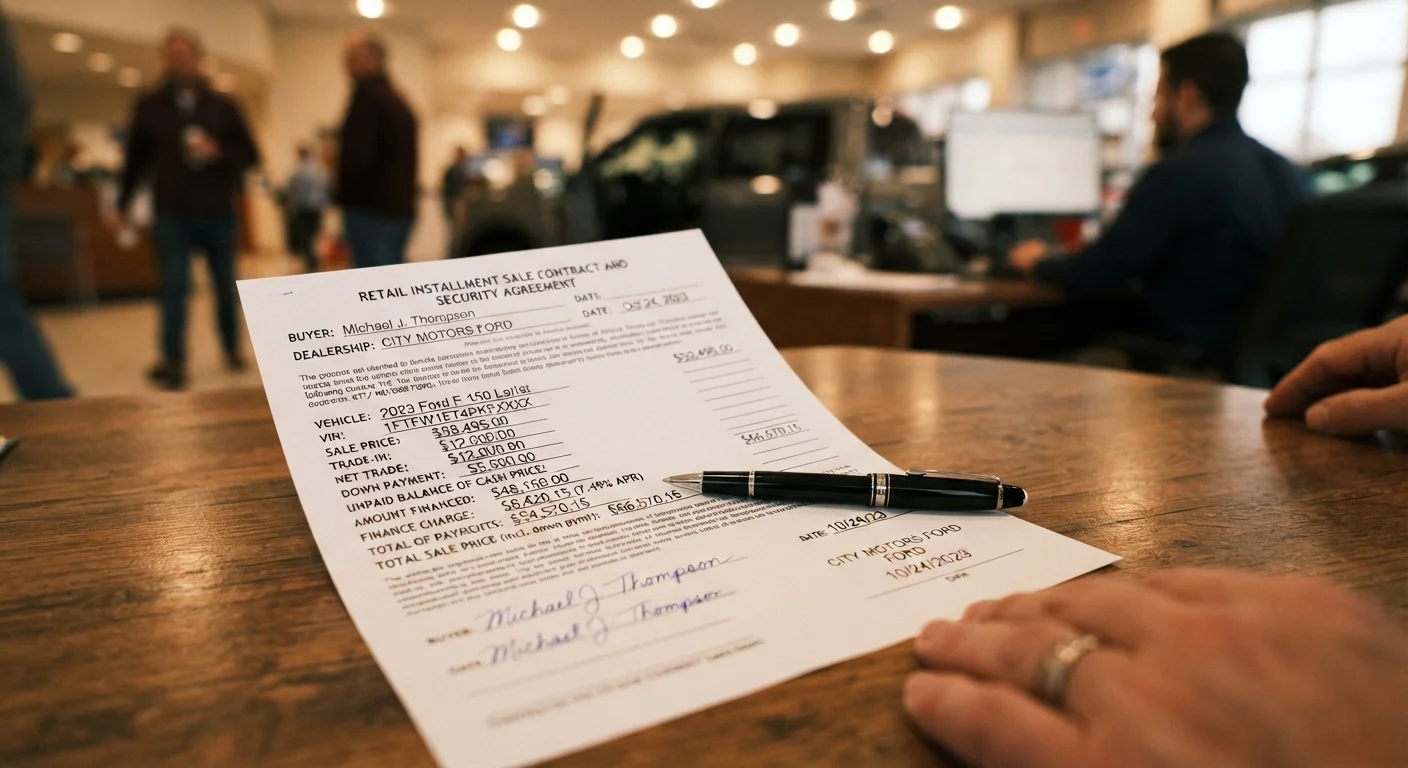
A verbal OTD quote is a starting point, not a commitment. Before you agree to anything or put down a deposit, request a written itemized breakdown that lists every line item: the sale price, tax amount, registration fees, doc fee, and any add-ons with their individual costs. A reputable dealer will provide this without hesitation.
Review the written quote carefully. If a charge appears that wasn't discussed, ask for an explanation before signing. You're entitled to understand every line on a purchase agreement, and any charge that can't be clearly explained deserves scrutiny.
Taking this approach - requesting, comparing, and verifying OTD prices in writing - puts you in control of one of the largest purchases most people make. The sticker price might grab attention, but the out-the-door price is where the real transaction lives.