

Key Takeaways
Why a Vehicle History Report Matters
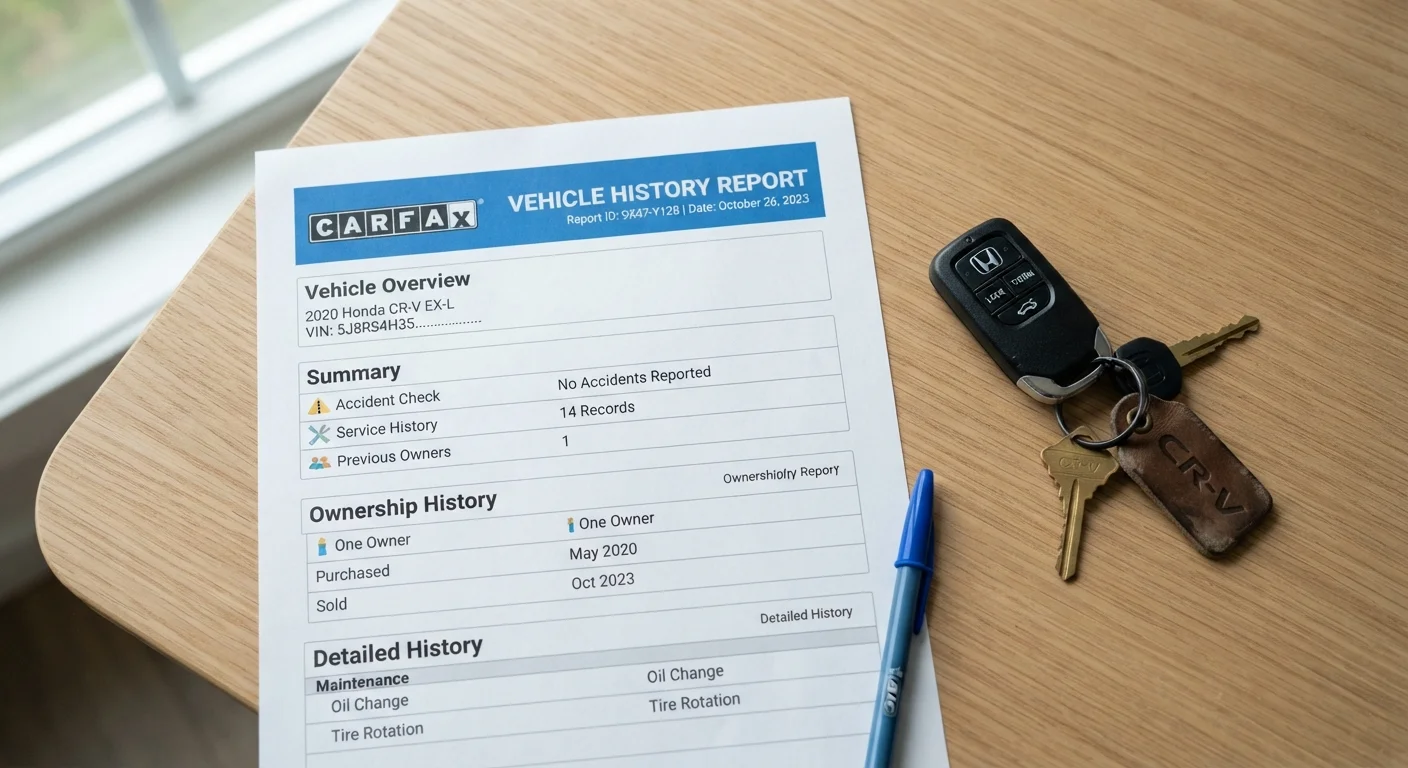
When you're considering a used car, the vehicle history report is one of the most important documents available to you - yet many buyers skim it quickly or focus only on whether accidents are listed. A report aggregates data from multiple sources: state DMV records, insurance claims, auction records, and service shops that report to national databases. Understanding what each section actually communicates helps you ask smarter questions and avoid costly surprises.
These reports are general tools, not complete guarantees. Not every incident ends up in a database - private repairs, unreported fender-benders, and cash transactions often leave no trace. That's why the physical pre-purchase inspection remains essential even when a report looks spotless.
Reports Have Limits - Know Them
Vehicle history reports only capture events that were reported to a database. Private repairs, unreported accidents, and cash-paid maintenance typically won't appear. Treat a clean report as encouraging, not conclusive. Always combine it with a qualified mechanic's inspection for the most complete picture.
The Sections That Matter Most
Title History and Brands
The title section is the first place to look. A clean title means the vehicle has not been declared a total loss or assigned a problematic designation. Title brands - such as salvage, rebuilt, flood, lemon law buyback, or junk - are the most consequential flags on any report. A salvage title means an insurer once declared the car a total loss. A rebuilt title means it was repaired and reinspected, but structural integrity can still be a concern. These designations affect resale value, insurability, and safety. Consult a licensed mechanic before proceeding with any branded-title vehicle.
Odometer Readings
The report will show odometer readings recorded at different points in the vehicle's life - emissions tests, registration renewals, dealer check-ins. Look for a consistent upward pattern. A reading that drops between events, or a large unexplained gap, is a signal worth investigating. Odometer fraud is a federal offense, but it still occurs.
Accident and Damage Records
Reports pull from insurance claims and sometimes collision repair shops. Pay attention to the type of damage recorded, not just whether an accident occurred. Minor cosmetic damage is very different from airbag deployment or frame/structural damage notation. If structural damage appears, a pre-purchase inspection by a qualified mechanic becomes especially important. Note that many minor incidents are never reported to insurance, so absence of accidents doesn't mean the car has none.
Structural Damage Deserves Extra Scrutiny
When a report notes structural, frame, or unibody damage, a surface-level look at the car isn't enough. Frame damage can affect how a vehicle handles, how it performs in a future collision, and whether it can be properly aligned. Have an independent mechanic inspect the undercarriage and frame before making any purchase decision.
Number of Owners and Use Type
This section tells you how many times the vehicle has been titled and whether it was ever registered as a rental, fleet, lease, or taxi. High-turnover ownership or commercial use doesn't automatically disqualify a car, but it's context you should factor in alongside mileage and condition.
Service and Maintenance Records
Some reports include maintenance records from dealers or shops that submit data. Consistent oil changes and scheduled service intervals suggest the vehicle was maintained attentively. Gaps aren't always red flags - owners who use independent shops or do their own maintenance often don't appear in the database - but they are worth asking about. See the car maintenance hub for a sense of what routine upkeep should look like over time.
Putting It All Together Before You Decide
No single item on a vehicle history report should be read in isolation. A car with two previous owners, a clean title, and consistent service history but one minor accident is likely a very different proposition from one with a flood brand and multiple ownership changes. Build a complete picture from all the sections together.
If anything in the report raises questions, bring those specific points to the seller or dealer and ask for documentation. For any vehicle you're seriously considering, a pre-purchase inspection by an independent, licensed mechanic is money well spent - typically a modest fee that can save thousands. First-time buyers especially tend to underestimate how much a history report paired with a hands-on inspection changes the negotiation dynamic.
Once you've made your decision and are finalizing the purchase, keep the report handy - it can be relevant when setting up your auto insurance, particularly if the title has any brands that affect coverage options. And before you drive off the lot, review these key questions to ask the seller so nothing important slips through the cracks.