

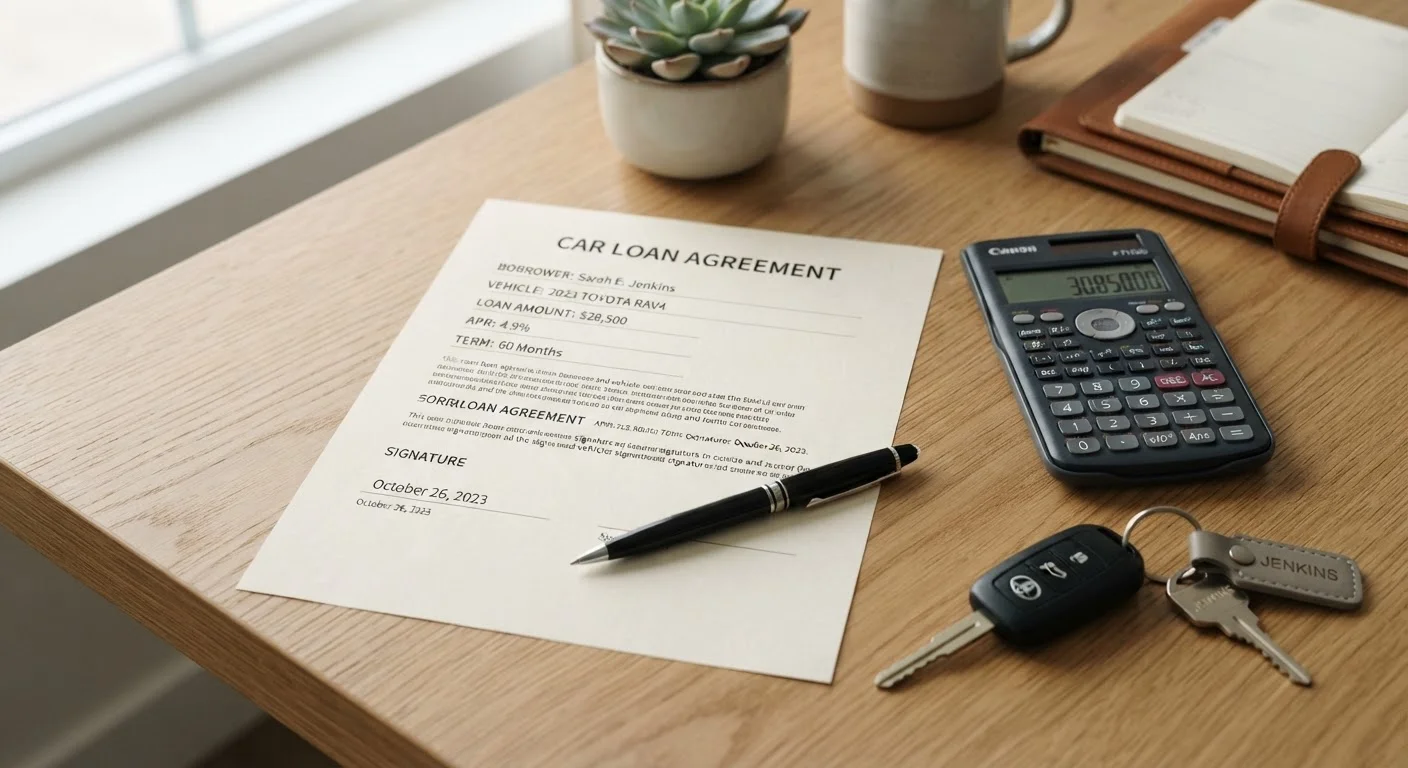
| Typical auto loan terms | 24 to 84 months |
| What APR includes | Interest rate + lender fees |
| Down payment effect | Reduces principal and may lower your rate |
| Simple vs. precomputed interest | Simple interest rewards early payoff; precomputed may not |
| LTV to watch for | At or below 100% is generally preferred by lenders |
Why These Terms Matter Before You Sign
Walking into a dealership finance office without knowing the vocabulary puts you at a real disadvantage. Salespeople and lenders use terms like APR, LTV, and amortization fluently - and the more comfortable you are with them, the more clearly you can evaluate any deal put in front of you.
This reference covers the core financing terms you'll encounter when buying a new or used vehicle. Bookmark it, bring it up on your phone in the F&I office, or read it before your first lender conversation. For a broader look at the purchase process, see our step-by-step car buying guide.
| Typical auto loan terms | 24 to 84 months |
| What APR includes | Interest rate + lender fees |
| Down payment effect | Reduces principal and may lower your rate |
| Simple vs. precomputed interest | Simple interest rewards early payoff; precomputed may not |
| LTV to watch for | At or below 100% is generally preferred by lenders |
Core Loan Terms Defined
The terms below appear in virtually every auto loan agreement. Understanding each one helps you compare offers accurately rather than focusing only on the monthly payment number.
Principal
The original amount of money you borrow, not including interest or fees. Your monthly payments chip away at the principal balance over time.
APR (Annual Percentage Rate)
The yearly cost of borrowing, expressed as a percentage, that includes the interest rate plus certain lender fees. It provides a more complete cost comparison than the interest rate alone.
Loan Term
The length of time you have to repay the loan, typically expressed in months (e.g., 48, 60, 72). Longer terms lower monthly payments but increase total interest paid.
Amortization
The process of spreading loan repayments over time. Early payments in an amortized schedule cover mostly interest; later payments apply more toward principal.
Down Payment
The cash amount you pay upfront toward the vehicle's purchase price. A larger down payment reduces the amount you need to borrow.
Loan-to-Value Ratio (LTV)
The ratio of your loan amount to the vehicle's appraised value. A lower LTV signals less risk to lenders and can result in better loan terms.
Capitalized Cost
Most commonly used in leasing, this is the negotiated price of the vehicle that forms the basis for calculating payments. It can be reduced by a down payment or trade-in.
Residual Value
In a lease, the estimated value of the vehicle at the end of the lease term. A higher residual value generally results in lower monthly lease payments.
If you want to see how these concepts fit into broader personal finance, our complete reference guide to personal debt terms covers them alongside credit cards, student loans, and more.
Reading the Numbers: What to Watch Closely
Two loan offers can have identical monthly payments and still cost very different amounts overall. Here's where to focus your attention.
APR vs. Interest Rate
Your interest rate is the base cost of borrowing the money. Your APR is a broader figure that folds in certain lender fees, making it a more complete measure of a loan's true annual cost. When comparing offers from different lenders, compare APRs - not just interest rates.
Loan Term Length
Stretching a loan to 72 or 84 months lowers your monthly payment but substantially increases total interest paid. It also raises the risk of being underwater on the vehicle - owing more than it's worth - for a longer period. Shorter terms cost more each month but less overall.
Down Payment and LTV
A larger down payment reduces the amount you finance, lowers your loan-to-value ratio, and can qualify you for a better rate. Lenders generally prefer an LTV at or below 100%, meaning you're not financing more than the vehicle is worth.
~70%
New car buyers who finance their purchase
According to Experian's State of the Automotive Finance Market reports, roughly seven in ten new vehicle purchases involve financing.
$1,000+
Extra interest from extending a 60-mo. loan to 72 months
Extending a loan term on an average-priced vehicle can add over a thousand dollars in total interest, even at the same rate, due to a longer accrual period.
First-time buyers often focus exclusively on the monthly payment figure. Our article on common first-time buyer mistakes explains why that single number can be misleading.
Other Terms You May Encounter
Beyond the essentials, you may run into the following terms in loan documents or lender conversations.
- Precomputed interest: Interest calculated on the original loan balance rather than the declining balance. Paying off early may not save as much as it would with a simple-interest loan.
- Simple interest: Interest calculated daily on your current outstanding balance. Paying even a few days early reduces how much interest accrues.
- Prepayment penalty: A fee some lenders charge if you pay off the loan ahead of schedule. Most auto loans today don't carry this, but confirm before signing.
- Gap coverage: An add-on product - not part of the loan itself - that covers the difference between what you owe and what your insurer pays if the car is totaled or stolen while you're underwater. For context on how auto insurance fits in, see our auto insurance overview.
- Dealer markup: When dealers arrange financing, they may increase the lender's offered rate and keep the difference as profit. Getting pre-approved by a bank or credit union gives you a comparison point.
This article is for general informational and educational purposes only and does not constitute personalized financial or legal advice. Loan terms, rates, and eligibility vary by lender and individual circumstances. Consult a qualified financial professional before making borrowing decisions.